⚕ MEDICALLY REVIEWED · CHEMICALPEEL.ORG
Chemical peel vs microdermabrasion: compare how each works, depth, downtime, results, and cost, then learn which treatment fits your skin and concerns.
Patient Education
Published July 27, 2026
⚕ MEDICALLY REVIEWED by Stefanie Drozd, MSN-APRN · Last medically reviewed: July 27, 2026
A chemical peel and microdermabrasion are both professional exfoliation treatments that remove dead surface cells to reveal fresher skin, but they work in fundamentally different ways. The chemical peel vs microdermabrasion decision comes down to mechanism and depth: microdermabrasion physically polishes the outermost layer with fine crystals or a diamond tip, while a chemical peel uses an acid solution whose strength can be adjusted from a gentle surface refresh to deep resurfacing. That single difference shapes everything else, including downtime, cost, sessions, and the concerns each treatment handles best. This guide compares the two side by side, explains which one is better for pigment, texture, acne, and fine lines, and helps you decide which treatment, or which combination, fits your skin.
The Difference Between a Chemical Peel and Microdermabrasion
The difference between a chemical peel and microdermabrasion starts with how each one exfoliates. Microdermabrasion is mechanical: a handheld device physically buffs away dead surface cells using a spray of fine crystals or an abrasive diamond tip, paired with gentle suction that lifts the debris away. A chemical peel is chemical: a trained provider applies an acid solution that loosens the bonds holding dead cells together so the outer layers shed and renew over the following days.
Because microdermabrasion only polishes the surface, its results are gradual, its recovery is brief, and its reach stops at the outermost dead layer of the epidermis, called the stratum corneum. Because a chemical peel’s strength and depth are adjustable, it can act anywhere from that same surface level down to the deeper dermis, which is why peels produce stronger changes in pigment, fine lines, and scarring, with more recovery time as depth increases.
What Is Microdermabrasion?
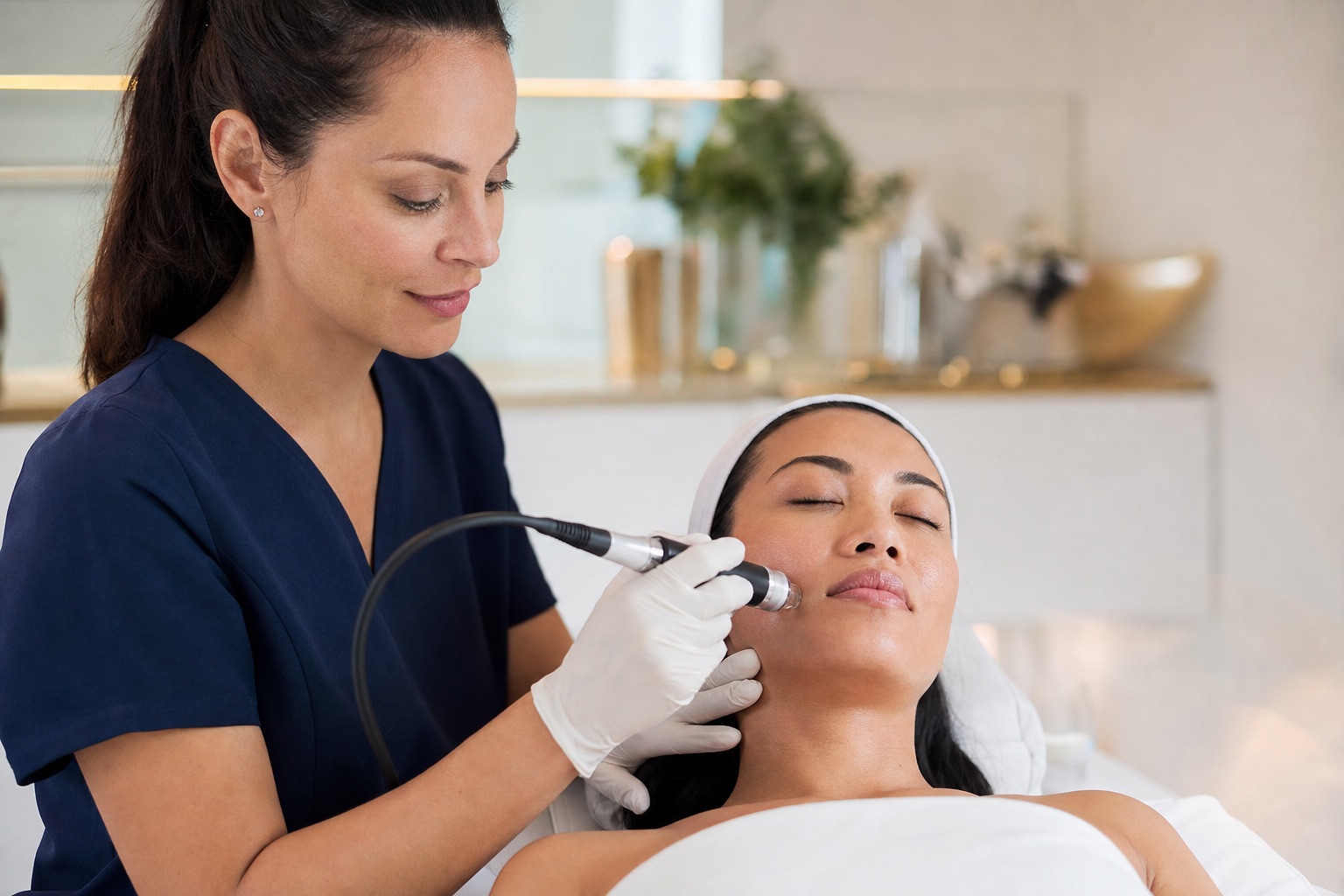
Microdermabrasion is a professional mechanical exfoliation treatment in which a licensed esthetician or clinician glides a small wand across the skin to remove the outermost layer of dead cells. Traditional crystal systems spray very fine aluminum oxide crystals onto the skin and immediately vacuum them back up along with the loosened debris. Newer diamond tip systems use an abrasive wand head with the same gentle suction and no loose crystals. Either way, no acids are involved, and the treatment stays within the stratum corneum.
The suction does double duty: it clears exfoliated debris and briefly stimulates surface circulation, which is why skin often looks pink and refreshed right afterward. A session usually takes 30 to 60 minutes, requires no numbing, and feels like mild scratching with light pulling. Do not confuse it with dermabrasion, a much deeper surgical resurfacing procedure performed by physicians.
What Is a Chemical Peel?
A chemical peel is a professional treatment in which a provider applies an acid solution that dissolves the bonds between dead skin cells so the outer layers exfoliate in a controlled way. What makes peels so versatile is the depth ladder. Superficial peels, which use alpha and beta hydroxy acids such as glycolic, lactic, mandelic, and salicylic acid, act on the epidermis and involve only minimal downtime. Medium depth peels, most often trichloroacetic acid (TCA) or Jessner’s solution, reach the upper dermis and bring about a week of visible peeling. Deep phenol peels reach further still and are physician performed procedures done with cardiac monitoring.
That adjustability is the peel’s defining advantage in this comparison. The same category of treatment can deliver a quick lunchtime brightening session or a dramatic resurfacing of etched lines and stubborn pigment. For a complete primer on what a chemical peel is, including every type and depth, see our pillar guide.
How Each Treatment Works, Step by Step
A microdermabrasion appointment is quick and predictable. A typical session looks like this:
- Cleansing. The skin is cleansed and dried so the wand glides evenly and debris lifts away cleanly.
- Treatment passes. The provider moves the crystal or diamond tip wand across the face in overlapping passes, adjusting suction strength for delicate areas.
- Focused work. Congested or rough zones, often the nose and chin, may receive an extra conservative pass.
- Cleanup. Residual crystals and debris are wiped away, and the skin is calmed with a soothing serum or moisturizer.
- Protection. Broad-spectrum sunscreen finishes the visit, and makeup is usually fine the same day or the next morning.
A chemical peel appointment follows a different rhythm: cleansing and degreasing, careful timed application of the acid, close monitoring of the skin’s response, then neutralizing or removing the solution (some acids, such as salicylic, are self neutralizing). The visible work happens afterward, as the treated layers flake and shed over the following days. Depth sets the tone: a superficial peel is a brief lunchtime visit, while medium and deep peels are provider performed medical procedures with structured recovery plans, never at home projects.
Chemical Peel vs Microdermabrasion: Side-by-Side Comparison
Here is how the two treatments line up on the factors people weigh most. Cost figures are industry estimates, not quotes, so always confirm pricing with a provider.
| Chemical peel | Microdermabrasion | |
|---|---|---|
| Mechanism | Chemical exfoliation; an acid dissolves the bonds between dead cells | Mechanical exfoliation; fine crystals or a diamond tip plus suction polish the surface |
| Depth | Adjustable, from the epidermis (superficial) to the deeper dermis (deep) | Outermost dead layer of the epidermis only |
| Performed by | Estheticians for superficial peels; physicians for deep peels | Usually a licensed esthetician |
| Downtime | A few days of flaking (superficial); up to a week for medium; two or more weeks for deep | Minimal; mild pinkness for a few hours |
| Best for | Uneven tone, sun spots, fine lines, acne, post-acne marks, deeper resurfacing | Dullness, rough texture, mild congestion, acid sensitive skin |
| Typical cost per session | About $100 to $300 for superficial; medium and deep peels cost more | About $75 to $250 |
| Sessions | Series of 3 to 6 for superficial peels; often a single medium or deep peel | Series of 5 to 10, then monthly maintenance |
| Results | Stronger per session and scale with depth | Gradual; build with regular sessions |
Which Should You Choose? Guidance by Concern and Skin Type
The microdermabrasion vs chemical peel question gets much easier when you start from the concern you want to treat instead of the treatment itself.
When a Chemical Peel Is the Better Fit
- Hyperpigmentation and sun spots. Acid exfoliation reaches below the dead surface layer where excess pigment sits, so peels fade discoloration more effectively than surface polishing (see our dedicated guide to chemical peels for hyperpigmentation). Melasma is the exception that needs specialist guidance, since aggressive treatment of any kind can darken it.
- Fine lines and early aging. A superficial peel series softens early lines, and a medium TCA peel treats more established ones. Microdermabrasion does not reach the layers where wrinkles form.
- Acne and post-acne marks. A salicylic acid peel exfoliates inside the pore, where breakouts begin, and a peel series helps fade the dark marks acne leaves behind.
- Texture concerns with depth. Shallow acne scarring and etched sun damage respond better to medium depth resurfacing than to any surface treatment.
When Microdermabrasion Is the Better Fit
- Dullness before an event. It delivers immediate polish and glow with very little chance of visible flaking afterward.
- Acid sensitivity. Because it is purely mechanical, it suits people who cannot tolerate hydroxy acids or prefer to avoid them entirely.
- Mild congestion and rough patches. Gentle abrasion plus suction clears surface debris and smooths texture gradually over a series.
- Budget-first maintenance. Per session it is often the least expensive professional exfoliation option, though it requires steady repetition to hold results.
For general brightness on healthy skin, either treatment works, and skin type can be the tiebreaker. If your goal is tone and gentle renewal, a gentle glycolic acid peel is the classic first peel, while sensitive or acid intolerant skin often does better with mechanical exfoliation. Both treatments can be performed across all skin tones when settings are conservative and the provider is experienced; in deeper skin tones, the priority is avoiding irritation that can trigger post-inflammatory hyperpigmentation.
Candidacy and Safety
Both treatments are considered low risk in trained hands, but each has its own screening list. Providers postpone or avoid microdermabrasion over active inflamed acne (suction can aggravate it), rosacea flares, fragile capillaries, open lesions, cold sores, sunburn, or skin recently treated with isotretinoin or resurfacing procedures. Overly aggressive suction can cause pinpoint bruising, one reason professional technique matters.
Chemical peel risks scale with depth. Superficial peels can cause temporary redness, flaking, and sun sensitivity, while medium and deep peels add risks such as prolonged redness, infection, and pigment changes, and they are provider performed medical procedures, never at home treatments. Home versions of both exist, from drugstore microdermabrasion kits to low strength acid pads, and they behave like maintenance skincare rather than professional treatments; our comparison of at-home vs professional peels explains where the safety line sits. If you are pregnant or nursing, or you have a history of keloid scarring or cold sores, review any treatment plan with your clinician first.
Recovery and Aftercare
Recovery is where the two treatments separate most visibly:
- After microdermabrasion. Skin may look pink and feel tight for a few hours to a day, similar to light windburn. Most people return to normal activities immediately.
- After a superficial peel. Expect mild redness, dryness, and light flaking for roughly two to five days. Do not pick or peel flaking skin.
- After a medium peel. Plan on about a week of visible peeling, with pigment often looking darker before it lifts, and social downtime many people schedule around.
Aftercare is nearly identical for both: a gentle cleanser, a bland moisturizer, and strict daily broad-spectrum sunscreen, with retinoids and other exfoliants paused until the skin fully settles. Freshly exfoliated skin is more vulnerable to UV damage, and unprotected sun exposure can create the very pigment problems you just treated.
Results and How Long They Last
Microdermabrasion results are immediate but modest: smoother texture, a brighter surface, and makeup that applies more evenly. The effect of a single session typically lasts a few weeks to about a month, which is why providers recommend a series of five to ten sessions followed by monthly maintenance. Results at this depth are generally subtle and cumulative rather than dramatic.
Chemical peel results scale with depth. A single superficial peel refreshes tone within days, and a series fades discoloration and softens fine lines over two to three months. A medium peel produces a more noticeable change after one recovery cycle, with improvements that can last a year or longer when skin is protected from the sun. Neither treatment stops the skin from aging, so consistency, sunscreen, and realistic expectations determine how long improvements hold.
How Much Does Each Treatment Cost?
As industry estimates, microdermabrasion commonly runs about $75 to $250 per session in the United States, which makes it one of the most affordable professional skin treatments. Superficial chemical peels commonly run about $100 to $300 per session, medium depth peels often reach several hundred dollars or more, and deep phenol peels can run several thousand. Series packages usually lower the per session price for either treatment. Because both address cosmetic concerns, insurance does not typically cover them. Treat every figure here as an estimate rather than a quote, and confirm pricing with a provider during a consultation. For a complete breakdown across every peel type and depth, see our chemical peel cost guide.
Frequently Asked Questions
Chemical peel vs microdermabrasion, which is better?
Neither is better for everyone; the right choice depends on your concern. Microdermabrasion is a gentle mechanical polish that suits dullness, rough texture, and skin that cannot tolerate acids. A chemical peel offers adjustable depth, so it is usually the stronger option for uneven tone, fine lines, acne, and post-acne marks. A consultation with a qualified provider is the fastest way to match the treatment to your skin and goals.
What is the difference between a chemical peel and microdermabrasion?
The difference is how each removes dead skin. Microdermabrasion physically exfoliates the surface with fine crystals or a diamond tip plus gentle suction, treating only the outermost dead layer. A chemical peel uses an acid solution to dissolve the bonds between dead cells, and its depth can be adjusted from superficial to deep. Chemical exfoliation reaches further, so it produces stronger changes along with more recovery time as depth increases.
Is microdermabrasion or a chemical peel better for hyperpigmentation?
A chemical peel is usually better for hyperpigmentation. Acid exfoliation reaches pigmented cells below the dead surface layer, so a series of superficial peels fades sun spots and post-acne marks more effectively than microdermabrasion, which polishes only the surface. Melasma is an exception that needs specialist care, because overly aggressive treatment of any kind can darken it. Work with a provider experienced in treating your skin tone.
Which has more downtime, a chemical peel or microdermabrasion?
A chemical peel has more downtime, and it rises with depth. Superficial peels cause a few days of mild flaking, medium peels involve about a week of visible peeling, and deep peels require weeks of healing. Microdermabrasion typically causes only mild pinkness for a few hours, and most people return to normal activities the same day.
Is microdermabrasion or a chemical peel better for acne?
A chemical peel, most often a salicylic acid peel, is generally better for acne. Salicylic acid is oil soluble, so it exfoliates inside congested pores where breakouts begin. Microdermabrasion can help mild blackheads and rough texture, but its suction can irritate inflamed pimples, so most providers avoid it during active flares. Either approach works best alongside a consistent daily acne routine.
Can you do a chemical peel and microdermabrasion together?
Sometimes, but only under professional guidance. Some providers alternate the two treatments several weeks apart so skin recovers fully between sessions, and a few pair gentle microdermabrasion with a very light peel in a single visit for extra exfoliation. Stacking them too aggressively raises the risk of irritation and post-inflammatory hyperpigmentation, so follow your provider’s plan rather than combining treatments on your own.
Medical Disclaimer
This page is provided by ChemicalPeel.org for patient education and is not medical advice. Individual results vary, and the information here does not replace a consultation with a qualified, board-certified provider. Always discuss your medical history and treatment options with a licensed clinician before pursuing any chemical peel.
Ready to Choose the Right Treatment?
Whether a chemical peel or microdermabrasion serves you better comes down to your concerns, your skin, and the experience of the person treating it. Find a qualified provider near you to talk through both options, or keep researching and compare every chemical peel type and depth before you book a consultation.
Related Articles
Article
Chemical peel aftercare protects your results. Learn what to do after a peel, what to avoid, when makeup and sun are safe, and how often to get one.
Article
A foot peel is a mask worn at home to shed dead skin and soften calluses over one to two weeks. Learn how foot peels work, safety, and how often to use one.
Article
A chemical peel for large pores clears clogged pores and controls oil so pores look smaller. Learn which peels work best, results, cost, and safety.
Article
A chemical peel for melasma can fade stubborn facial patches when paired with strict sun protection. Compare the gentlest peel options, results, and costs.
Article
A chemical peel for wrinkles smooths fine lines by resurfacing skin and stimulating collagen. Compare peel depths, cost, and results, then find a provider.
Article
Chemical peel vs laser resurfacing compared: results, downtime, cost, and safety by skin tone, plus how to choose the treatment that fits your skin.
The information on this page is for educational purposes only and is not a substitute for medical advice, diagnosis, or treatment from a qualified health care provider. Always consult a board-certified dermatologist or licensed medical professional before beginning any chemical peel regimen. Individual results may vary. ChemicalPeel.org does not endorse or guarantee any specific treatment outcome.