Written by the ChemicalPeel.org editorial team. Published July 28, 2026. Updated September 2, 2026.
Clinical review pending. This page has not yet been reviewed by a licensed clinician; read it as patient education, not medical advice. How we review
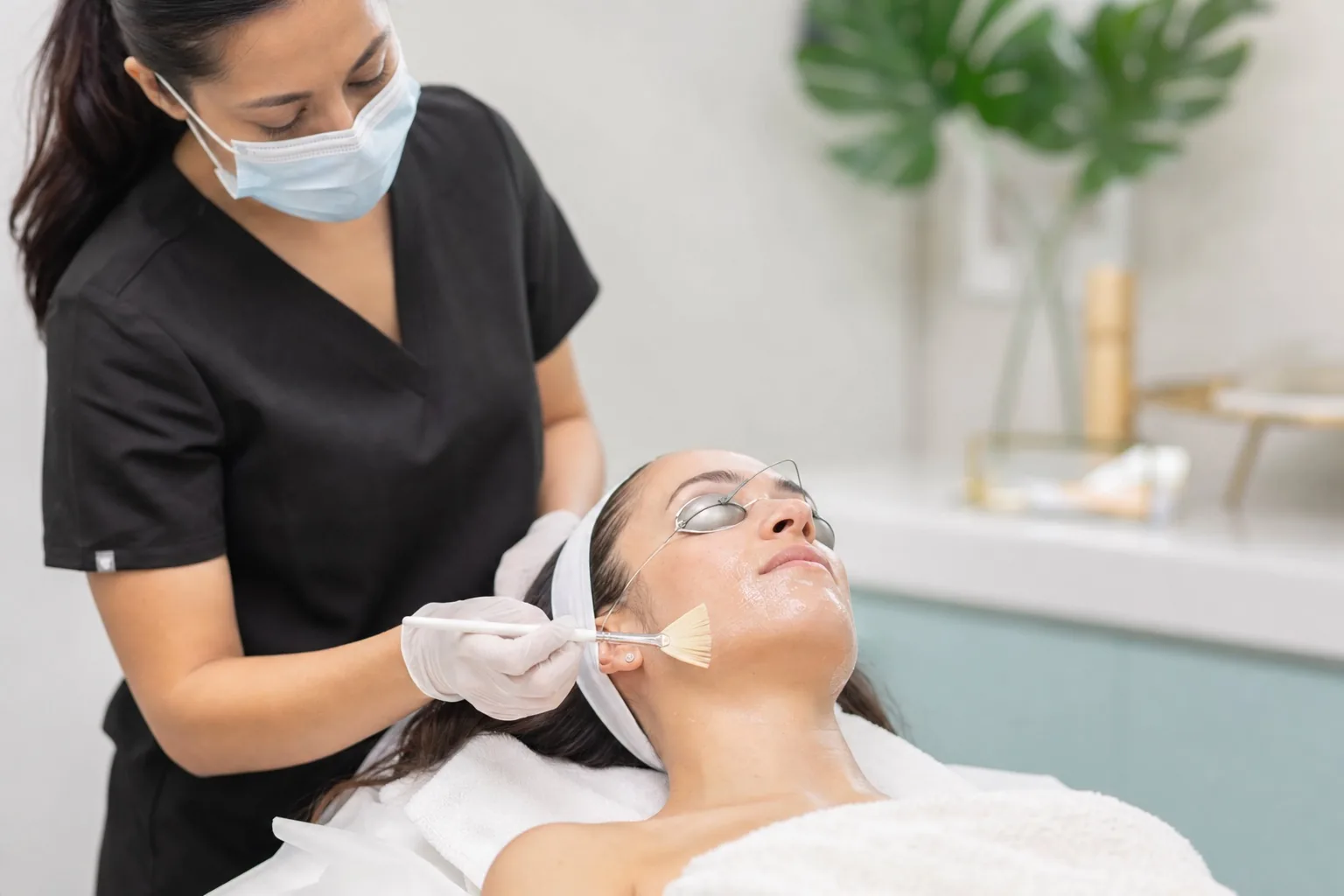
A chemical peel resurfaces the skin with a controlled acid solution, while laser resurfacing renews the skin with focused light and heat energy. Both treat sun damage, uneven tone, fine lines, and rough texture, which is why the chemical peel vs laser question comes up in so many consultations. Neither wins outright. Peels are generally more affordable and adapt well across skin tones, while lasers offer pinpoint precision and, at the ablative end, powerful wrinkle smoothing. The better fit depends on your concern, your skin type, your budget, and how much recovery you can accept. This guide compares the two point by point so you can bring the right questions to a consultation.
What Is the Difference Between a Chemical Peel and Laser Resurfacing?
Chemical peels and laser resurfacing pursue the same goal, removing or remodeling damaged skin so fresher skin can take its place, with different tools. A peel works chemically, with an acid solution. A laser works with focused light that the skin converts to heat. That difference shapes everything else: precision, cost, downtime, and how each treatment behaves across skin tones.
What a Chemical Peel Is
A chemical peel is a professional treatment in which a clinician applies an acid solution to remove damaged layers of skin at a controlled depth. Depth is the organizing idea. Superficial peels, which use glycolic, lactic, salicylic, or mandelic acid, act on the epidermis, the outermost layer, and involve minimal downtime. Medium peels, most often trichloroacetic acid (TCA) or Jessner’s solution, reach the upper dermis and bring about a week of visible peeling. At the strongest end, a deep phenol peel reaches the mid-reticular dermis and is a physician-performed procedure with cardiac monitoring, reserved for advanced sun damage and deep wrinkles. Medium and deep peels are provider-performed treatments, never at-home projects. If you are new to peels, our overview of what a chemical peel is walks the full depth ladder.
What Laser Resurfacing Is
Laser skin resurfacing is a professional treatment in which a device delivers concentrated light energy that heats or removes skin with extreme precision. Lasers divide into two families. Ablative lasers, chiefly carbon dioxide (CO2) and erbium, vaporize the outer layers of skin and produce the most powerful resurfacing with the most recovery. Non-ablative lasers leave the surface intact and heat the dermis below to stimulate collagen remodeling, trading raw power for much lighter downtime. Many modern devices are also fractional, meaning they treat thousands of microscopic columns of skin and leave the tissue between them untouched, which speeds healing at either energy level. A clinician selects the family, device, and settings by matching intensity to the problem, just as a peel depth is chosen.
What Each Treatment Addresses
The two treatments overlap far more than most head-to-head articles suggest. Superficial and medium peels and non-ablative or gentle fractional lasers address a very similar list: uneven tone, sun spots, post-acne marks, rough texture, dullness, and early fine lines. For dark spots specifically, our guide to chemical peels for hyperpigmentation covers acids, strengths, and expectations; melasma is a special case needing conservative, provider-guided care with either technology. The overlap continues at the intensive end, where deep phenol peels and fully ablative CO2 lasers compete for the same jobs, deeper wrinkles and advanced sun damage. If aging skin is your main concern, our guide to chemical peels for wrinkles maps peel depth to wrinkle depth in detail.
The differences show at the edges. Lasers win on precision, because the beam treats exactly where it is pointed: the border of an acne scar, a single stubborn spot. Peels win on cost, on treating the full face evenly, and on flexible, gradual treatment across a wider range of skin tones. Neither treatment lifts sagging skin the way surgery does.
How Each Procedure Works
Both treatments follow the same broad arc: assess, prepare, treat, protect. A typical resurfacing appointment, peel or laser, moves through five steps:
- Consultation and skin assessment. The provider reviews your medical history, medications, skin type, and goals, then recommends a modality and depth suited to your skin.
- Pre-treatment preparation. Deeper treatments in either family may involve weeks of runway: strict sun avoidance, a pigment-calming skincare routine, or antiviral medication to prevent cold sore flare-ups.
- Cleansing and protection. On treatment day the skin is cleansed and degreased. Laser sessions add mandatory eye protection, and deeper treatments may call for numbing cream, local anesthesia, or monitored sedation.
- The treatment itself. In a peel, the acid is applied in even, timed passes, monitored closely, then neutralized or allowed to self-neutralize. In a laser session, the handpiece moves across the skin in controlled passes, often with cooling. Most sessions take 15 to 60 minutes.
- Immediate aftercare. The skin is calmed with ointment or moisturizer, sun protection is reviewed, and you leave with written instructions matched to the treatment depth.
Sensation differs more than structure. Light peels tingle or sting briefly, and non-ablative lasers feel like quick snaps of heat. The deepest options in both families require formal anesthesia planning, and a deep phenol peel adds continuous cardiac monitoring.
Chemical Peel vs Laser: Side-by-Side Comparison
Here is how the two families compare on the factors patients ask about most. All ranges are industry estimates that vary by region, provider, and device.
| Chemical peel | Laser resurfacing | |
|---|---|---|
| How it works | An acid solution removes damaged skin chemically at a controlled depth | Focused light energy heats or removes tissue with pinpoint precision |
| Main types | Superficial (glycolic, lactic, salicylic, mandelic), medium (TCA, Jessner’s), deep (phenol) | Ablative (CO2, erbium), non-ablative, fractional versions of both |
| Best for | Overall tone, dullness, mild to moderate sun damage, gradual full-face improvement | Precise scar work, deeper wrinkles, concentrated results in fewer sessions |
| Downtime | Minimal for superficial, about a week for medium, two weeks or more for deep | Minimal for non-ablative, several days for fractional, one to two weeks for fully ablative |
| Typical sessions | Superficial peels build over a series; medium and deep work in one to a few | Non-ablative usually needs a series; ablative often delivers in one |
| Cost per session | About $100 to $300 for superficial; medium and deep peels run higher (industry estimates) | Several hundred to roughly $1,500 for non-ablative; several thousand for ablative (industry estimates) |
| Darker skin tones | Superficial peels adapt well with conservative, gradual technique | Some ablative lasers carry a higher pigment risk; wavelength choice matters |
Candidacy and Safety
Most healthy adults with realistic expectations are candidates for some version of either treatment; the real question is which version. Screening looks similar for both. Active skin infections or cold sore outbreaks, recent isotretinoin use, a history of keloid scarring, and sunburned or otherwise compromised skin all postpone treatment. If you are pregnant or nursing, review any resurfacing plan with your clinician first. Risk scales with depth in both families: deeper peels and ablative lasers carry higher chances of infection, prolonged redness, scarring, and pigment changes, so the intensive versions belong with experienced, properly credentialed providers.
Which Is Safer for Darker Skin Tones?
Both treatments can be performed safely on darker skin, and both carry a real risk of post-inflammatory hyperpigmentation, the darkening that melanin-rich skin can produce in response to inflammation or heat. The risk is not evenly distributed. Some ablative lasers carry a well-documented higher risk of pigment problems in deeper skin tones (Fitzpatrick types IV through VI), while certain wavelengths and conservative fractional or non-ablative settings are considered lower risk in experienced hands. On the peel side, superficial peels at conservative strengths are often the gentler starting point, with intensity built gradually across a series. Dermatology guidance emphasizes matching resurfacing intensity and technology to skin tone; the deciding factor is a provider who treats skin of color regularly and chooses accordingly.
Downtime and Recovery Compared
Downtime follows depth, not category. Matched intensity for intensity, the two families heal on similar clocks:
- Superficial peel or non-ablative laser. Mild redness and possible light flaking for a day or two. Most people return to normal activities immediately.
- Medium peel or fractional ablative laser. Roughly five to seven days of visible peeling or crusting, with pinkness that fades over the following weeks.
- Deep phenol peel or fully ablative CO2 laser. One to two weeks before the skin is comfortable in public, strict wound care in the first days, and redness that can persist for weeks to months.
Whatever you choose, aftercare converges on the same essentials: gentle cleansing, a bland moisturizer, hands off the flaking or crusting skin, and strict daily broad-spectrum sunscreen, because freshly resurfaced skin is exceptionally vulnerable to UV damage.
Results and How Long They Last
At comparable depths, results are more alike than different. A series of superficial peels and a series of non-ablative laser sessions both build gradual improvement in tone, brightness, and texture over two to three months. A single medium peel or fractional ablative session produces a clearer jump: smoother texture, faded pigment, and softened lines that hold for months to a few years depending on sun habits. Deep phenol peels and fully ablative lasers produce the most dramatic change, and improvement in deep wrinkles is commonly measured in years. No resurfacing treatment stops aging or future sun damage, so longevity depends on sunscreen, skincare, and periodic maintenance. Whichever technology a provider offers, ask to see before and after photos of their own patients with skin similar to yours.
Chemical Peel vs Laser Cost
Cost is where the two treatments separate most clearly. As industry estimates, superficial chemical peels commonly run about $100 to $300 per session in the United States, and medium and deep peels push the average considerably higher. Laser resurfacing generally starts higher: non-ablative sessions often run several hundred dollars to roughly $1,500, and full-field ablative resurfacing frequently reaches several thousand dollars per treatment. Treatment plans change the math: superficial peels and non-ablative lasers are usually priced as a series, while ablative work is often a single session. A deep phenol peel, as a physician-performed procedure with anesthesia and monitoring, prices closer to ablative laser territory than to other peels. Insurance does not typically cover cosmetic resurfacing of either kind. These figures are industry estimates, not a quote; ChemicalPeel.org is an education resource, not a clinic, so confirm pricing directly with a provider. For numbers across every peel type, see our chemical peel cost guide.
How to Choose Between a Chemical Peel and Laser
There is no universal winner. A good consultation weighs four factors:
- Your concern. Overall tone, dullness, and mild sun damage favor peels or non-ablative laser. Precise scar revision and deeply etched wrinkles push toward fractional or ablative laser, or a deep peel.
- Your skin type. Deeper skin tones often start with conservative superficial peels or carefully chosen laser wavelengths, guided by a provider experienced with skin of color.
- Your budget. Peels usually deliver the most improvement per dollar for tone and texture. Lasers cost more per session but concentrate results into fewer visits.
- Your downtime tolerance. If you cannot step away from work or events for a week, stay at the superficial or non-ablative end of either family.
Many providers combine both over time, for example clearing pigment with a peel series before refining etched lines with a fractional laser.
Frequently Asked Questions
Chemical peel vs laser resurfacing, which is better?
Neither is better across the board. Both treatments improve tone, texture, fine lines, and sun damage, and results at comparable depths are broadly similar. Chemical peels are generally more affordable and adapt well across skin tones, while lasers offer more precision and stronger single-session results at the ablative end. The right choice depends on your concern, skin type, budget, and downtime tolerance, which is exactly what a consultation sorts out.
Is a chemical peel or laser better for wrinkles?
It depends on wrinkle depth. Fine surface lines respond well to superficial and medium peels and to non-ablative laser sessions. Deeper, etched-in wrinkles respond best to the strongest tools: ablative CO2 or erbium laser resurfacing, or a physician-performed deep phenol peel. Those intensive options involve one to two weeks of recovery, so most patients weigh results against downtime with their provider.
Is a chemical peel or laser better for hyperpigmentation?
Both fade hyperpigmentation, and chemical peels are often the first-line choice because they are affordable, repeatable, and adjustable across skin tones. Superficial and medium peels lift sun spots and post-acne marks over a series. Lasers treat pigment well too, but heat can aggravate some conditions, including melasma in some patients, so device and setting choices matter. A provider who has examined your skin can recommend the safer route.
Which is safer for dark skin, a chemical peel or laser?
A conservative superficial peel is often the gentler starting point for darker skin tones. Both treatments carry a risk of post-inflammatory hyperpigmentation in melanin-rich skin, and some ablative lasers carry a higher risk than peels do. Certain laser wavelengths and conservative settings can be used safely in deeper skin tones by experienced providers. Whichever route you choose, a provider experienced with skin of color is the most important safety factor.
Which has more downtime, a chemical peel or laser resurfacing?
Downtime tracks depth, not treatment type. A superficial peel and a non-ablative laser session both involve minimal downtime, often a day or two of redness. A medium peel brings about a week of visible peeling, similar to fractional ablative laser recovery. Deep phenol peels and fully ablative CO2 lasers sit at the top, with one to two weeks of intensive healing and lingering redness afterward.
Is a chemical peel or laser more expensive?
Laser resurfacing generally costs more per session. As industry estimates, superficial chemical peels commonly run about $100 to $300, non-ablative laser sessions often run several hundred dollars to roughly $1,500, and ablative resurfacing can reach several thousand dollars. The deep phenol peel is the exception on the peel side, pricing closer to ablative laser work. These figures are estimates, not quotes, so confirm pricing with a provider.
Medical Disclaimer
This page is provided by ChemicalPeel.org for patient education and is not medical advice. Individual results vary, and the information here does not replace a consultation with a qualified, board-certified provider. Always discuss your medical history and treatment options with a licensed clinician before pursuing any chemical peel.
Ready to Compare Your Options in Person?
The chemical peel vs laser decision comes down to your skin, your goals, and the professional examining you. Find a qualified provider near you to discuss both treatment families in person, or keep researching and compare all chemical peel types and depths to understand the peel side of the decision first.