Written by the ChemicalPeel.org editorial team. Published September 26, 2026.
Clinical review pending. This page has not yet been reviewed by a licensed clinician; read it as patient education, not medical advice. How we review
A chemical peel and dermabrasion both remove the top layers of skin, but they get there differently. With a peel, the skin that grows back is smoother. With dermabrasion, when new skin grows back, it usually is smoother. A peel uses a chemical solution applied to the skin, while dermabrasion scrapes the skin away with a fast-spinning wire brush or diamond wheel. In general, the American Society of Plastic Surgeons (ASPS) says chemical peel is used more often to treat fine wrinkles, and dermabrasion and dermaplaning, which ASPS describes as controlled surgical scraping, for deeper imperfections such as acne scars.
For other treatment comparisons, browse the chemical peel guides.
Chemical Versus Mechanical Resurfacing
How a Chemical Peel Removes Skin
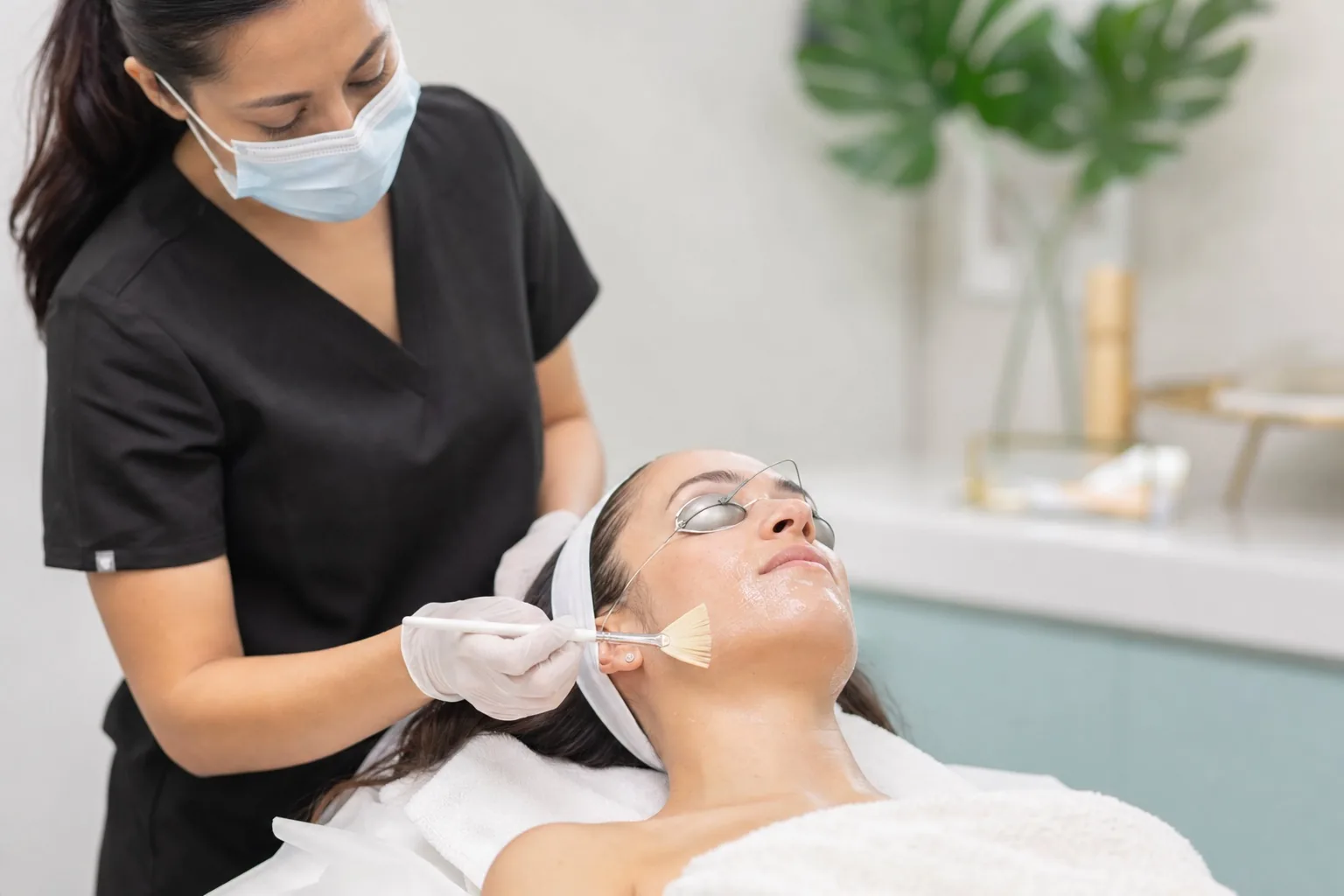
During a chemical peel, a solution applied to the skin causes a controlled injury to its layers, and those layers then peel off. Common agents include glycolic, salicylic and lactic acid, trichloroacetic acid (used in a TCA peel) and, for the deepest peels, carbolic acid, also called phenol. Each chemical penetrates to a different depth; our guide to chemical peel depths covers each level.
How Dermabrasion Removes Skin
Dermabrasion is a surgical procedure. The clinician moves a motorized, hand-held tool with an abrasive wheel, diamond fraise or wire brush across the skin, wearing away the top layers. According to ASPS, the scraping continues until the surgeon reaches the safest level that will make the scar or wrinkle less visible.
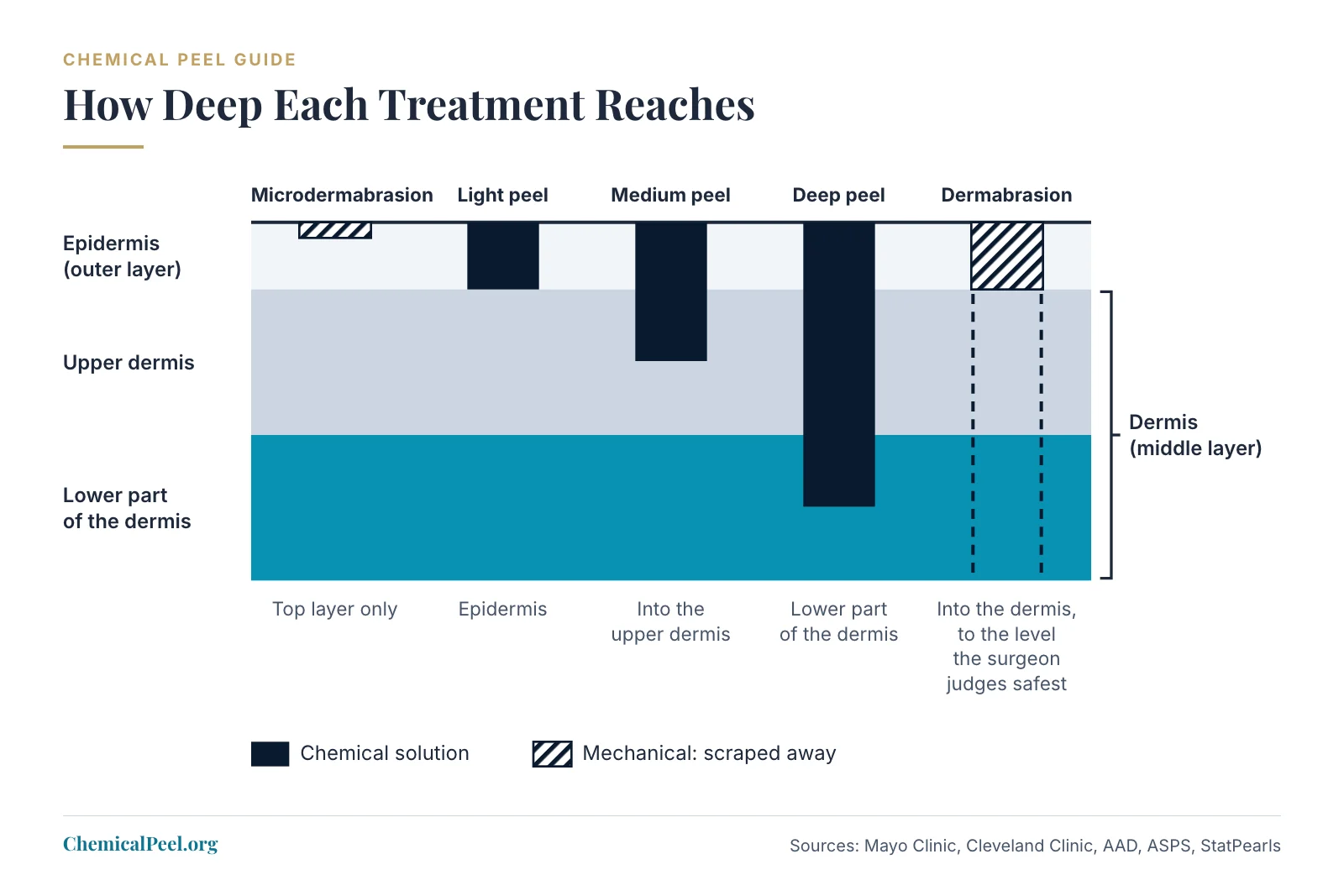
The depths overlap. A light peel removes the epidermis, the outer layer of skin; a medium peel also removes part of the upper dermis, the middle layer; and a deep peel reaches the lower part of that middle layer. The StatPearls clinical reference describes dermabrasion as an injury to both the epidermis and the dermis. Microdermabrasion, a separate and less invasive treatment, treats only the top layer, according to the American Academy of Dermatology (AAD).
Chemical Peel vs Dermabrasion at a Glance
| Factor | Chemical peel | Dermabrasion |
|---|---|---|
| How skin is removed | A chemical solution causes a controlled injury | A spinning wire brush or diamond wheel scrapes the skin |
| Depth | Light: outer layer; medium: into the upper dermis; deep: lower part of the dermis | Into the dermis, to the level the surgeon judges safest |
| Who performs it | Medium and deep peels: usually a dermatologist or plastic surgeon | A dermatologist or surgeon, as a surgical procedure |
| Numbing | Light: pain relief isn't typically needed; medium: you might receive a sedative and painkiller; deep: the AAD says general anesthesia | Local anesthetic, sometimes with relaxing medicine, or general anesthesia |
| Healing time | About 1 to 7 days (light), 7 to 14 days (medium), new skin in about 2 weeks (deep) | New skin usually starts to grow in 7 to 10 days; back at work in about 2 weeks |
| How often | Light: you might have one every two to five weeks, and three to five may be necessary; deep: only once | May need more than one session for deep scars or large areas |
Who Performs Dermabrasion, and Where
The AAD describes dermabrasion as a surgical procedure that dermatologists use, and ASPS says choosing a qualified plastic surgeon and closely following their advice reduces your risks. Mayo Clinic says it is usually done in a medical office or an outpatient clinic, though a large treatment area can mean a hospital stay. A local anesthetic numbs the skin. You may also have medicine to help you relax, or you may be given general anesthesia.
For peels, the AAD advises seeing a dermatologist or dermatologic surgeon and says a deep peel must be performed in a surgical setting under general anesthesia. Mayo Clinic notes that phenol can damage heart muscle; our phenol peel guide covers that procedure.
What Each Treatment Is Used For
Mayo Clinic says dermabrasion can improve:
- Scars caused by acne, surgery or injuries
- Fine wrinkles, especially around the mouth
- Sun-damaged skin, including age spots
- Swelling and discoloration of the nose, called rhinophyma
- Precancerous skin patches
Mayo Clinic matches peels to depth: light peels for fine wrinkles, acne, uneven skin tone and dryness; medium peels for wrinkles, acne scars and uneven skin tone; and a deep peel may be recommended for deeper wrinkles, scars or precancerous growths. See our guides to peels for acne scars and peels for wrinkles.
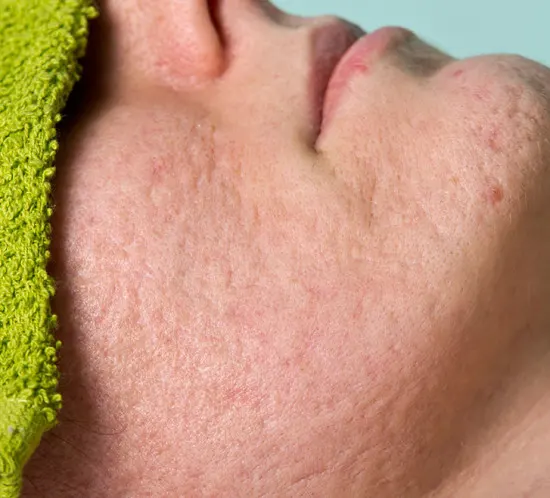
Scar depth is where they part ways. The AAD lists both chemical peels and dermabrasion among treatments for depressed acne scars, but Mayo Clinic states that chemical peels cannot remove deep scars or wrinkles or tighten sagging skin, and ASPS notes that dermabrasion will not remove all scars and flaws or prevent aging. The AAD also lists microneedling and laser treatment for these scars; see chemical peel vs microneedling and chemical peel vs laser.
Recovery: What the Weeks After Look Like
After Dermabrasion
Directly after dermabrasion, ASPS says, the skin is red and swollen and eating and speaking may be difficult; a scab or crust forms as it heals. DermNet says new skin usually takes 7 to 10 days to start growing, and ASPS and Mayo Clinic put the return to work at about two weeks. The new skin stays sensitive and bright pink for several weeks, and Mayo Clinic says skin usually returns to its typical color in about three months. Mayo Clinic advises avoiding chlorinated pools for at least four weeks and protecting the skin from the sun for 6 to 12 months to prevent long-term or permanent color changes, and ASPS says more active sports should be avoided for four to six weeks.
After a Chemical Peel
Mayo Clinic says treated areas take about one to seven days to heal after a light peel and about seven to 14 days after a medium peel, though redness might last for months. After a deep peel, new skin forms within about two weeks, and the AAD describes recuperating at home for 2 to 3 weeks. You might have a light peel every two to five weeks, and three to five peels may be necessary to give you the desired results. A person can have only one deep peel.
Risks and Who Should Wait
Side Effects and Skin Tone
According to ASPS, the most common risk of dermabrasion is a change in skin pigmentation, and permanent darkening may occur in some patients because of sun exposure in the days or months after surgery. Mayo Clinic also lists milia (small white bumps), enlarged pores, rare infection, cold sores in people who have had them before, and scarring if too much skin is removed. Peels can also darken or lighten skin, lead to infection and, rarely, cause scarring; deep phenol peels add a risk of heart, kidney or liver damage.
Mayo Clinic notes that color changes after either treatment, and scarring after dermabrasion, are more common in brown or Black skin, and that color changes can sometimes be permanent. ASPS cautions that Black, Asian and other dark complexions may become permanently discolored or blotchy after a skin-refinishing treatment such as dermabrasion, though for slightly darker skin in limited areas of the face it says a non-chemical approach may be preferred, since dermabrasion is less likely to produce extreme contrasts in skin color. DermNet explains that lighter peels are used in darker skin because of the risk of pigmentation after inflammation.
Reasons to Postpone or Avoid
Mayo Clinic says your clinician may caution against a chemical peel, or certain types of peel, if you have taken the acne medicine isotretinoin in the past six months, and against dermabrasion if you have taken it in the past year; for dermabrasion, the American Society for Dermatologic Surgery (ASDS) lists use within the last six to 12 months. Both Mayo Clinic lists include a personal or family history of keloids and frequent or severe cold sores. For a peel, Mayo Clinic adds pregnancy; for dermabrasion, acne, burn scars and skin damaged by radiation treatments.
For dermabrasion, the ASDS adds an active herpes or other skin infection, a recent facelift or browlift, and a skin, blood or immune disorder that could make healing more difficult. ASPS says most surgeons won't perform dermabrasion during active acne because of a greater risk of infection, and the same may be true after a previous chemical peel. Our guide to who should not get a chemical peel covers the peel list in full.
Warning Signs
After dermabrasion, ASPS says to call your surgeon as soon as possible if the treated area becomes increasingly red, raised and itchy after it has started to heal, since abnormal scars may be beginning to form. Mayo Clinic says to contact your healthcare professional if treated skin gets more discolored, swollen and itchy after it starts healing. DermNet advises telling your doctor about yellow crusting or scabs, which may be the start of an infection, and contacting your doctor immediately about persistent redness in one area. After a peel, the AAD advises contacting your dermatologist if your skin burns, itches or swells.
Dermabrasion Is Not Microdermabrasion
ASPS calls microdermabrasion a less invasive form of dermabrasion, and DermNet says it uses tiny crystals to remove the surface skin layers, with low risk and rapid recovery compared with standard dermabrasion. It removes the uppermost layer of skin with tiny crystals or a diamond-tipped wand and needs no anesthetic, and the AAD says it has no downtime or recovery period and will not treat acne scars. See chemical peel vs microdermabrasion.
What They Cost
ChemicalPeel.org's industry ranges for peels are: superficial peels $100 to $400 per session, medium depth peels about $300 to $1,500 per session, and deep peels $2,500 to $6,000 or more. This guide gives no dermabrasion price; ASPS advises asking your surgeon about all costs involved, since its average cost figure does not include anesthesia, operating room facilities or other related expenses. The chemical peel cost guide has the full breakdown.
Questions to Ask Before You Choose
- How deep would you treat, and what anesthesia would you use?
- When could I return to work, and how long must I avoid the sun?
- How does my skin tone change the risk of color change or scarring?
- Do my medicines or my history of cold sores or keloids mean I should wait?
Our guide to choosing a qualified provider covers what to check. If a light peel series is the better fit, start looking for a clinic with our med spa finder.
Frequently Asked Questions
Is dermabrasion better than a chemical peel for acne scars?
It depends on scar depth. The American Society of Plastic Surgeons says that, in general, chemical peel is used more often to treat fine wrinkles, and dermabrasion and dermaplaning (controlled surgical scraping) for deeper imperfections such as acne scars. Mayo Clinic states that chemical peels cannot remove deep scars. Dermabrasion will not remove all scars either. Mayo Clinic says most people can return to work after two weeks, and ASPS says permanent darkening of the skin may occur in some patients. Scar type, skin tone and recovery time all shape the choice.
How long is the recovery time after dermabrasion?
Mayo Clinic and the American Society of Plastic Surgeons put the return to work at about two weeks. Right after dermabrasion the skin is red and swollen, a crust forms as it heals, and DermNet says new skin usually takes 7 to 10 days to start growing. Mayo Clinic says skin usually returns to its typical color in about three months, and advises avoiding chlorinated pools for at least four weeks and protecting the skin from the sun for 6 to 12 months.
What is the difference between dermabrasion and microdermabrasion?
Dermabrasion is a surgical procedure in which a spinning wire brush or diamond wheel scrapes away the top layers of skin. Mayo Clinic says you will be given a local anesthetic, and you may be given general anesthesia. Mayo Clinic says most people can return to work after two weeks. The American Society of Plastic Surgeons calls microdermabrasion a less invasive form. It removes only the uppermost layer of skin with tiny crystals or a diamond-tipped wand, needs no anesthetic and has no downtime, and the American Academy of Dermatology says it will not treat acne scars.
Do dermatologists recommend chemical peels?
The American Academy of Dermatology says dermatologists use chemical peels to diminish signs of aging and to treat some types of acne and conditions that discolor the skin, and that dermatologists have performed peels for more than 50 years with an excellent safety record. It also warns that results depend largely on the skill of the person performing the peel and advises seeing a dermatologist or dermatologic surgeon.
Will a chemical peel get rid of deep wrinkles?
Mayo Clinic states that chemical peels cannot remove deep scars or wrinkles, and DermNet notes that a medium depth TCA peel has no effect on deep furrows. A doctor might recommend a deep phenol peel for deeper wrinkles, Mayo Clinic says. Your heart rate will be closely monitored, and you won’t need repeat procedures to get the full effect; DermNet says phenol is rarely used for facial peels nowadays because of scarring risk and toxicity. For more severe wrinkles and sagging, Cleveland Clinic points to options such as carbon dioxide laser resurfacing, a face lift or soft tissue filler.
Is it better to get a chemical peel or microneedling?
It depends on the concern and your skin. Microneedling uses tiny needles to puncture the skin so the body produces new collagen, and the American Academy of Dermatology calls it safe for all skin tones and says it is often used along with another treatment, such as chemical peeling, for acne scars. A chemical peel removes skin layers with a solution and is used for fine wrinkles, acne and uneven tone. Darker skin carries a greater risk of darkening after a peel, which is worth raising at a consultation.