Written by the ChemicalPeel.org editorial team. Published April 23, 2026. Updated September 1, 2026.
Clinical review pending. This page has not yet been reviewed by a licensed clinician; read it as patient education, not medical advice. How we review
- Peel depth
- Superficial
- Downtime
- 1 to 3 days
- Best for
- Dull, tired-looking skin, uneven texture and rough patches, fine lines linked to sun exposure, mild hyperpigmentation such as sun spots and post-acne marks, clogged pores with mild non-inflamed breakouts, and dry, flaky skin that no longer responds to moisturizer alone.
- Not for
- A superficial glycolic peel will not lift deep wrinkles, tighten loose skin or resurface significant acne scarring; those concerns call for medium or deep resurfacing or a different procedure. Providers also postpone a glycolic peel during an active cold sore outbreak or skin infection, over sunburn or open irritation, and soon after isotretinoin, prescription exfoliants or recent resurfacing. If you are pregnant or nursing, review any peel plan with your clinician first.
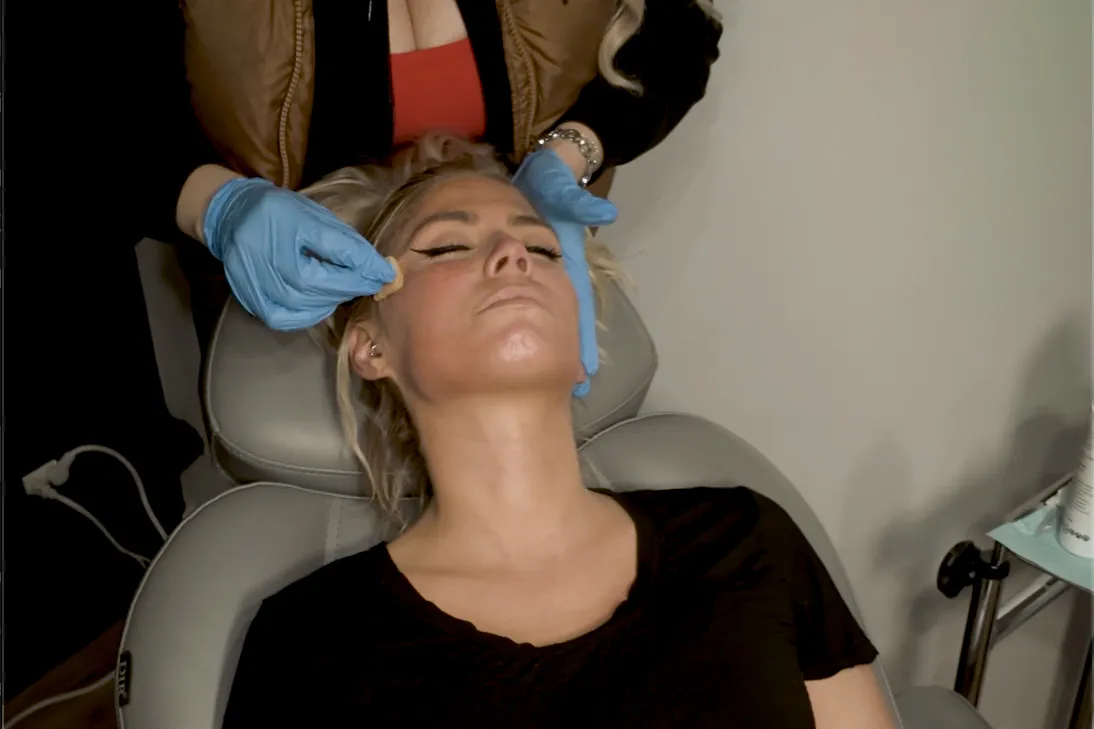
A glycolic acid peel is a professional exfoliating treatment in which a clinician or licensed esthetician applies a controlled concentration of glycolic acid to the skin for a set amount of time, then neutralizes it. It is one of the most widely performed light peels in dermatology offices and medical spas because it refreshes dull skin, softens fine lines, and fades mild discoloration with only minimal downtime.
Where a Glycolic Peel Sits on the Depth Ladder
Chemical peels are grouped by how deeply they work, and a glycolic acid peel sits on the lightest rung. Superficial peels, including glycolic and other AHA peels along with salicylic acid peels, act on the epidermis, the outermost layer, and require little recovery. Medium-depth peels, such as trichloroacetic acid (TCA) alone or combined with Jessner's solution, reach the upper layers of the dermis and involve seven to 14 days of crusting and peeling (Cleveland Clinic). Deep phenol peels reach the mid-reticular dermis and are physician-performed procedures with cardiac monitoring. If you are still comparing options, our overview of chemical peel types and depths walks through every level, and our guide to the stronger medium-depth TCA peel covers the most common step up from glycolic.
Glycolic acid belongs to the alpha hydroxy acid (AHA) family, a group of water-soluble acids found in plants, and it can be sourced from sugarcane. Among the AHAs, glycolic acid has the smallest molecule, which lets it move through the outer layer of skin quickly and evenly. The acid works by loosening the bonds that hold dead cells to the surface of the skin. Once those bonds release, the dull outer layer sheds and fresher cells take its place. Professional glycolic peels typically use concentrations between about 20 and 70 percent. Strength, pH, and time on the skin all determine how deeply the peel acts, which is why higher strengths belong in trained hands.
Glycolic Peel Benefits: What It Treats
The appeal of a glycolic acid peel is the balance it strikes. It produces visible improvement without asking you to hide at home for a week. A glycolic peel, done as a series, may be recommended for:
- Dull, tired-looking skin that needs an overall brightness reset
- Uneven texture and rough patches
- Fine lines, especially early lines linked to sun exposure
- Mild hyperpigmentation, such as sun spots and post-acne marks (for stubborn discoloration, see our guide to chemical peels for hyperpigmentation)
- Clogged pores and mild, non-inflamed breakouts
- Dry, flaky skin that no longer responds well to moisturizer alone
It is equally important to know what a glycolic peel does not do. A superficial peel will not lift deep wrinkles, tighten loose skin, or resurface significant acne scarring. Those concerns call for medium or deep resurfacing, or for a different procedure entirely, which is a conversation to have with a qualified, licensed provider.
Is a Glycolic Peel Safe for Darker Skin Tones?
Superficial glycolic peels, performed at conservative strengths by an experienced provider, are generally considered among the better-tolerated peel options for medium and deep skin tones (Fitzpatrick types IV through VI). The main risk to manage is post-inflammatory hyperpigmentation, since skin that produces more melanin responds to irritation by making pigment. A skilled provider can reduce that risk by starting with lower concentrations, using shorter contact times, building up gradually across a series, and prepping the skin with brightening agents beforehand. Peels can be performed on all skin tones when the peel and technique are matched to the individual, which makes provider selection especially important here.
At-Home Glycolic Acid vs a Professional Peel
Searches for a glycolic acid peel at home usually lead to over-the-counter pads, serums, and masks containing roughly 5 to 10 percent glycolic acid at a higher (gentler) pH. These products are useful for maintaining smoothness between appointments, but they are not the same treatment as a professionally applied 20 to 70 percent peel with controlled timing and neutralization. Stronger acids sold online for self-application are genuinely risky, with chemical burns and lasting discoloration among the documented outcomes. A sensible rule: daily-strength glycolic products at home, true peels with a professional.
Results: Before and After, and How Long They Last
Glycolic acid peel before and after photos usually show a change in brightness, evenness, and light reflection rather than a dramatic structural transformation. After a single peel, most people notice softer, smoother, more luminous skin within a few days. After a full series, the more meaningful changes appear: faded sun spots and post-acne marks, refined texture, and less noticeable fine lines. Because the skin keeps aging and renewing, ask your provider whether and when to repeat a peel once the initial series is complete. For general guidance on how often to schedule any chemical peel, see our peel frequency guide. Consistent sunscreen use is the other half of maintaining results. When you review before and after images, favor providers who show their own patients, with similar skin tones and concerns to yours, rather than stock photography.
How Much Does a Glycolic Acid Peel Cost?
Glycolic acid peels sit at the affordable end of professional skin treatments. As an industry estimate, a single professional glycolic peel runs about $100 to $300 per session in the United States, with some providers charging up to $400, depending on the provider's credentials, your region, and the strength used. Three to five peels may be needed, so budget for the whole series rather than one visit. Superficial glycolic peels are consistently the least expensive tier. Because peels treat cosmetic concerns, insurance does not typically cover them. These figures are industry estimates, not a quote, and ChemicalPeel.org is an education resource rather than a clinic, so confirm pricing directly with a provider. For a closer look at glycolic peel pricing specifically, see our glycolic acid peel cost guide, or for pricing across every peel type, see our chemical peel cost guide.
Glycolic Acid vs Salicylic Acid Peel
The most common fork in the road for a first superficial peel is glycolic acid versus salicylic acid. Both act on the epidermis, but they behave differently and suit different skin.
| Glycolic acid peel | Salicylic acid peel | |
|---|---|---|
| Acid family | Alpha hydroxy acid (AHA), water soluble | Beta hydroxy acid (BHA), oil soluble |
| How it works | Loosens dead surface cells for even exfoliation and brightness | Cuts through oil to exfoliate inside pores |
| Best for | Dullness, fine lines, mild sun damage, uneven tone, dry or normal skin | Oily skin, blackheads, clogged pores, active acne |
| Neutralization | Must be neutralized by the provider | Self-neutralizing |
| Sensation | Tingling to mild stinging | Often milder, brief warmth |
| Downtime | Minimal, light flaking for a few days | Minimal, light flaking for a few days |
Your provider may also combine the two or alternate them across a series, using salicylic acid to clear congested areas and glycolic acid to brighten overall tone. If your primary concern is active breakouts, a salicylic-based plan may come first; if your concern is dullness, tone, and early aging, glycolic acid is the classic choice. A consultation settles the question for your specific skin.
Benefits
- Brightens dull skin. Sheds the dull outer layer so fresher, more luminous skin shows through within days.
- Smooths uneven texture. Softens rough patches and refines texture with each session in a series.
- Softens fine lines. Reduces early lines linked to sun exposure; repeated AHA use is associated with support for collagen activity over time.
- Fades mild hyperpigmentation. Helps fade sun spots and post-acne marks across a series of treatments.
- Clears clogged pores. Loosens the bonds holding dead cells in place, helping with congestion and mild non-inflamed breakouts.
- Minimal downtime. Often called a lunchtime peel: most people return to normal activities immediately, with light flaking for a few days.
What happens during the treatment
- Consultation and skin prep. Your provider reviews your skin type, goals, medications, and history, then may have you pause other exfoliants before the peel so your skin is calm and intact; Cleveland Clinic says not to use any products containing retinoids (such as tretinoin) one to two weeks before treatment, unless your physician tells you differently.
- Cleansing and degreasing. On treatment day, the skin is cleansed and prepped with a solution that removes surface oil so the acid applies evenly.
- Application. The glycolic acid solution is brushed or wiped onto the skin in even passes. A mild tingling or warm, itchy sensation is normal and expected.
- Timed monitoring. The provider watches the skin closely, usually for two to ten minutes depending on strength, looking for uniform light pinkness rather than the frosting seen with deeper peels.
- Neutralization. Unlike self-neutralizing acids, glycolic acid keeps working until it is stopped, so the provider applies a neutralizing solution and rinses the skin thoroughly.
- Post-peel care. A soothing moisturizer and broad-spectrum sunscreen are applied, and you leave with simple aftercare instructions. Three to five peels may be needed, and they may be repeated every two to five weeks.
Who is a candidate
Most healthy adults with realistic expectations are candidates. Superficial glycolic peels at conservative strengths, performed by an experienced provider, are generally considered among the better-tolerated peel options for medium and deep skin tones (Fitzpatrick types IV through VI); the main risk to manage there is post-inflammatory hyperpigmentation, so skilled providers start with lower concentrations and shorter contact times and build up gradually across a series.
Risks and contraindications
Side effects are usually mild and short lived: temporary redness, tightness, light flaking, and extra sun sensitivity for several days. Less commonly, a peel that is too strong for the skin, left on too long, or layered over a damaged barrier can cause irritation, prolonged redness, or post-inflammatory hyperpigmentation, which is darkening rather than brightening of the treated skin. Choosing an experienced, properly licensed provider is the single best way to keep a light peel light.
Preparation
Your provider reviews your skin type, goals, medications and history at the consultation, and may ask you to pause other exfoliants before the peel so the skin is calm and intact, and Cleveland Clinic says not to use any products containing retinoids (such as tretinoin) one to two weeks before treatment, unless your physician tells you differently. Arrive with clean skin and no active sunburn, cold sore or open irritation in the treatment area, and tell your provider about any isotretinoin use, recent resurfacing procedures, pregnancy or nursing.
Downtime and recovery
- Day of treatment. Skin may look lightly pink, like a mild sunburn, and feel tight. Most people return to normal activities immediately, skipping makeup for the rest of the day if their provider advises it.
- Days 1 to 3. Expect mild dryness, tightness, and possible light flaking, for example around the mouth and chin. Use a gentle cleanser, a bland moisturizer, and sunscreen every morning. Do not pick or peel flaking skin.
- Days 3 to 7. Any flaking finishes and the fresh, brighter surface shows through. Hold off on retinoids, scrubs, and other exfoliants until the skin feels completely normal, usually about a week.
- Ongoing. Daily broad-spectrum sunscreen is essential after any peel, because newly revealed skin is more vulnerable to UV damage, and sun exposure can undo the pigment improvements you just paid for.
Aftercare
Use a gentle cleanser, a bland moisturizer and broad-spectrum sunscreen every morning. Do not pick or peel flaking skin. Hold off on retinoids, scrubs and other exfoliants until the skin feels completely normal, usually about a week. Daily sunscreen matters most after a peel because newly revealed skin is more vulnerable to UV damage, and sun exposure can undo pigment improvements. For general chemical peel aftercare guidance across peel types, see our chemical peel aftercare guide.
Frequently Asked Questions
What does a glycolic acid peel do?
A glycolic acid peel exfoliates the outermost layer of the skin, loosening the bonds that hold dead cells to the surface so brighter, smoother skin can show through. Over a series of treatments it softens fine lines, fades mild dark spots and post-acne marks, refines texture, and gives the complexion a more even, luminous look.
How often can you get a glycolic acid peel?
A glycolic peel may be repeated every two to five weeks, and three to five treatments may be needed; ask your provider whether and when to repeat a peel after that. Spacing matters because the skin needs time to finish renewing between sessions; peeling too frequently can irritate the skin instead of improving it.
What do glycolic acid peel results look like?
Expect brighter, smoother, more even-toned skin rather than a dramatic transformation. After one peel, skin typically looks fresher within a few days. After a full series, before and after photos can show faded sun spots, softer fine lines, and refined texture. Results build gradually; wear sunscreen every day to help maintain results, and ask your provider whether and when to repeat a peel.
Is a glycolic acid peel safe for dark skin?
Superficial glycolic peels at conservative strengths are generally considered among the better-tolerated peel options for darker skin tones when performed by an experienced provider. The key risk is post-inflammatory hyperpigmentation, so providers start low, keep contact times short, and build up gradually. Choosing a provider experienced with skin of color is essential.
Glycolic acid vs salicylic acid peel, which is better?
Neither is better overall; they suit different skin. Glycolic acid, a water-soluble AHA, is the stronger choice for dullness, fine lines, mild sun damage, and uneven tone. Salicylic acid, an oil-soluble BHA, penetrates pores and is usually preferred for oily, congested, or acne-prone skin. Many providers alternate or combine them.
Is there downtime after a glycolic peel?
Downtime is minimal for most people. Expect mild redness and tightness the day of treatment and possible light flaking for two to three days, and most people return to normal activities immediately. Plan on gentle skincare, no picking, and strict daily sunscreen for at least a week afterward. Contact your provider if you notice unusual blistering, intense pain, or a reaction that does not improve within a few days.