Written by the ChemicalPeel.org editorial team. Published July 22, 2026. Updated September 2, 2026.
Clinical review pending. This page has not yet been reviewed by a licensed clinician; read it as patient education, not medical advice. How we review
A salicylic acid peel is a superficial chemical peel that uses beta hydroxy acid (BHA) to exfoliate the outermost layer of skin and dissolve the oil and debris that clog pores. It is the go-to professional peel for acne-prone and oily skin because salicylic acid is oil-soluble, which lets it work inside the pore where breakouts begin. It is also one of the gentlest peels a clinician can perform, with a few days of light flaking rather than the dramatic shedding people picture when they hear the word peel. This guide explains what a salicylic acid peel is, what it treats, how the appointment works, who makes a good candidate, what recovery and results look like, what it costs, and how it compares with its closest sibling, the glycolic acid peel.
What Is a Salicylic Acid Peel?
A salicylic acid peel is a light chemical peel in which a clinician applies a solution of salicylic acid, which the IJDVL guidelines list at 20 to 30 percent among very superficial peels, to loosen the bonds between dead surface cells and clear buildup from inside the pores. Salicylic acid is a beta hydroxy acid derived from willow bark, and it is chemically related to aspirin, which gives it a mild anti-inflammatory effect that most other peel acids do not have. That combination of exfoliating, pore-clearing, and calming action is why dermatology practices and medical spas reach for it so often when the concern is acne, blackheads, or excess oil.
The defining trait of a BHA peel is solubility. Alpha hydroxy acids such as glycolic acid dissolve in water, so they work mainly at the skin surface. Salicylic acid dissolves in oil, so it can travel down into the sebum-filled pore lining and break up the plugs of oil and dead cells (comedones) that become blackheads and pimples. In dermatology terms it is both keratolytic, meaning it loosens dead surface cells, and comedolytic, meaning it helps clear and prevent clogged pores.
Where It Sits on the Peel Depth Ladder
Chemical peels are grouped by how deeply they work. Superficial peels, including salicylic acid and glycolic acid, treat only the epidermis, the outermost layer, and need little recovery time. Medium-depth peels such as TCA, alone or combined with Jessner’s solution, reach the upper dermis and involve seven to 14 days of crusting and peeling (Cleveland Clinic). Deep phenol peels reach the mid-reticular dermis and are once-in-a-career procedures performed by physicians with cardiac monitoring. A salicylic acid peel sits firmly at the gentle end of that ladder, which makes it a repeatable, low-commitment treatment rather than a one-time event. If you are still mapping your options, our overview of chemical peel types walks through every depth in plain language.
What a Salicylic Acid Peel Treats
Providers choose a salicylic acid peel when the goal is clearer, calmer, less congested skin. It can be used to address:
- Active acne, including whiteheads, blackheads, and inflamed breakouts on the face, chest, or back
- Clogged pores and the rough, congested texture that comes with oily skin
- Enlarged-looking pores, which appear smaller once the debris stretching them is cleared
- Post-inflammatory hyperpigmentation, the dark marks that linger after blemishes heal
- Excess oil production, since regular peels help keep sebum from accumulating
- Mild sun damage and dullness, as a secondary benefit of steady surface exfoliation
Because acne is the headline use, a salicylic acid peel is usually one part of a larger plan rather than a standalone fix. The American Academy of Dermatology notes that peels for acne work best alongside a consistent daily routine and, when needed, prescription treatment. For a full picture of how peels fit into breakout care, see our guide to chemical peels for acne.
How the Procedure Works
A professional salicylic acid peel is a quick, well-tolerated appointment, often finished within thirty minutes. Here is what a typical session looks like:
- Consultation and preparation. Your provider reviews your skin, medications, and history, and may ask you to pause other exfoliants beforehand, and Cleveland Clinic says not to use any products containing retinoids (such as tretinoin) one to two weeks before treatment, unless your physician tells you differently.
- Cleansing and degreasing. The skin is cleansed and prepped with a solution that removes surface oil, which helps the acid apply uniformly.
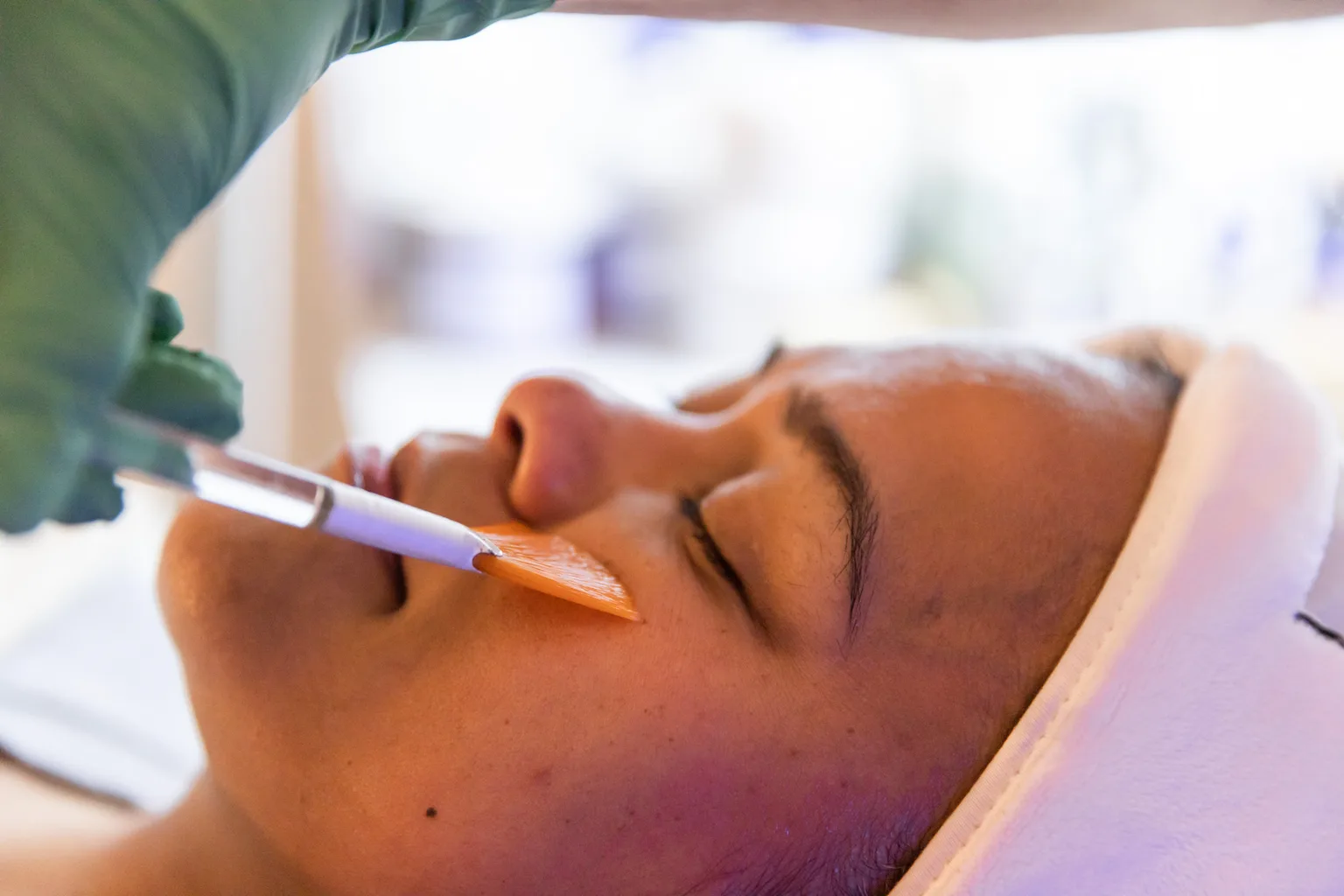
- Application. The clinician applies the salicylic acid solution with gauze or a brush in one or more thin layers. You will feel tingling or mild stinging that typically fades within a few minutes.
- Pseudo-frost. A fine white film often appears on the skin. This is not the true frosting seen in deeper peels; it is simply salicylic acid crystallizing on the surface as the solution dries, and it signals even coverage.
- Completion. Salicylic acid is self-neutralizing, so after the intended contact time the provider removes any residue, then applies a soothing moisturizer and broad-spectrum sunscreen.
- Series scheduling. Because superficial peels work gradually, three to five sessions may be needed, and they may be repeated every two to five weeks; ask your provider whether and when to repeat a peel after that.
Who Is a Candidate? Safety and Side Effects
Salicylic acid peels have one of the friendliest safety profiles in the peel family, but candidacy still matters. The ideal candidate has oily, acne-prone, or congestion-prone skin and realistic expectations about gradual improvement over a series. A few groups should avoid or postpone treatment: anyone with an aspirin or salicylate allergy, anyone with an active skin infection, cold sore outbreak, or open lesions in the treatment area, and anyone who has recently taken isotretinoin, which requires a provider-determined waiting period. If you are pregnant or nursing, tell your provider; a 2024 review lists pregnancy and breastfeeding among absolute contraindications to chemical peeling, and your own physician’s guidance comes first.
Side effects are usually mild and short-lived: temporary redness, tightness, dryness, and a few days of light flaking. Dark spots can look slightly darker for a few days before they lift. Salicylate toxicity is a documented but rare risk tied to treating very large areas of skin at once, which is one more reason professional peels belong in the hands of a trained, licensed clinician who controls the concentration, coverage, and timing.
Is It Safe for Darker Skin Tones?
Salicylic acid is widely considered one of the better peel choices for deeper skin tones, including Fitzpatrick types IV through VI, because it is gentle, self-limiting, and less likely than stronger peels to trigger pigment problems when performed correctly. The main risk in melanin-rich skin is post-inflammatory hyperpigmentation from over-aggressive treatment, so experience matters. Look for a provider who treats skin of color regularly, starts conservatively, and builds intensity across the series.
Recovery and Aftercare, Day by Day
Downtime after a salicylic acid peel is minimal, and most people return to normal activities immediately. A typical course looks like this:
- Day of treatment. Skin may look slightly pink and feel tight, similar to mild sunburn. Makeup is usually fine the next day if your provider agrees.
- Days 1 to 3. Expect dryness and, for many people, light flaking around the nose, chin, and any congested areas. Moisturize gently and do not pick or peel flakes by hand.
- Days 3 to 5. Flaking tapers off and fresher, smoother skin shows through. Some people never visibly peel at all, which does not mean the treatment failed; the exfoliation still happened at the microscopic level.
- Week 1 and beyond. Skin looks clearer and more even. Daily broad-spectrum sunscreen is essential, since freshly exfoliated skin is more sensitive to UV damage.
Skip retinoids, scrubs, and other exfoliants until your provider clears them, usually within about a week. For a deeper look at what healing skin does after any peel, see our recovery and peeling timeline.
Results: Before and After Expectations
Salicylic acid peel before and after photos usually show the same pattern: skin that looks clearer, brighter, and less oily, with fewer blackheads and softer-looking pores. After a single session, the change is real but subtle, mostly smoothness and glow. The meaningful transformation, fewer active breakouts and visibly faded dark marks, builds over a series: three to five peels may be needed, and they may be repeated every two to five weeks. Results vary from person to person based on skin type, acne severity, home routine, and sun habits; to maintain results, you can repeat light peels, so ask your provider how often. When you evaluate a provider, ask to see before and after photos of their own patients with skin similar to yours rather than relying on stock imagery.
How Much Does a Salicylic Acid Peel Cost?
A salicylic acid peel is one of the most affordable professional peels. As a reference point, published averages that span every peel depth run much higher, because that figure is pulled upward by deep phenol procedures. As an industry estimate, superficial peels such as salicylic acid run roughly $100 to $400 per session in the United States. Prices vary with geography, provider credentials, and whether the peel is combined with other treatments. These figures are industry estimates, not a quote; ChemicalPeel.org is an education resource, not a clinic, so confirm pricing directly with a provider. For a side-by-side look at what every peel type costs, see our chemical peel cost guide.
Salicylic Acid Peel vs Glycolic Acid Peel
These two superficial peels are the most commonly compared, and the right choice comes down to skin type and goal. Salicylic acid is the oil-soluble BHA that works inside pores; glycolic acid is the water-soluble AHA that works at the surface. Here is how they line up:
| Comparison factor | Salicylic acid peel (BHA) | Glycolic acid peel (AHA) |
|---|---|---|
| Solubility | Oil-soluble, penetrates into pores | Water-soluble, acts on the surface |
| Best for | Acne, blackheads, oily and congested skin | Dullness, uneven tone, fine lines, dry or sun-damaged skin |
| Skin types | Oily and acne-prone; well tolerated in deeper skin tones | Normal to dry; may sting more on sensitive skin |
| Neutralization | Self-neutralizing | Must be neutralized or rinsed by the clinician |
| Bonus effect | Anti-inflammatory, calms red breakouts | Hydrating effect, supports surface renewal |
| Downtime | Minimal, light flaking for a few days | Minimal, mild redness and flaking |
Your provider may alternate the two acids or blend them across a treatment plan, using salicylic sessions to control breakouts and glycolic sessions to brighten tone. If your main concerns are texture, tone, or early sun damage rather than clogged pores, start with our glycolic acid peel guide and compare from there.
Frequently Asked Questions
What is a salicylic acid peel?
A salicylic acid peel is a superficial chemical peel that uses salicylic acid, a beta hydroxy acid (BHA), to exfoliate the outer layer of skin and clear oil and debris from inside the pores. It is one of the mildest professional peels, with light flaking rather than dramatic peeling, and it is best known for treating acne and oily skin.
What does a salicylic acid peel do?
A salicylic acid peel unclogs pores, reduces blackheads and breakouts, smooths rough texture, and helps fade the dark marks acne leaves behind. Because salicylic acid is oil-soluble, it works inside the pore lining where acne starts, and it also calms redness through its aspirin-related, anti-inflammatory chemistry.
Is a salicylic acid peel good for acne?
Yes. A salicylic acid peel is one of the most widely used professional peels for acne because it dissolves the oil and dead-cell buildup that clogs pores. Three to five peels may be needed, alongside a daily acne routine, since the American Academy of Dermatology notes that peels work best as part of a broader treatment plan.
Salicylic acid vs glycolic acid peel, which is better?
Neither is better overall; they suit different skin. Salicylic acid is oil-soluble and reaches inside pores, so it is usually the stronger choice for oily, acne-prone, or blackhead-prone skin. Glycolic acid is water-soluble and works at the surface, so it often suits dry or sun-damaged skin focused on tone and fine lines. A provider can combine or alternate them.
What do salicylic acid peel before and after results look like?
After one peel, skin typically looks clearer, smoother, and less oily, with smaller-looking pores. Meaningful before and after change in active acne and dark marks can take a series: three to five peels may be needed, and they may be repeated every two to five weeks. Results vary by person, and photos from your own provider are the most realistic reference.
Can you do a salicylic acid peel at home?
Only at low, over-the-counter strengths. Leave-on products with 0.5 to 2 percent salicylic acid are designed for home use. The IJDVL guidelines list salicylic acid at 20 to 30 percent among very superficial peels, and at that strength the application, timing, and aftercare need a trained, licensed clinician to keep the treatment safe and even.
Medical Disclaimer
This page is provided by ChemicalPeel.org for patient education and is not medical advice. Individual results vary, and the information here does not replace a consultation with a qualified provider. Always discuss your medical history and treatment options with a licensed clinician before pursuing any chemical peel.
Ready to Take the Next Step?
A salicylic acid peel is a gentle, proven starting point for clearer skin, and the results you see will depend most on the skill of the person performing it. Find a qualified provider near you to discuss whether a BHA peel fits your skin, or keep researching and compare all chemical peel types to see the full depth ladder before you book a consultation.