Written by the ChemicalPeel.org editorial team. Published September 25, 2026.
Clinical review pending. This page has not yet been reviewed by a licensed clinician; read it as patient education, not medical advice. How we review
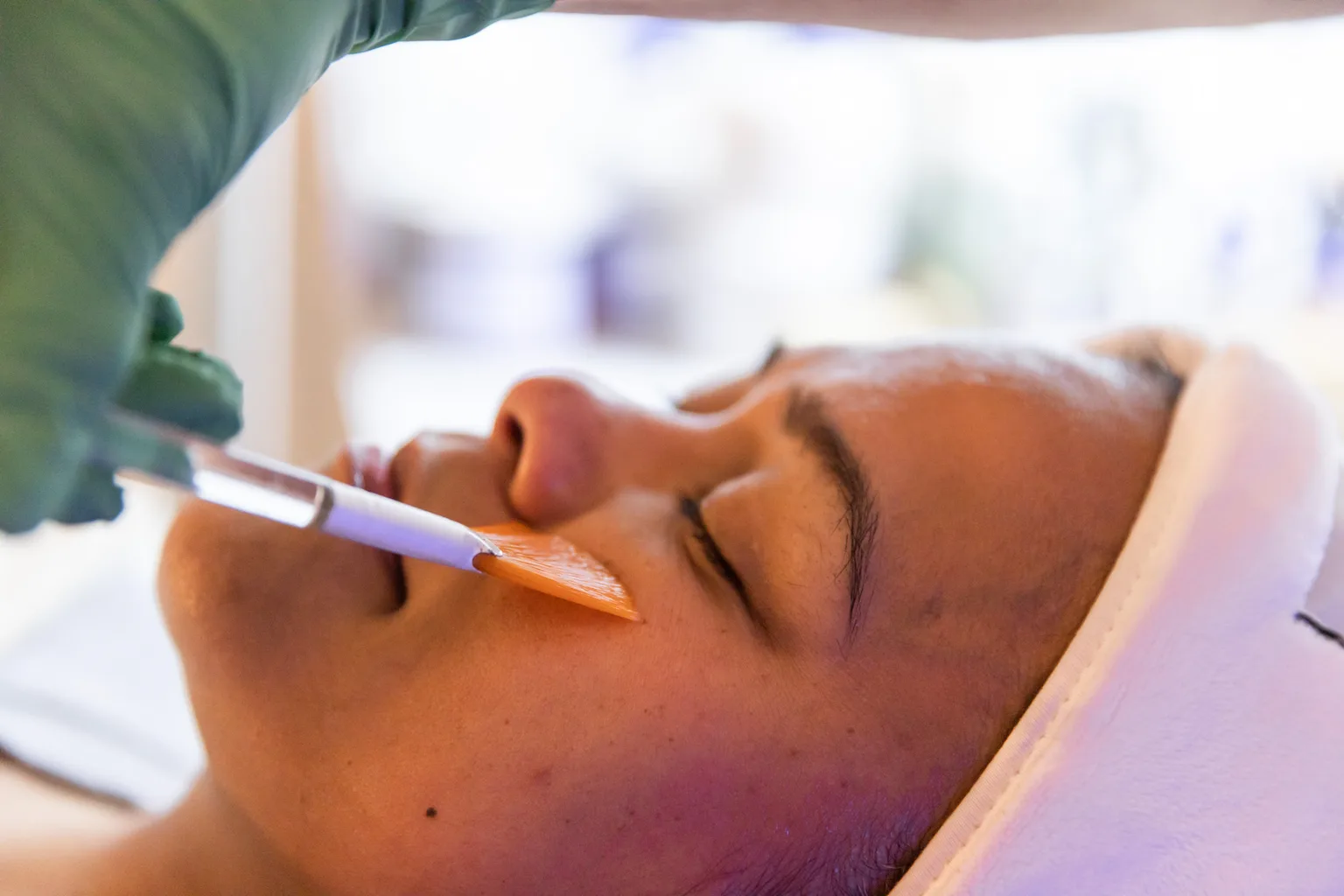
An alpha hydroxy acid peel is a professional chemical peel built around one of the water-soluble acids in the AHA family, most often glycolic, lactic or mandelic acid. The acid loosens the bonds holding dead cells to the surface of the skin, so the outer layer sheds more evenly. That is why AHA peels are used to smooth rough texture, brighten dull skin, soften very fine lines and fade surface pigment. AHA peels are superficial peels, meaning they work within the epidermis and stop before the deeper layers of skin, which keeps recovery short. This guide compares the three main AHAs used in professional peels, explains how the related alpha keto acid pyruvic acid and the beta hydroxy acid salicylic acid fit alongside them, and covers who an AHA peel suits.
What an Alpha Hydroxy Acid Peel Does to Skin
Alpha hydroxy acids work by interfering with the bonds between corneocytes, the flattened dead cells that make up the outermost layer of skin. Loosening that cohesion lets the surface shed more readily instead of building up as dull, uneven texture. AHAs are water-soluble, so they act mainly at the surface rather than traveling down into oil-filled pores, which is the key difference from the oil-soluble beta hydroxy acid salicylic acid, covered further down.
In a professional peel, that surface-level action places AHAs in the superficial category of chemical peels, alongside salicylic acid and single-coat Jessner's solution. Superficial peels reach the epidermis only and stop short of the dermis, which is why recovery is measured in hours to a couple of days rather than a week or more. Our guide to chemical peel depths explained maps every depth category if you want the fuller picture, and our peel types hub lists every acid and branded peel this site covers.
The Main AHAs Used in Peels
Three alpha hydroxy acids account for most professional AHA peels, and they are not interchangeable. Their molecules differ in size, and that difference changes how quickly and how evenly each one moves through the outer skin layer.
Glycolic acid has the smallest molecule of the group, at roughly 70 to 76 daltons. Its small size lets it move through the outer skin layer quickly, and professional glycolic peels are formulated across a wide strength range, reported from about 20 percent up to 70 percent depending on the person's skin sensitivity and how gradually a provider wants to build up strength. Our glycolic acid peel guide covers it in full.
Lactic acid is a larger molecule, at about 90 daltons, so it moves through the skin more slowly than glycolic acid. Lactic acid is also one of the alpha hydroxy acids that functions as a humectant, a substance that draws water into the outer skin layer, which is part of why a lactic acid peel is often chosen for drier or more reactive skin. See our lactic acid peel guide.
Mandelic acid is the largest of the three at about 152 daltons, roughly double the size of glycolic acid's molecule. Larger AHA molecules move through the outer skin layer more slowly and are generally considered less likely to irritate the skin than smaller ones, which is why mandelic acid is frequently the AHA a provider reaches for first on reactive or richly pigmented skin. Read more in our mandelic acid peel guide.
A handful of other acids, including citric acid, malic acid and tartaric acid, also belong to the AHA family, though they show up far less often on professional peel menus than glycolic, lactic and mandelic acid.
Comparing the Main AHAs
| Acid | Relative molecule size | Penetration and gentleness | Often chosen for |
|---|---|---|---|
| Glycolic acid | Smallest, about 70 to 76 daltons | Fastest penetration, most likely of the three to irritate | Dullness, uneven texture, fine lines, mild pigment |
| Lactic acid | Medium, about 90 daltons | Slower than glycolic, humectant, hydrating | Dry, dehydrated or reactive skin |
| Mandelic acid | Largest, about 152 daltons | Slowest, spreads evenly, less irritating | Sensitive skin, richly pigmented skin, mild acne |
Where Pyruvic Acid Fits
Pyruvic acid is sometimes grouped with the AHAs on a treatment menu, but it belongs to a different chemical family. It is an alpha keto acid, not an alpha hydroxy acid, a distinction our pyruvic acid peel guide also makes. Professional pyruvic acid peels have been studied at concentrations from about 40 to 50 percent, and one study of a 50 percent peel ran four sessions spaced two weeks apart. Confirm with your provider which family a peel labeled simply "AHA peel" actually uses before comparing it against the acids in this guide.
AHA Versus BHA: Salicylic Acid
The alpha hydroxy acids are water-soluble. Salicylic acid, the beta hydroxy acid used in professional peels, is lipid-soluble instead, which lets it travel down into oil-filled pores rather than staying mostly on the surface. That is the practical reason providers reach for a salicylic acid peel for oily or acne-prone skin and clogged pores, and reach for an AHA when the concern is dullness, dryness or surface tone rather than congestion.
Salicylic acid comes with a caution that does not apply to the AHAs: if you have a known aspirin or salicylate allergy, tell your provider before a salicylic acid peel. If oiliness and breakouts are your main concern but salicylic acid is not an option, an AHA, particularly one of the gentler, larger-molecule options, is worth discussing with a provider as an alternative.
In-Office AHA Peels Versus Daily AHA Skin Care and At-Home Peels
The AHA in your nightly serum and the AHA in a professional peel are the same molecule used very differently. The FDA reports that the Cosmetic Ingredient Review Expert Panel, the cosmetics industry's own safety review body, judged consumer products containing glycolic or lactic acid safe when the AHA concentration is 10 percent or less, the final product has a pH of 3.5 or greater, and the product either protects skin from increased sun sensitivity or tells users to wear daily sun protection. Professional peels are formulated well above that ceiling, sometimes with glycolic acid strengths reported as high as 70 percent, which is why they are applied by a trained provider rather than sold for daily use.
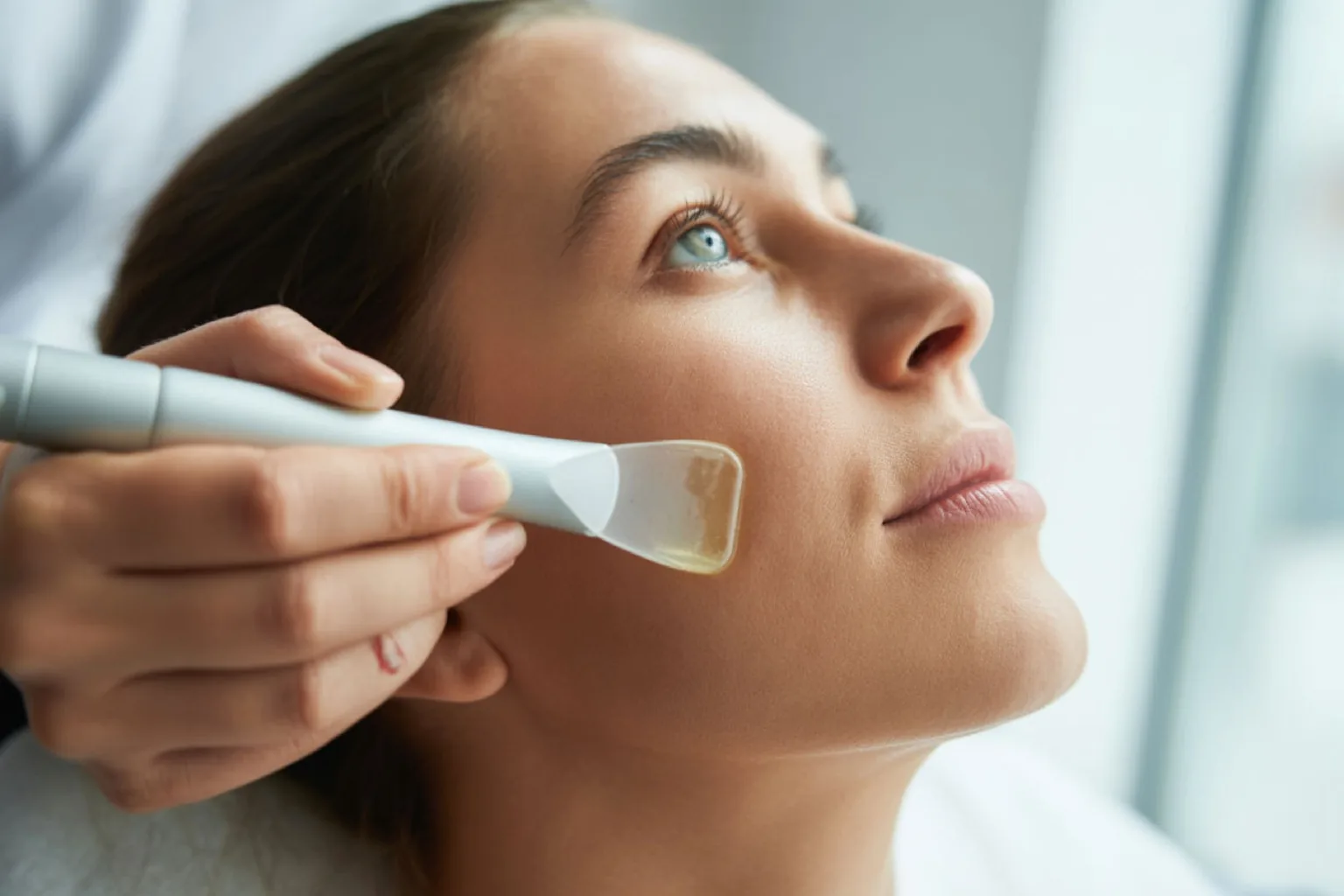
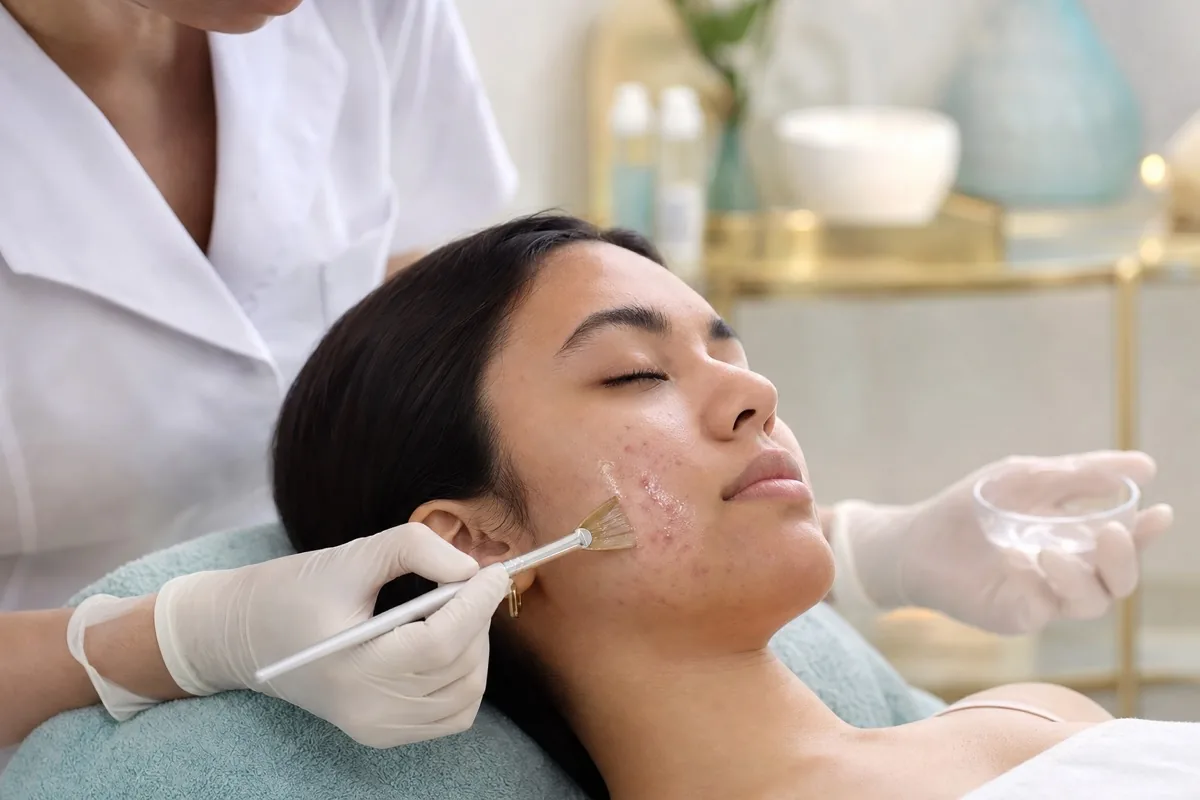
That strength gap is also why an in-office AHA peel is timed and then washed off or neutralized, rather than left on the skin. A provider applies the solution, watches the clock and your skin's response, and removes it at a set point, typically a few minutes, instead of letting it sit indefinitely the way a leave-on home product does. Skipping that step, or trying to replicate professional strength with an unsupervised at-home peel kit, removes the safeguard that keeps a superficial peel superficial. Our comparison of at-home versus professional chemical peels goes further into where that line sits.
Who an AHA Peel Suits, and Who Should Wait
AHA peels suit people who want to address dullness, rough texture, mild sun damage, fine lines or surface pigment without significant downtime, and who are willing to keep up daily sunscreen afterward. A single session is rarely the whole plan: professional AHA peels are commonly repeated every one to a few weeks, with results building gradually across a series rather than a single visit.
Postpone an AHA peel if you have an active cold sore or skin infection in the treatment area, and tell your provider first about any history of keloid scarring. If you are pregnant or breastfeeding, most providers postpone elective chemical peels, AHA peels included; our guide to chemical peels while pregnant covers the low-strength skincare acids some providers discuss case by case. Mention any isotretinoin use at consultation too. A consensus of dermatologic surgeons found insufficient evidence to justify delaying superficial chemical peels for people currently or recently taking isotretinoin, but the timing is still your provider's call.
Deeper skin tones deserve a specific note. Any peel that provokes inflammation, however mild, can trigger post-inflammatory hyperpigmentation, and that risk is higher in Fitzpatrick skin types IV through VI. This is one reason lighter, more conservative peels, including AHAs, are frequently the starting point in deeper skin rather than something to avoid, alongside a provider experienced with your skin type. Our guides to chemical peels for hyperpigmentation and chemical peels for acne go further on those specific concerns.
Sun sensitivity applies to every AHA, not only the strongest ones. In studies the FDA describes, four weeks of daily AHA skin care made skin more sensitive to ultraviolet light, an effect that had faded one week after use stopped, and the FDA recommends that AHA cosmetics carry a sunburn alert. After a professional peel, follow your provider's sun-protection instructions, including daily broad-spectrum sunscreen, protective clothing and limiting sun exposure. Our chemical peel aftercare guide and notes on how often to get a chemical peel cover the rest of the routine between sessions.
What an AHA Peel Costs
AHA peels are priced as superficial peels, typically about $100 to $400 per session in the United States, with a series of several sessions usually the realistic budget rather than a single visit. Our chemical peel cost guide and glycolic acid peel cost guide break pricing down further. ChemicalPeel.org is an education resource, not a clinic, so confirm current pricing with a practice.
Finding a Provider
Because peel strength, pH and timing all affect how deep an AHA peel actually goes, results and safety depend heavily on the provider applying it. You can find a qualified provider near you to discuss which AHA, or which alternative, fits your skin.
Medical Disclaimer
This page is provided by ChemicalPeel.org for patient education and is not medical advice. Individual results vary, and nothing here replaces a consultation with a qualified, licensed clinician who has examined your skin and reviewed your medical history.
Frequently Asked Questions
What is an alpha hydroxy acid peel?
An alpha hydroxy acid peel is a professional chemical peel that uses a water-soluble AHA, most often glycolic, lactic or mandelic acid, to loosen the bonds between dead surface skin cells so they shed more evenly. It works within the epidermis, which places it in the superficial category of chemical peels, and it is used for dullness, rough texture, fine lines and surface pigment.
What is the difference between glycolic, lactic and mandelic acid peels?
The main difference is molecule size. Glycolic acid has the smallest molecule and penetrates the outer skin layer fastest, and it is the most likely of the three to irritate. Lactic acid is a larger molecule that penetrates more slowly and also acts as a humectant, drawing water into the skin. Mandelic acid has the largest molecule of the three, penetrates slowest and is generally considered the gentlest option for sensitive or richly pigmented skin.
Is pyruvic acid an alpha hydroxy acid?
No. Pyruvic acid is an alpha keto acid, a distinct chemical family from the alpha hydroxy acids glycolic, lactic and mandelic acid, even though it is sometimes offered alongside AHA peels on a treatment menu. Professional pyruvic acid peels have been studied at concentrations of roughly 40 to 50 percent.
What is the difference between an AHA and a BHA peel?
Alpha hydroxy acids are water-soluble and work mainly at the surface of the skin. Salicylic acid, the beta hydroxy acid used in peels, is lipid-soluble, which lets it travel into oil-filled pores. That makes salicylic acid peels a common choice for oily or acne-prone skin, while AHA peels are chosen for dullness, dryness and surface tone.
Can an at-home AHA product replace a professional AHA peel?
Not for the same effect. An industry safety panel judged consumer glycolic and lactic acid products safe at 10 percent or less with a pH of 3.5 or greater, while professional peels use far higher concentrations applied for a timed interval and then washed off or neutralized by a trained provider. That gap in strength and technique is why professional peels are not safely replicated at home.
Who should avoid or postpone an alpha hydroxy acid peel?
Postpone an AHA peel if you have an active cold sore or skin infection, or if you are pregnant or breastfeeding, and tell your provider about any history of keloid scarring or any isotretinoin use. Deeper skin tones carry a higher risk of post-inflammatory hyperpigmentation from any peel, so a conservative approach and an experienced provider matter. AHA use can increase sun sensitivity, so follow your provider on sun protection and use daily broad-spectrum sunscreen.