Written by the ChemicalPeel.org editorial team. Published July 21, 2026. Updated September 2, 2026.
Medically reviewed on by Stefanie Drozd, MSN-APRN. How we review · Our reviewers
Our reviewers work for or own Express Med Spa and Catara Med Spa, clinics marketed by this site's publisher. That is a commercial conflict of interest and it is worth weighing when you read a review here.
A chemical peel for acne is a clinician-applied treatment that uses an exfoliating acid solution, such as salicylic or glycolic acid, to clear clogged pores, calm breakouts, and fade the marks and shallow scars acne leaves behind. When a peel is matched correctly to your skin, it can address active breakouts, discoloration, and texture within the same treatment plan. This guide explains which peel ingredients actually help acne, what happens during an appointment, what recovery and costs look like, and when a peel is the wrong tool, so you can walk into a consultation knowing the right questions to ask.
What Is a Chemical Peel for Acne?
A chemical peel for acne is a controlled application of an acid solution that dissolves the bonds holding dead skin cells together, clears oil and debris from inside the pores, and triggers the skin to regenerate a fresher surface. That matters because acne begins when pores clog with oil and dead cells, and peels remove exactly that material. Several peel acids, particularly salicylic acid, also reduce inflammation and excess oil, calming existing breakouts, while the faster cell turnover a peel creates fades discoloration and softens the shallow texture change old breakouts leave behind.
It helps to separate the three problems people mean when they search for acne peels, because each responds differently. Active breakouts respond to superficial peels done in a series. Post-inflammatory marks, the flat red or brown spots left after a pimple heals, are discoloration rather than true scars and also respond to superficial peels over several sessions. True atrophic scars, the depressed ice pick, boxcar, and rolling scars that change the skin’s texture, need deeper resurfacing, usually a medium depth peel or focal physician techniques.
Where Acne Peels Sit on the Peel Depth Ladder
Chemical peels are grouped by how deeply they work. Superficial peels, including salicylic and glycolic acid, treat only the epidermis and involve minimal visible peeling. Medium depth peels, such as trichloroacetic acid (TCA) alone or combined with Jessner’s solution, reach the upper dermis and bring seven to 14 days of crusting and peeling (Cleveland Clinic). Deep phenol peels reach the mid-reticular dermis, require a physician and cardiac monitoring, and are rarely part of acne care. Most acne treatment lives at the superficial end of the ladder, with medium peels stepping in for established scarring. If you are new to peels entirely, start with our overview of chemical peel types to see how the depths compare.
The Best Peel Ingredients for Acne
These are the ingredients providers reach for in acne treatment plans, and why:
- Salicylic acid. A beta hydroxy acid and the workhorse of acne peels. Because it is oil soluble, it travels into the pore itself, dissolving the oil and debris where breakouts start, and it calms redness and inflammation. It is usually the first choice for active, oily, congested skin.
- Glycolic acid. An alpha hydroxy acid derived from sugar cane. It is water soluble, so it works at the surface, smoothing texture, brightening dullness, and fading dark marks. A professional glycolic acid peel is often the next step once active breakouts are under control.
- Mandelic and lactic acid. Gentler alpha hydroxy acids with larger molecules that penetrate more slowly, often chosen for sensitive skin and deeper skin tones where gentler exfoliation lowers the chance of irritation-triggered pigmentation.
- Jessner’s solution. A classic acne formula combining salicylic acid, lactic acid, and resorcinol. Applied lightly it behaves like a superficial peel; layered by a clinician it reaches medium depth.
- TCA (trichloroacetic acid). The standard medium depth peel and the scar-focused option. A clinician-performed TCA peel for scars reaches the upper dermis, where shallow atrophic scarring lives. Dermatologists also use TCA CROSS, a focal technique that applies a tiny amount of high-concentration TCA directly into individual ice pick scars to stimulate new collagen. It is a physician technique, never an at-home one.
Peels for Acne Scars vs Peels for Dark Marks
The most common mismatch in acne peel expectations is treating discoloration and scarring as the same problem. They are not.
Post-inflammatory hyperpigmentation (brown marks) and post-inflammatory erythema (red or purple marks) are flat. The skin’s texture is normal; only the color is off. These marks respond well to a series of superficial peels. If discoloration is your main concern, our dedicated guide to hyperpigmentation and dark marks covers acid choices and expectations for every skin tone.
True atrophic scars are indented; run a fingertip across the skin and you can feel them. Superficial peels soften only the shallowest of these, so realistic plans for textural scarring center on medium depth TCA peels, TCA CROSS for ice pick scars, or combination approaches. Deep or widespread scarring often responds best when peels are combined with microneedling, laser resurfacing, or subcision, a conversation to have with a dermatologist.
What Happens During an Acne Peel: Step by Step
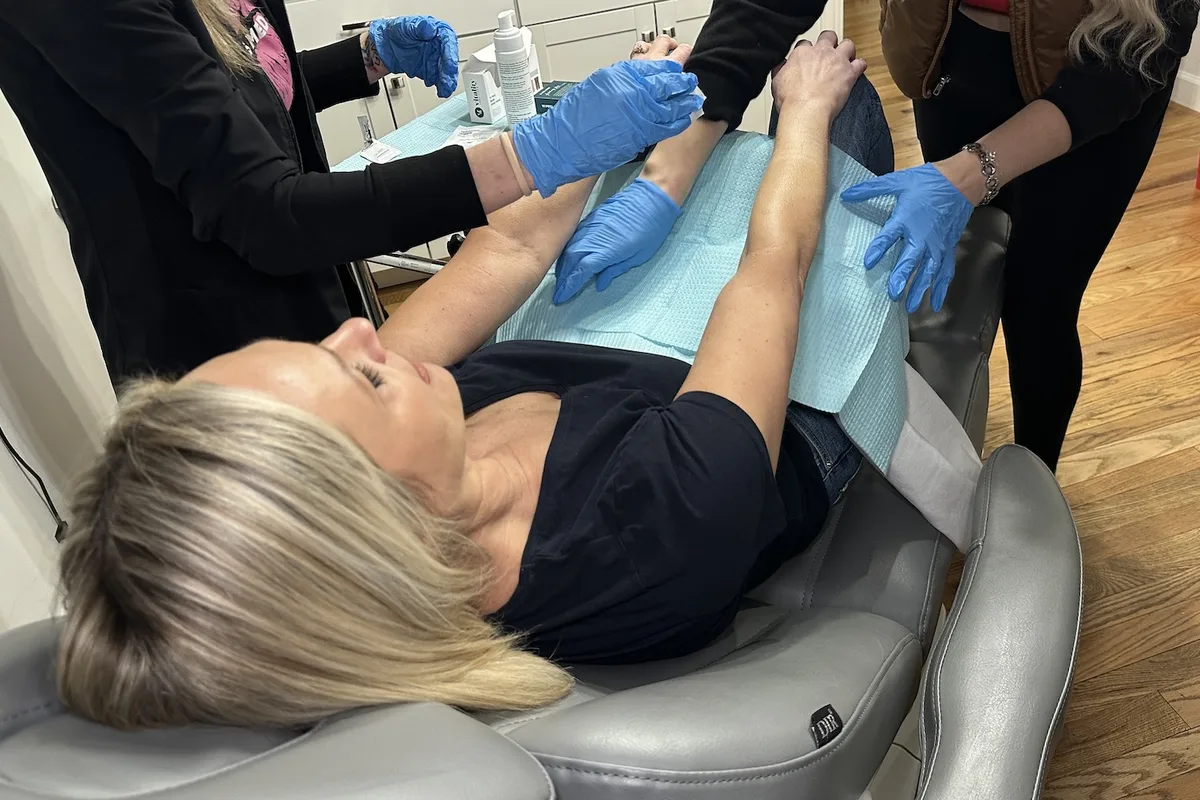
A superficial acne peel is a short, structured appointment, typically 30 to 45 minutes:
- Consultation and skin assessment. The provider reviews your medications, acne history, and skin type, then selects the acid, concentration, and number of layers. Isotretinoin use, cold sore history, and pregnancy are screened here.
- Cleansing and degreasing. The skin is cleansed and prepped with a solution that removes surface oil so the peel absorbs evenly.
- Application. The acid is brushed or wiped on in controlled passes. Expect warmth, tingling, or mild stinging for a few minutes. Salicylic acid often forms a fine white crust of crystallized acid, which is normal and is not the frosting seen with deeper peels.
- Timing and monitoring. The clinician watches the skin’s response and leaves the solution on for a set number of minutes.
- Neutralizing or removal. Depending on the acid, the peel is neutralized or gently removed, and the stinging fades quickly.
- Barrier care and SPF. A soothing moisturizer and broad-spectrum sunscreen finish the visit, along with written aftercare instructions.
Medium depth TCA peels follow a similar arc but involve careful layering, visible frosting as the acid reaches depth, and a longer aftercare conversation. They are performed by physicians or experienced clinicians under medical oversight, not as walk-in facials.
Recovery: What the First Week Looks Like
Superficial acne peels have short recoveries, but short does not mean invisible. A typical week after a salicylic or glycolic peel:
- Day 1. Skin looks mildly pink, like light sun exposure, and can feel tight. Most people return to normal activities immediately.
- Days 2 to 4. Light flaking or fine peeling begins, usually around the mouth and cheeks first. Moisturize, do not pick, and skip exfoliating products.
- Days 5 to 7. Flaking resolves and the fresh surface looks brighter and feels smoother. Makeup is usually fine within a day or two unless your provider says otherwise.
A medium depth TCA peel is a bigger commitment: expect seven to 14 days of crusting and peeling (Cleveland Clinic), with redness, swelling, and darkened skin that sheds before healthier skin emerges. Whatever the depth, daily broad-spectrum sunscreen is essential during healing, because freshly revealed skin pigments easily, and unprotected sun is the fastest way to trade a breakout problem for a discoloration problem.
Results: How Many Peels You Need and How Long Results Last
Acne peels are a series, not a single event. Three to five superficial peels may be needed, and they may be repeated every two to five weeks. Expect modest improvement after the first session and compounding results across the series: fewer breakouts, faded marks, and smoother texture. Because acne is a chronic condition driven by oil production and hormones, results are maintained rather than finished, so ask your provider whether and when to repeat a peel after the series. For scar-focused TCA work, improvement builds over 2 to 3 months after each peel as new collagen forms. Browse real outcomes in our before and after photos to calibrate expectations, and remember that results vary with skin type, acne severity, and aftercare.
Chemical Peels for Bacne and Body Acne
Peels are not just for faces. Salicylic acid peels are a common in-office treatment for breakouts on the back, chest, and shoulders, where hard-to-reach terrain makes topical routines inconsistent. Body skin tolerates peels well but heals more slowly, so providers adjust concentrations, treat in sections, and space sessions further apart. As with facial acne, body peels work as a series.
Who Is a Candidate, and Who Should Wait
Good candidates have mild to moderate acne, post-acne marks, or shallow scarring, and realistic expectations about series-based improvement. A few situations call for caution first:
- Severe cystic or nodular acne. Deep, painful cysts need medical acne treatment from a dermatologist first. Peels are a complement to medical therapy, not a replacement for it.
- Current or recent isotretinoin use. For medium depth and deep peels, the IJDVL guidelines list isotretinoin use in the last six months. Disclose it and let the clinician set the timeline.
- Deeper skin tones (Fitzpatrick types IV to VI). Peels can be safe and effective for skin of color, but acid choice and strength matter more, because aggressive peeling can trigger the same pigmentation you are trying to fade. Experienced providers often favor salicylic, mandelic, or lower-strength options and build up slowly.
- Active skin infection, open lesions, or a history of cold sores. Infections need treatment first, and cold-sore-prone patients may need preventive antiviral medication before peeling.
- Pregnancy or nursing. Salicylic acid peels are generally avoided; discuss safe alternatives with your provider and physician.
Expected side effects of superficial peels are mild: temporary redness, tightness, flaking, and occasional short-lived purging. Uncommon risks, more relevant as depth increases, include prolonged redness, pigment changes, infection, and scarring, which is why the American Academy of Dermatology recommends having peels performed by, or supervised by, a dermatologist.
How Much Does a Chemical Peel for Acne Cost?
Acne peels sit at the affordable end of the peel spectrum. As industry estimates, superficial salicylic or glycolic acid peels run about $100 to $400 per session in the United States. As an industry estimate, medium depth TCA peels run about $300 to $1,500 per session depending on the provider, region, and area treated. Acne peels are almost always considered cosmetic, so insurance rarely covers them. These figures are industry estimates rather than a quote, and ChemicalPeel.org is an education resource rather than a clinic, so confirm pricing directly with a provider.
Salicylic Acid vs Glycolic Acid Peel for Acne
The two most common acne peels solve different halves of the problem.
| Comparison factor | Salicylic acid peel | Glycolic acid peel |
|---|---|---|
| Acid family | Beta hydroxy acid (oil soluble) | Alpha hydroxy acid (water soluble) |
| Where it works | Inside the pore | At the skin surface |
| Best for | Active breakouts, blackheads, oily and congested skin, bacne | Post-acne marks, dullness, rough texture, early fine lines |
| Feel and downtime | Mild stinging, light flaking for a few days | Mild stinging, light flaking for a few days |
| Sensitive or deeper skin tones | Often well tolerated, calms inflammation | Lower strengths preferred; mandelic is a gentler AHA alternative |
| Series | 3 to 5 may be needed, every 2 to 5 weeks | 3 to 5 may be needed, every 2 to 5 weeks |
A simple rule of thumb: salicylic acid while breakouts are active, glycolic acid to repair what they left behind. Your provider may alternate them across a series once your skin’s tolerance is established.
Chemical Peels for Pimples and Active Breakouts
A chemical peel for pimples works differently than a peel aimed only at the marks breakouts leave behind. While a pimple is active, the goal is to calm inflammation and clear the clogged pore driving it, not to resurface skin that has already healed. Salicylic acid is the acid providers reach for first, because it is oil soluble and travels directly into the pore, dissolving the oil and debris where the breakout started while reducing the redness and swelling around it. A series of salicylic acid peels, which may be repeated every two to five weeks, tends to calm active pimples gradually and keep new ones from forming as quickly, rather than clearing a single blemish overnight.
There are places a chemical peel for pimples should not go. Acid should never be applied directly over an open, weeping pimple, a broken pustule, or a lesion that is actively draining, since the skin barrier there is already compromised and the acid can worsen irritation or push it deeper. The same caution applies to an active cold sore. A provider generally works around an isolated active lesion during a session rather than peeling directly over it, then treats the surrounding skin as usual.
Severe cystic or nodular acne is its own caveat. Deep, painful cysts sit well below where a superficial or even a medium peel reaches, and treating them with a peel alone will not resolve them. That kind of acne needs medical treatment first, from a clinician who can prescribe what a peel cannot, and once it is under control a peel becomes a useful tool for the marks and texture left behind. Our guide to chemical peels for acne scars and our page on the salicylic acid peel go further into both steps.
Frequently Asked Questions
Do chemical peels help acne?
Yes. Chemical peels are a well established treatment for mild to moderate acne. Salicylic acid and glycolic acid peels unclog pores, reduce excess oil, and calm inflammation, and a series of treatments can also fade the red or brown marks that breakouts leave behind. They work best alongside a daily skincare routine guided by a qualified provider.
What is the best chemical peel for acne scars?
For true depressed acne scars, a medium depth TCA peel generally delivers the most improvement, and dermatologists often treat ice pick scars with a focal high strength technique called TCA CROSS. Shallow scars and dark post-acne marks may respond to a series of glycolic or salicylic acid peels. A provider can identify which scar types you have and match the peel depth to them.
Do chemical peels work for bacne or body acne?
Yes. Salicylic acid peels are commonly used on the back, chest, and shoulders. Because body skin is thicker than facial skin and heals more slowly, your provider may adjust the concentration and space sessions further apart, and results build over a series of treatments.
Salicylic acid vs glycolic acid peel for acne, which is better?
Salicylic acid is usually the better choice for active, oily, congested acne because it is oil soluble and travels into the pore itself. Glycolic acid often works better once breakouts are under control and the main concerns are texture, dullness, and dark marks. Your provider may alternate or combine the two across a treatment series.
How many chemical peels do you need for acne?
Three to five superficial peels may be necessary to give you the desired results, and they may be repeated every two to five weeks. Improvement in post-acne marks and shallow scars continues to build across the series; after that, ask your provider whether and when to repeat a peel.
Can a chemical peel make acne worse before it gets better?
Sometimes, temporarily. A short flush of new breakouts, often called purging, can appear in the first week or two as the peel speeds up the turnover of clogged pores that were already forming under the skin. Purging usually settles quickly on its own. Persistent or severe worsening is not typical and should be reported to your provider.
Do chemical peels help active pimples, not just acne marks?
Yes. Salicylic acid peels are usually the first choice for active pimples because the acid is oil soluble and travels into the clogged pore to calm inflammation and clear debris while a breakout is still happening. Peels are not a substitute for medical treatment of severe cystic or nodular acne, and a peel should not be applied directly over an open lesion or an active cold sore until it has settled.
Medical Disclaimer
This page is provided by ChemicalPeel.org for patient education and is not medical advice. Individual results vary, and the information here does not replace a consultation with a qualified provider. Always discuss your medical history and treatment options with a licensed clinician before pursuing any chemical peel.
Ready to Clear Your Skin?
The difference between a disappointing peel and a transformative series can come down to who is holding the brush. Find a qualified provider near you to map out an acne peel series, or keep researching and compare all chemical peel types to see where acne peels fit on the depth ladder.