Written by the ChemicalPeel.org editorial team. Published September 22, 2026.
Clinical review pending. This page has not yet been reviewed by a licensed clinician; read it as patient education, not medical advice. How we review
Pyruvic acid is less familiar than glycolic or salicylic acid, and you will not find it on every treatment menu. Practices that do offer it tend to use it for a specific profile: skin that is oily and congested, marked by breakouts, or showing early sun damage, where a straightforward alpha hydroxy acid peel has not delivered enough.
What Pyruvic Acid Is
Pyruvic acid is an alpha keto acid, a distinct family from the alpha hydroxy acids such as glycolic and lactic acid and from the beta hydroxy acid in a salicylic acid peel. Two properties explain why clinicians use it.
First, it is lipophilic, meaning it mixes readily with oil. That lets it travel into oil-filled follicles rather than sitting on the surface, which is the same practical advantage salicylic acid has and the reason both are favored for congested skin.
Second, once it is in the skin it converts to lactic acid. Lactic acid is a gentler, water-binding alpha hydroxy acid, so the treatment tends to finish softer than it starts. Providers sometimes describe a pyruvic peel as delivering a stronger initial exfoliation with a milder tail, though the experience still depends on the strength used and how the solution is compounded. Our lactic acid peel guide covers that gentler end of the spectrum.
Strength and Depth
Professional pyruvic acid formulations vary considerably in concentration, pH and the vehicle the acid is carried in, and those variables, not the name on the bottle, decide how deep the peel goes. Most treatments sit in the superficial range, and stronger, layered applications can approach medium depth. Your provider chooses the strength for your skin and your goal, which is why the same acid can mean two very different appointments at two different practices. If depth terminology is new, start with chemical peel depths explained.
What a Pyruvic Acid Peel Is Used For
Providers most often select pyruvic acid for:
- Oily, congested skin. Its affinity for oil lets it work inside follicles rather than only on the surface.
- Active acne and post-acne marks. It is used within broader acne plans alongside prescription care, as described in our guide to chemical peels for acne.
- Rough texture and dullness. Removing the built-up outer layer smooths the surface and evens light reflection.
- Early photoaging and fine lines. Repeated superficial resurfacing softens fine lines and improves overall skin quality.
- Uneven tone. Surface pigment and blotchiness can lighten gradually across a series, though established melasma needs a broader plan.
What it is not: a treatment for deep wrinkles, pitted scarring or laxity. Those need medium or deep resurfacing, or a different modality altogether.
The Odor Problem, and Why It Matters
Pyruvic acid has one practical characteristic worth knowing before you book. The solution gives off a sharp, pungent vapor that can sting the eyes and irritate the nose and throat. Clinicians manage this with good ventilation, careful positioning and sometimes a fan, and it is the main reason some practices do not carry it despite liking the results.
It is not dangerous when handled properly, but it does mean the appointment is less pleasant than a glycolic or lactic peel, and it is a poor fit if you have asthma or are unusually sensitive to strong smells. Say so at consultation rather than discovering it in the chair.
What Happens During the Appointment
- Consultation and prep. Your provider reviews your history, medications and goals, and may ask you to pause retinoids and exfoliating acids for several days. A patch test is reasonable to request if you have reactive skin.
- Cleansing and degreasing. Thorough degreasing matters more than usual here, because any residual oil changes how an oil-soluble acid distributes.
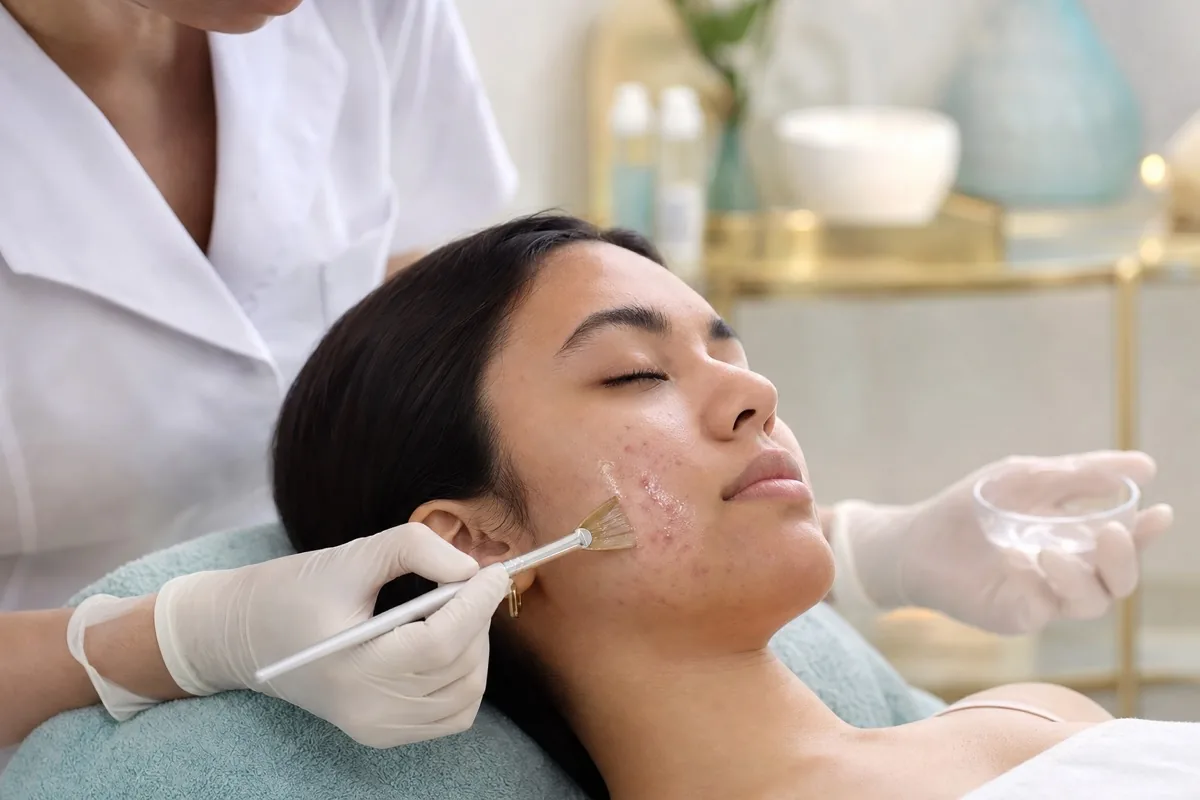
- Application. The solution is applied in thin, even passes. Expect immediate stinging or burning that is noticeably sharper than a mild AHA peel, usually eased with a fan. Tell the provider what you feel, since your reported sensation guides their timing.
- Monitoring and endpoint. The clinician watches for redness and any light frosting to judge depth, and applies additional passes only if your skin and goal call for it.
- Neutralizing and finishing. The peel is neutralized or rinsed per the protocol, then the skin is cooled and protected with a bland moisturizer and sunscreen.
The appointment itself is short, commonly around twenty to thirty minutes including prep.
Who Is a Good Candidate
Good candidates tend to have oily or combination skin, active or recurring breakouts, congested pores, rough texture or early sun damage, plus realistic expectations and a willingness to use sunscreen daily afterward.
You should postpone or avoid a pyruvic acid peel if you are pregnant or breastfeeding, have taken isotretinoin recently and have not been cleared by your prescriber, have active eczema, rosacea flares, open lesions or an infection in the treatment area, or have a history of cold sores without preventive antiviral coverage. Reactive or very dry skin and asthma are also reasons to consider a gentler option such as a mandelic acid peel.
Deeper skin tones are not excluded, but inflammation drives post-inflammatory hyperpigmentation, so a conservative strength, gradual progression across a series and a provider experienced with your skin type all matter. Our notes on choosing a provider cover what to ask.
Recovery and Aftercare
Recovery after a superficial pyruvic peel is short. Expect redness and a warm, tight feeling for a day or two, then light flaking rather than sheets of peeling, usually finishing within three to five days. Stronger or layered applications peel more visibly and take longer. Skin stays sensitive to sun for a couple of weeks.
The aftercare rules are the familiar ones and they are what protect your result:
- Cleanse gently with lukewarm water and no scrubs.
- Keep skin moisturized with a bland product.
- Use broad-spectrum SPF 30 or higher every morning and reapply outdoors.
- Do not pick or pull at flaking skin.
- Pause retinoids, acids and exfoliating tools until your provider clears them.
- Skip saunas, hot yoga and heavy sweating for the first two to three days.
Because each superficial session does modest work, results build across a series, commonly four to six peels spaced two to four weeks apart, then maintenance. Single sessions typically fall in the usual superficial peel range of $100 to $400, varying by region, provider and whether you buy a package. These are typical figures rather than a quote; see our cost guide for comparisons, and follow the standard aftercare routine between sessions.
Medical Disclaimer
This page is provided by ChemicalPeel.org for patient education and is not medical advice. Individual results vary, and nothing here replaces a consultation with a qualified, licensed clinician who has examined your skin.
Frequently Asked Questions
What is a pyruvic acid peel?
It is a professional chemical peel that uses pyruvic acid, an alpha keto acid that mixes readily with oil and converts to lactic acid once it is in the skin. Clinicians use it mainly at a superficial depth for oily, congested, acne-prone and sun-damaged skin.
How is pyruvic acid different from glycolic acid?
Glycolic acid is an alpha hydroxy acid that is water loving and works largely on the surface. Pyruvic acid is an alpha keto acid that is oil loving, so it travels into oil-filled follicles, which suits congested and acne-prone skin. Pyruvic acid also converts to lactic acid in the skin, and it has a sharp odor that glycolic acid does not.
Does a pyruvic acid peel smell bad?
Yes. The solution releases a pungent vapor that can sting the eyes and irritate the nose and throat, so providers use good ventilation and often a fan. It is manageable but noticeably less pleasant than a glycolic or lactic peel, and it is worth mentioning at consultation if you have asthma or are sensitive to strong odors.
How long is the recovery?
After a superficial pyruvic acid peel, expect redness and tightness for a day or two followed by light flaking that usually finishes within three to five days. Stronger or layered applications peel more visibly and take longer. Skin remains sun sensitive for about two weeks, so daily sunscreen is essential.
How many pyruvic acid peels will I need?
Superficial peels work cumulatively, so providers commonly plan a series of four to six sessions spaced two to four weeks apart, followed by periodic maintenance. Texture and clarity often improve after the first session, while pigment and acne changes build across the series.
Who should avoid a pyruvic acid peel?
Avoid or postpone it during pregnancy and breastfeeding, after recent isotretinoin use until your prescriber clears you, and when you have active eczema, rosacea flares, an infection or open lesions in the treatment area. A history of cold sores usually calls for preventive antiviral medication first, and very dry, reactive skin may do better with a gentler acid.