Written by the ChemicalPeel.org editorial team. Published August 13, 2026. Updated September 2, 2026.
Clinical review pending. This page has not yet been reviewed by a licensed clinician; read it as patient education, not medical advice. How we review
A mandelic acid peel is a superficial chemical peel that uses mandelic acid, an alpha hydroxy acid derived from bitter almonds, to exfoliate the outermost layer of skin slowly and evenly. Its defining feature is molecule size: at roughly twice the size of glycolic acid, mandelic acid soaks in gradually instead of racing. That single physical fact is why providers reach for it when skin is sensitive, reactive, rosacea-prone, or richly pigmented, and why it has become the standard gentle AHA for Fitzpatrick types IV through VI. This guide covers what it treats, how a session works, who it suits, what recovery, results, and cost look like, and how it compares with the other common peel acids.
What Is a Mandelic Acid Peel?
A mandelic acid peel is a professional treatment in which a clinician or licensed esthetician applies a controlled concentration of mandelic acid to the skin, leaves it on for a timed interval, then neutralizes and rinses it. Mandelic acid is an alpha hydroxy acid (AHA), the same family as glycolic and lactic acid, originally obtained from an extract of bitter almonds: Mandel is the German word for almond. It also has a long history outside dermatology as a urinary anti-infective, a useful clue to the antibacterial behavior providers notice on acne-prone skin.
Why the Molecule Size Matters
Every peel acid must cross the stratum corneum, the compacted outer surface of the epidermis, before it can loosen the bonds between dead cells, and how fast it does depends largely on molecule size. Glycolic acid, the smallest AHA, weighs about 76 daltons and moves through quickly; lactic acid is about 90. Mandelic acid is about 152 daltons, the largest AHA in common cosmetic use, because it carries an aromatic ring the others lack. A larger molecule penetrates more slowly, so the acid spreads uniformly rather than rushing into thinner areas first, and it produces far less of the sting glycolic is known for. Less irritation means less of the inflammation that drives most peel complications. That aromatic ring also gives mandelic acid some affinity for oil, so it reaches into sebum-filled follicles. The result is a middle ground: not a pure resurfacer like glycolic acid, not a pore treatment like salicylic acid, but a little of both.
Where a Mandelic Acid Peel Sits on the Depth Ladder
Peels are classified by how deep they act, and mandelic acid sits on the lightest rung. Superficial peels, including mandelic, glycolic, lactic, and salicylic acid, work within the epidermis and need little recovery. Medium-depth peels such as TCA, alone or combined with Jessner’s solution, reach the upper dermis and involve seven to 14 days of crusting and peeling (Cleveland Clinic), and deep phenol peels reach the mid-reticular dermis under physician care with cardiac monitoring. A mandelic acid peel is never a medium or deep treatment, whatever concentration is used. See our overview of chemical peel types and depths.
Mandelic Acid Peel Benefits: What It Treats
The central benefit is real improvement without provoking the skin. Providers recommend it, almost always as a series, for:
- Uneven tone and dullness. Faster turnover of pigmented surface cells gradually evens the complexion.
- Mild to moderate acne and congestion. Partial oil affinity plus antibacterial behavior helps with clogged pores.
- Post-inflammatory hyperpigmentation. Dark marks left by healed breakouts often respond well, and mandelic acid is chosen because it fades marks without creating new ones. See our guide to chemical peels for hyperpigmentation.
- Early photoaging. Surface sun damage, blotchiness, and the earliest fine lines soften.
- Rough texture. Skin feels smoother and makeup sits better.
- Sensitive skin that has failed other acids. Many people arrive here after a glycolic peel.
What it cannot do matters just as much. A superficial peel cannot lift deep wrinkles, tighten loose skin, or resurface atrophic acne scarring, and expecting a dramatic single-session change leads to disappointment. Melasma is a separate case: this chronic, relapsing condition is easily worsened by heat and aggressive treatment and needs a provider-directed plan built on topical therapy and strict sun protection.
Why Mandelic Acid Is the Preferred AHA for Melanin-Rich and Sensitive Skin
Chemical peels can be performed safely on every skin tone. What changes across the Fitzpatrick scale is how carefully depth, concentration, and technique are chosen. In richly pigmented skin (types IV through VI), melanocytes are more reactive, so significant inflammation can prompt them to make excess pigment and the treated area heals darker rather than clearer. That post-inflammatory hyperpigmentation is the governing risk, and it is a risk of inflammation and depth, not of pigment itself.
This is the problem mandelic acid solves. Slow, even penetration keeps the inflammatory response low, which keeps the trigger for excess pigment low as well. That is why it appears so consistently in guidance on treating skin of color, and why it suits rosacea-prone skin. Comparative dermatology studies generally find it holds its own against stronger acids for pigmentation and mild acne with fewer irritation-related side effects. Two safeguards still belong in the plan: ask for a test spot, a small application evaluated over a week or two before the full face is treated, and choose a provider who routinely treats your skin tone.
How a Professional Mandelic Acid Peel Works
Professional mandelic acid peels typically use concentrations of about 20 to 50 percent, with 40 percent a common working strength and lower ones reserved for a first session or reactive skin. Over-the-counter mandelic products sit far lower, generally 5 to 10 percent, and are leave-on serums rather than timed peels. A typical appointment runs about 30 minutes:
- Consultation and screening. Your provider reviews skin type, Fitzpatrick phototype, medications, allergies, and cold sore history, and asks you to pause retinoids and exfoliants beforehand.
- Cleansing and degreasing. A prep solution removes surface oil so the acid absorbs evenly.
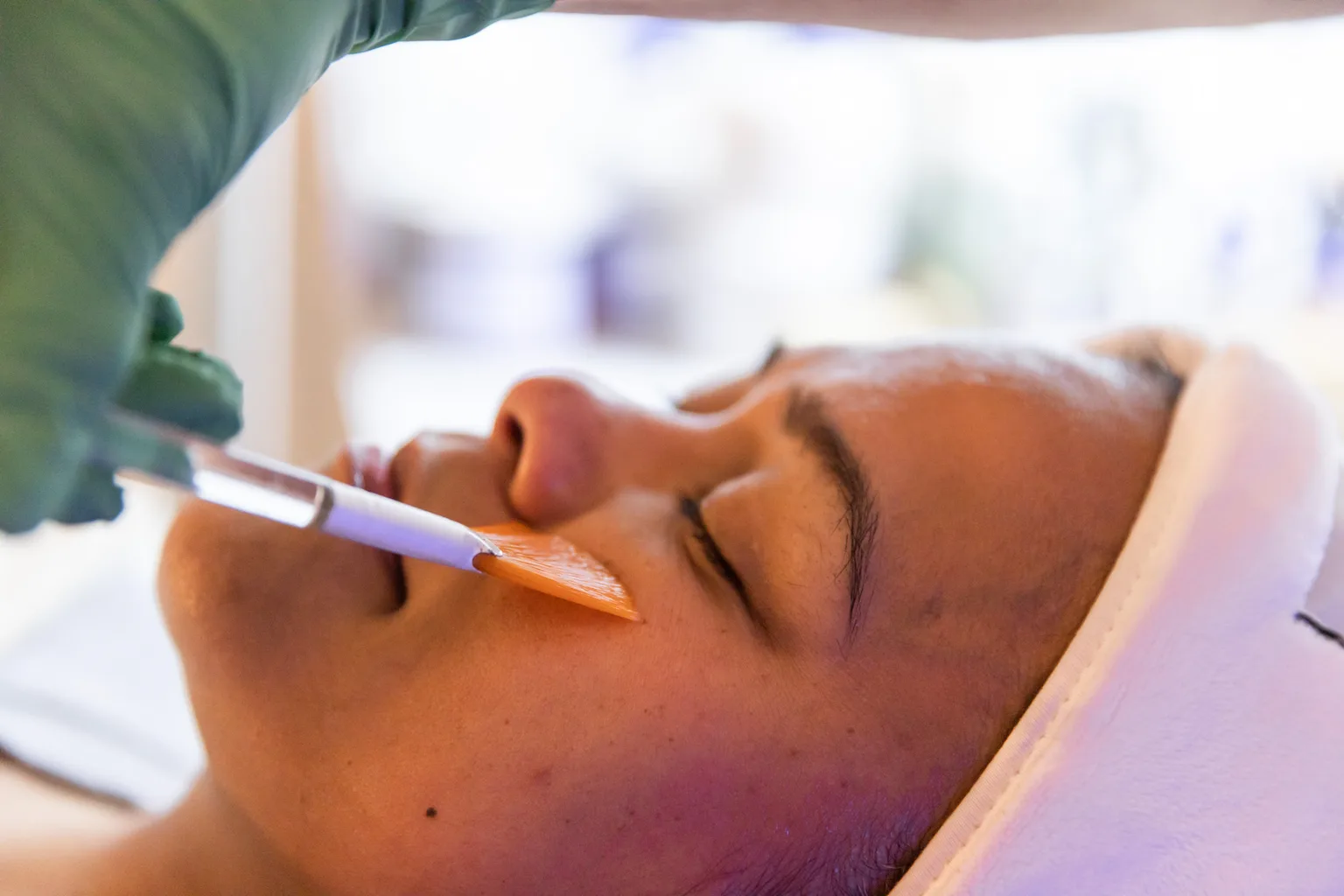
- Application. The solution is brushed on in even passes, forehead down, with barrier ointment protecting the eyes, nose, and mouth.
- Timed monitoring. The acid stays on for a few minutes while your provider watches for light, uniform pinkness, never the white frost of a deeper peel.
- Neutralization and removal. Like other AHAs, mandelic acid works until stopped, so a neutralizing solution is applied and the skin is rinsed.
- Post-peel care. A calming moisturizer and sunscreen go on before you leave, with written aftercare instructions.
Most people describe the sensation as mild warmth or faint prickling that builds and then settles, noticeably milder than glycolic acid at comparable strength. It fades within a minute or two of neutralization, leaving skin lightly flushed for a few hours.
Who Is a Candidate? Safety and Risks
Most healthy adults with realistic expectations are candidates, and this peel’s tolerability is why it is offered to people who cannot handle stronger acids. Providers postpone or avoid one if you have an active cold sore outbreak or other infection, sunburn or open irritation in the area, or a compromised skin barrier. Recent isotretinoin use, prescription exfoliants, and waxing all affect timing. If you are pregnant or nursing, review the plan with your clinician first.
Side effects are usually mild and short-lived: temporary redness, tightness, light dryness or flaking, and sun sensitivity for several days. Less commonly, a peel that is too strong, left on too long, or applied over a damaged barrier can cause lasting irritation, prolonged redness, or post-inflammatory hyperpigmentation. Rarely, infection or scarring can occur. An experienced, properly licensed provider is the best protection against all of it.
Almond Allergy and Mandelic Acid
Mandelic acid is a small, purified organic acid, not a nut protein, and tree nut allergies are triggered by proteins, so the theoretical risk is low and peel-grade mandelic acid is often made synthetically. Tell your provider about any tree nut allergy and let them decide whether a patch test or a different acid is safer.
What Not to Combine With a Mandelic Acid Peel
The reliable rule is one exfoliant at a time. Before and after a peel, set aside retinoids, other AHAs and BHAs, benzoyl peroxide, scrubs, and cleansing brushes, and postpone waxing in the area. Layering these on peeled skin raises the risk of the pigment changes a mandelic peel was chosen to avoid. Your provider will say when actives can return, usually about a week.
Recovery and Downtime, Day by Day
Recovery is usually minimal, and light flaking is the most anyone typically sees:
- Day of treatment. Mild pinkness and slight tightness, like a light sunburn. Most people return to normal activities immediately.
- Days 1 to 3. Skin may feel dry and can flake lightly around the nose, chin, and mouth. Use a gentle cleanser, a bland moisturizer, and broad-spectrum SPF 30 or higher each morning, and do not pick at flakes.
- Days 3 to 5. Flaking finishes and a smoother surface shows through. Keep actives out until skin feels completely normal.
- Ongoing. Daily sunscreen is essential, because freshly exfoliated skin pigments easily and unprotected sun is a common reason a good result turns into a dark patch.
Many mandelic peels never visibly flake, which is normal at this depth and does not mean the peel failed.
Results: What to Expect and How Many Sessions
After a single mandelic acid peel, most people notice modest brightening and a smoother feel within a few days. The changes that matter, fading post-acne marks and uneven tone, calmer breakouts, softer texture, appear across a series: three to five treatments may be needed, and they may be repeated every two to five weeks. Results are maintained rather than permanent, so daily sun protection determines how long they last.
How Much Does a Mandelic Acid Peel Cost?
Mandelic acid peels sit at the affordable end of professional treatments. As an industry estimate, a superficial peel such as mandelic acid runs about $100 to $400 per session in the United States, with geography, provider credentials, and strength driving the range. Because it is a series treatment, budget for the whole series rather than one visit. These figures are industry estimates, not a quote, so confirm pricing with a provider. Our chemical peel cost guide breaks down pricing by peel type and depth.
Mandelic vs Glycolic, Lactic, and Salicylic Acid Peels
All four are superficial peels. The differences that matter:
| Comparison factor | Mandelic acid | Glycolic acid | Lactic acid | Salicylic acid |
|---|---|---|---|---|
| Acid family | AHA | AHA | AHA | BHA |
| Molecule size | About 152 daltons, largest AHA | About 76 daltons, smallest AHA | About 90 daltons | About 138 daltons |
| Penetration | Slow and even | Fast, most aggressive AHA | Moderate, stays shallow | Into the pore lining |
| Professional strength | 20 to 50 percent | 20 to 70 percent | 10 to 30 percent | 20 to 30 percent |
| Best suited to | Sensitive, rosacea-prone, melanin-rich skin; uneven tone with mild acne | Resilient skin; lines and sun damage | Dry skin; dullness | Oily skin; blackheads |
| Downtime | Minimal, light flaking at most | Minimal, light flaking | Minimal, often none | 2 to 5 days of light flaking |
How to choose: if your skin stings, flushes, or darkens easily, start with mandelic acid. If your skin is resilient and your goals lean toward fine lines and sun damage, a glycolic acid peel is the stronger resurfacer. If dryness is the main complaint, a lactic acid peel fits better. If oily congestion dominates, an oil-soluble salicylic acid peel targets the pore. The two are often blended in professional formulas because they cover different ground.
Frequently Asked Questions
What does a mandelic acid peel do?
A mandelic acid peel exfoliates the outermost layer of skin slowly and evenly, which brightens tone, fades post-acne marks and mild discoloration, smooths rough texture, and helps calm mild acne and congestion. Because it has the largest molecule of the common alpha hydroxy acids, it irritates far less than glycolic acid, and results build across a series.
Is a mandelic acid peel safe for dark skin?
Mandelic acid is widely regarded as one of the safest peel choices for Fitzpatrick types IV through VI and is frequently the first AHA providers recommend for melanin-rich skin. Its slow, even penetration keeps inflammation low, which keeps the risk of post-inflammatory hyperpigmentation low. Depth selection and provider experience govern that risk far more than skin tone does, so ask for a test spot.
What cannot be mixed with mandelic acid?
Use one exfoliant at a time. Around a peel, pause retinoids, other AHAs and BHAs, benzoyl peroxide, scrubs, and cleansing brushes, and skip waxing in the treated area. Stacking these on freshly exfoliated skin can trigger the pigment changes the peel was chosen to avoid. Hyaluronic acid and ceramides are fine.
How often can you do a mandelic acid peel?
Professional mandelic acid peels may be repeated every two to five weeks, and three to five sessions may be needed; ask your provider whether and when to repeat a peel after that. The skin needs time to finish renewing, so more frequent is not better. Low-strength over-the-counter products follow their own label and should never go on skin still healing from a peel.
Do you actually peel after a mandelic acid peel?
Often not visibly. Most people see mild pinkness on the day of treatment and light flaking around the nose, chin, and mouth for a day or two, and many see no shedding at all. That is normal at this depth and does not mean the peel failed. Keep the routine gentle and use broad-spectrum SPF 30 every morning.
Mandelic acid or glycolic acid peel, which should I choose?
Choose mandelic acid if your skin is sensitive, rosacea-prone, or richly pigmented, or if a glycolic peel once left you red and irritated. Choose glycolic acid if your skin is resilient and your priorities are fine lines and sun damage. Glycolic has a much smaller molecule that works harder; mandelic trades intensity for a gentler, more even treatment.
Medical Disclaimer
This page is provided by ChemicalPeel.org for patient education and is not medical advice. Individual results vary, and the information here does not replace a consultation with a qualified provider. Always discuss your medical history and treatment options with a licensed clinician before pursuing any chemical peel.
Ready to Try a Mandelic Acid Peel?
A mandelic acid peel is only as good as the judgment behind it: concentration, contact time, and series length have to match your skin. Find a qualified provider near you to discuss whether a mandelic series fits your skin, or compare all chemical peel types and depths before you book.