⚕ MEDICALLY REVIEWED · CHEMICALPEEL.ORG
Chemical peel vs microneedling: how each works, downtime, cost, and which is better for acne scars, wrinkles, and dark spots. Compare before you book.
Patient Education
Published July 26, 2026
⚕ MEDICALLY REVIEWED by Stefanie Drozd, MSN-APRN · Last medically reviewed: July 26, 2026
A chemical peel resurfaces the skin chemically with an acid solution, while microneedling remodels the skin mechanically with fine sterile needles that trigger new collagen. That single difference, chemistry versus mechanics, drives everything else in the chemical peel vs microneedling decision: what each treatment does best, how long recovery takes, what it costs, and who makes an ideal candidate. Both are proven, provider-performed treatments with decades of clinical use, and neither is universally better. Peels tend to win for surface concerns such as uneven tone, dark spots, and sun damage. Microneedling tends to win for structural concerns such as indented acne scars. This guide compares the two on every axis that matters before you book a consultation.
What Is the Difference Between a Chemical Peel and Microneedling?
Both treatments improve skin by creating a controlled, temporary injury that the body repairs with fresher tissue. The difference is where and how that injury happens. A peel dissolves damaged layers from the surface down. Microneedling leaves the surface largely intact and creates thousands of microscopic channels beneath it, prompting the skin to rebuild from within.
What Is a Chemical Peel?
A chemical peel is the controlled application of an acid solution that removes damaged outer layers of skin so smoother, more even skin can regenerate in their place. Peels are grouped by depth. Superficial peels use alpha hydroxy acids such as glycolic acid, or beta hydroxy salicylic acid, and treat only the epidermis with minimal downtime. Medium-depth peels, most often trichloroacetic acid (TCA) or Jessner’s solution, reach the upper dermis and involve about a week of visible peeling. Deep peels use phenol, classically in the Baker-Gordon formula, reach the mid-reticular dermis, and are performed only by a physician with cardiac monitoring. If you are new to peels entirely, start with our overview of what a chemical peel is and how the depth ladder works.
What Is Microneedling?
Microneedling, also called collagen induction therapy, uses a device tipped with fine sterile needles, most often a motorized pen such as the FDA-cleared SkinPen, to create thousands of controlled micro-channels in the skin. Those tiny injuries activate the skin’s wound-healing cascade, which produces new collagen and elastin over the following weeks and months. Professional treatments adjust needle depth to the concern and the area, typically between about 0.5 and 2.5 millimeters. Radiofrequency (RF) microneedling adds heat energy through the needles for deeper remodeling and mild tightening. Professional microneedling is a clinician-performed treatment; at-home rollers penetrate far more shallowly and do not produce comparable results.
How Each Procedure Works
Both are outpatient visits, and only deep phenol peels involve sedation and cardiac monitoring.
A Typical Professional Chemical Peel Session
- Cleansing and prep. The clinician degreases the skin so the acid penetrates evenly, and may protect delicate areas such as the corners of the eyes and lips.
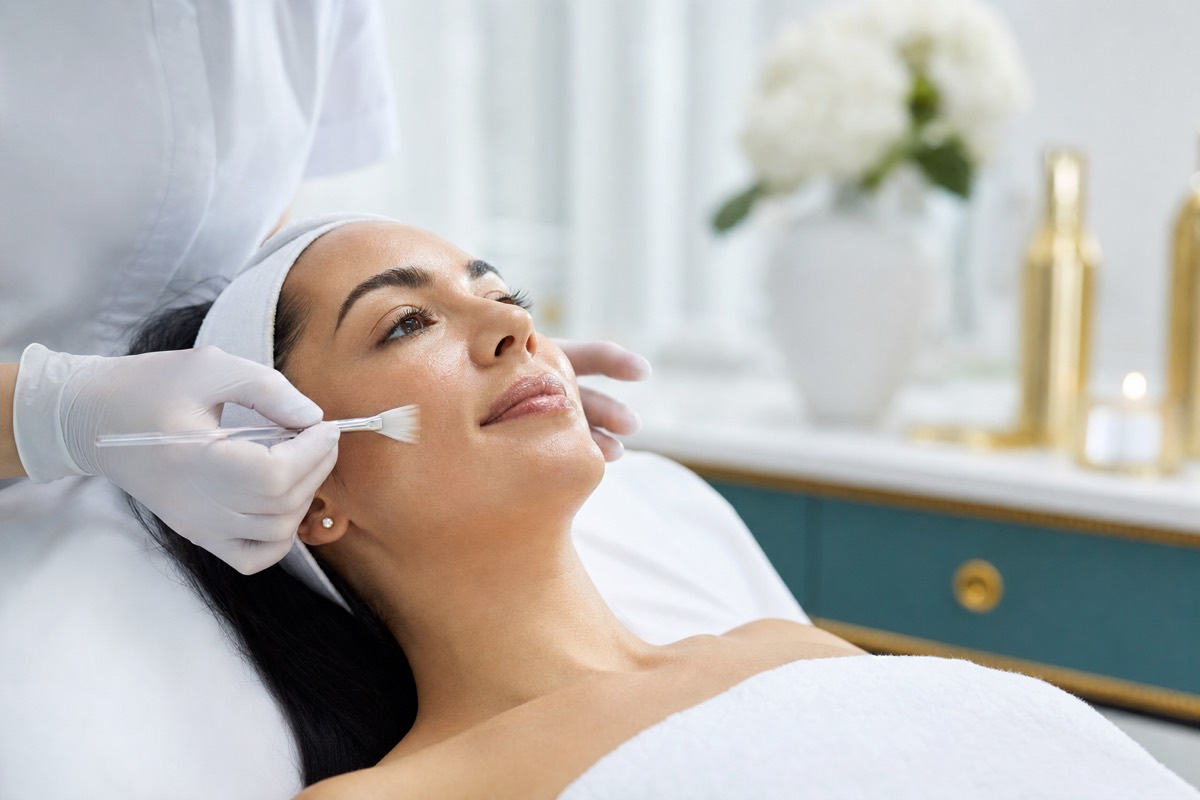
- Application. The peel solution is brushed or wiped on in even layers, with strength and layering matched to your skin and goals.
- Monitoring. The clinician watches the skin’s response, including the whitening called frosting in medium and deep peels, to judge when the intended depth is reached.
- Neutralizing or removal. Depending on the acid, the solution is neutralized or self-neutralizes, then the skin is calmed with cool compresses and a protective ointment or moisturizer.
- Aftercare. You leave with instructions centered on gentle cleansing, moisture, and strict daily sun protection while the skin flakes and renews.
A Typical Microneedling Session
- Cleansing and numbing. A topical numbing cream is applied for roughly 20 to 30 minutes, so the treatment itself feels like light scratching or vibration rather than pain.
- Treatment passes. The clinician glides the device across the skin in overlapping passes, adjusting needle depth by area, deeper over scarred cheeks, shallower over thin skin.
- Targeted work. Individual scars or lines may receive extra attention at greater depth, sometimes with pinpoint bleeding that stops quickly.
- Serums or PRP. Many providers apply hyaluronic acid serum or platelet-rich plasma (PRP) immediately after, when the open micro-channels absorb it best.
- Recovery starts. Skin looks flushed like a sunburn for one to three days, and collagen production builds quietly over the following weeks.
Chemical Peel vs Microneedling: Side-by-Side
| Chemical peel | Microneedling | |
|---|---|---|
| How it works | Acid dissolves damaged surface layers | Fine needles trigger collagen from within |
| Best for | Uneven tone, dark spots, sun damage, fine to deep lines (by depth) | Indented acne scars, texture, large pores, early laxity (with RF) |
| Deeper skin tones | Superficial peels generally suitable; medium and deep peels need caution | Often preferred across all skin tones |
| Sessions | Superficial: series of 3 to 6; medium: 1 to 2; deep: usually once | Series of 3 to 6, spaced about 4 weeks apart |
| Downtime | 1 to 3 days (superficial) up to about 2 weeks (deep) | Roughly 1 to 3 days of redness |
| Typical cost per session | About $150 to $400 superficial; medium and deep run much higher | Roughly $200 to $700; RF versions higher |
| Performed by | Estheticians (superficial) to physicians (deep) | Trained clinicians; RF typically in medical settings |
The ranges above are industry estimates, not quotes. Your skin type, goals, and provider determine where you land within them.
Which Is Better for Your Skin Concern?
The most useful way to choose is by the concern you most want to change.
Acne Scars and Texture
Microneedling is usually the stronger first choice for indented (atrophic) acne scars, including rolling and boxcar scars, because the new collagen it stimulates helps lift the scar floor from below. Peels cannot rebuild lost volume the same way, though clinicians can use medium-depth TCA on shallow scarring and individual pits. For the flat red or brown marks acne leaves behind, which are discoloration rather than true scars, peels usually work faster. Our guide to chemical peels for acne and acne scars breaks down which peel suits each situation.
Dark Spots, Melasma, and Uneven Tone
Chemical peels are generally the better tool for pigment. Because excess pigment concentrates in the surface layers, an acid that exfoliates those layers addresses the problem directly, and peel agents such as glycolic and salicylic acid have long track records here. Microneedling plays a supporting role for pigment and is sometimes preferred for melasma in deeper skin tones, where aggressive peels can backfire. For a full treatment-by-treatment breakdown, see our guide to chemical peels for hyperpigmentation.
Fine Lines and Wrinkles
For fine lines and early sun damage, both treatments improve smoothness gradually over a series. For deeper, etched-in wrinkles, chemical peels have the higher ceiling: a medium TCA peel produces meaningful change in one or two sessions, and a deep phenol peel remains one of the most powerful wrinkle treatments in medicine, though it is a serious physician-performed procedure. RF microneedling sits between the two, often chosen when mild skin laxity accompanies the lines.
Deeper Skin Tones
Microneedling is often favored for Fitzpatrick skin types IV through VI because it does not use acid or (in its standard form) heat at the surface, so the risk of post-inflammatory hyperpigmentation is comparatively low in experienced hands. Superficial glycolic and salicylic peels are still used safely in skin of color by providers who adjust strength and prep carefully. Medium and especially deep peels carry real pigment risk in deeper tones and require an experienced, board-certified provider’s judgment.
Downtime and Recovery Compared
Downtime is where the two treatments separate most clearly, and where peel depth matters more than the peel-versus-needle question itself.
- Microneedling. Redness and mild swelling for roughly 1 to 3 days, similar to a sunburn, with possible light flaking. Most people return to work the next day and wear makeup within a day or two, per their provider’s guidance.
- Superficial peel. Mild redness followed by fine flaking for about 3 to 7 days. Social downtime is minimal, though the skin needs diligent sun protection.
- Medium peel (TCA or Jessner’s). Visible peeling in sheets for about a week, with redness that can linger beyond it. Most people plan around 7 days away from camera-facing commitments.
- Deep phenol peel. Around two weeks of significant recovery with dressings and prescribed care, and residual pinkness that can last up to three months.
Neither treatment is downtime-free. Even microneedling leaves you visibly flushed on day one, so schedule either treatment with your calendar in mind.
Safety, Risks, and Who Performs Each
Both treatments have strong safety records when performed by qualified professionals on well-selected candidates. Peel risks scale with depth: superficial peels rarely cause more than temporary irritation, while medium and deep peels can cause pigment changes, prolonged redness, and, uncommonly, scarring or infection, which is why the American Academy of Dermatology emphasizes professional evaluation for anything beyond mild exfoliation. Deep phenol peels are physician-only procedures with cardiac monitoring. Microneedling’s main risks are irritation, infection from non-sterile equipment, and pigment changes if performed too aggressively, which is why single-use sterile cartridges and trained hands matter. People with active skin infections, uncontrolled eczema or psoriasis in the treatment area, keloid-prone skin, or recent isotretinoin use need individualized guidance before either treatment.
Cost: What Each Treatment Runs
By industry estimates, a superficial chemical peel typically costs about $150 to $400 per session, while published averages that span every depth run much higher, a figure pulled upward by medium and deep peels that include physician time, facility fees, and, for phenol peels, sedation and monitoring. Standard microneedling commonly runs about $200 to $700 per session, with RF microneedling often in the $800 to $1,500 range. Because both superficial peels and microneedling are usually planned as a series of three to six sessions, compare total plan cost rather than single-visit price. These figures are industry estimates, not a quote; ChemicalPeel.org is an education resource, not a clinic, so confirm pricing with a provider. Our chemical peel cost guide breaks down pricing by peel type.
Can You Combine Chemical Peels and Microneedling?
Yes, and many providers do exactly that for patients with layered concerns, such as acne scarring plus discoloration. The standard approach is to alternate the treatments rather than stack them: a peel one month, microneedling the next, typically spaced about two to four weeks apart so the skin fully recovers between sessions. Applying acid to freshly needled skin is generally avoided because it raises the risk of irritation and pigment changes, so one provider should design and sequence the combined plan.
Results and How Long They Last
Microneedling results build gradually. Collagen remodeling continues for weeks after each session, so the payoff of a 3 to 6 session series is usually judged around three months after the final treatment, with maintenance sessions once or twice a year to sustain it. Superficial peel results are similarly cumulative and maintained with periodic sessions. Medium peels deliver more change per session, often holding for a year or two with good sun protection, and a single deep phenol peel can improve deep wrinkles for up to about ten years. Individual results vary with skin condition, age, and sun habits, so review real outcomes, starting with our before and after photos, and ask any provider to show results from their own patients.
Frequently Asked Questions
What is the difference between a chemical peel and microneedling?
A chemical peel resurfaces skin chemically with an acid solution that removes damaged surface layers, while microneedling remodels skin mechanically with fine sterile needles that trigger new collagen. Peels work from the outside in and excel at surface concerns like uneven tone and dark spots. Microneedling works from the inside out and excels at structural concerns like indented acne scars.
Which is better for acne scars, a chemical peel or microneedling?
Microneedling is usually the stronger choice for indented (atrophic) acne scars, such as rolling and boxcar scars, because it stimulates collagen that helps lift the scar floor from below. Chemical peels are usually better for the flat dark or red marks acne leaves behind. Many providers combine both in a staged plan for skin that is both scarred and discolored.
Can you do a chemical peel and microneedling together?
Yes, many treatment plans alternate the two, but they are generally not performed in the same appointment. Providers typically space a peel and a microneedling session about two to four weeks apart so the skin can heal fully between treatments, since applying acid to freshly needled skin raises the risk of irritation and pigment changes.
Which has more downtime, a chemical peel or microneedling?
It depends on the depth of the peel. Microneedling and a superficial peel are similar, with roughly one to three days of redness or light flaking. A medium TCA or Jessner’s peel involves about a week of visible peeling, and a deep phenol peel requires around two weeks of recovery. At matched intensity, chemical peels generally involve more downtime.
Which is better for wrinkles, a chemical peel or microneedling?
For fine lines and early photoaging, both work, and a series of superficial peels or microneedling sessions produces gradual smoothing. For deeper, etched-in wrinkles, medium and deep chemical peels generally deliver more dramatic change in fewer sessions. Radiofrequency microneedling sits in between and is often chosen for texture with mild skin laxity.
Is a chemical peel or microneedling cheaper?
A single superficial chemical peel is usually cheaper, often around $150 to $400 per session by industry estimates, compared with roughly $200 to $700 for a standard microneedling session. Both are typically done in a series of three to six sessions, so total plan cost matters more than any single visit. These are estimates, not quotes, so confirm pricing with a provider.
Medical Disclaimer
This page is provided by ChemicalPeel.org for patient education and is not medical advice. Individual results vary, and the information here does not replace a consultation with a qualified, board-certified provider. Always discuss your medical history and treatment options with a licensed clinician before pursuing any chemical peel.
Ready to Choose Your Treatment?
The honest answer to the chemical peel vs microneedling question is that the right choice depends on your primary concern, your skin tone, your downtime budget, and the judgment of a provider who has examined your skin in person. Find a qualified provider near you to compare both options for your skin, or keep researching and compare every chemical peel type and depth before you book a consultation.
Related Articles
Article
Chemical peel vs microneedling: how each works, downtime, cost, and which is better for acne scars, wrinkles, and dark spots. Compare before you book.
Article
The Obagi Blue Peel is a physician applied TCA peel for wrinkles, texture, and pigment. Learn results, recovery, cost, and how it compares to Blue Radiance.
Article
A Cosmelan peel treats melasma and stubborn dark spots at the source. Learn how it works, what results look like, recovery, cost, and safety.
Article
A lactic acid peel gently exfoliates and hydrates for brighter, smoother skin. Learn benefits, results, cost, and safety, then find a qualified provider.
Article
A salicylic acid peel is a gentle BHA peel that clears pores and calms acne with minimal downtime. Learn benefits, cost, and results, then find a provider.
Article
A chemical peel for acne clears breakouts, fades dark marks, and softens acne scars. Compare the best peel acids, costs, and recovery, then find a provider.
The information on this page is for educational purposes only and is not a substitute for medical advice, diagnosis, or treatment from a qualified health care provider. Always consult a board-certified dermatologist or licensed medical professional before beginning any chemical peel regimen. Individual results may vary. ChemicalPeel.org does not endorse or guarantee any specific treatment outcome.