Written by the ChemicalPeel.org editorial team. Published July 25, 2026. Updated September 2, 2026.
Clinical review pending. This page has not yet been reviewed by a licensed clinician; read it as patient education, not medical advice. How we review
The Obagi Blue Peel is a physician applied, medium depth chemical peel that combines trichloroacetic acid (TCA) with a proprietary blue base to resurface fine wrinkles, rough texture, uneven pigment, and mild scarring. The blue base slows and controls how quickly the TCA penetrates, and its color shows the physician exactly where the solution has been applied and how evenly it is working. That built in control made the Blue Peel one of the best known branded TCA peels in aesthetic medicine. This guide explains what the peel is, what it treats, how the appointment unfolds, what the week of visible peeling involves, what it costs, and how the classic Blue Peel differs from the much lighter Obagi Blue Radiance peel.
What Is an Obagi Blue Peel?
The Obagi Blue Peel is a branded trichloroacetic acid peel developed in the 1990s by dermatologist Zein Obagi, MD. Instead of brushing TCA directly onto the skin, the physician mixes a measured amount of TCA, most often in the 15 to 20 percent range, into the signature blue base, a glycerin rich mixture that slows the acid’s release into the skin. That slower, steadier penetration gives the clinician more time to judge the peel’s progress, and the blue tint acts as a visual map, revealing any areas that were missed or double coated. Depth is controlled by the number of coats applied, so the same product can produce a lighter or a deeper resurfacing. The classic Blue Peel is best known as a medium depth treatment that reaches the upper layers of the dermis.
Where It Sits on the Peel Depth Ladder
Chemical peels are grouped by how deeply they work. Superficial peels such as glycolic and salicylic acid act on the epidermis, the outermost layer, and need little recovery. Medium depth peels, the category where the classic Blue Peel lives alongside the standard TCA peel, reach the upper dermis and involve about a week of visible peeling. Deep phenol peels reach further still and are physician performed procedures with cardiac monitoring. If you want the full map before you commit to any peel, our overview of chemical peel types and depths walks through every level in plain language.
One Name, Two Peels: Classic Blue Peel vs Blue Radiance
Obagi offers two peels with similar names, and mixing them up is easy. The classic Obagi Blue Peel is the TCA based, medium depth, physician applied resurfacing procedure this article focuses on. The Obagi Blue Radiance peel is a separate and much lighter product, a salicylic acid based superficial peel performed as a quick office visit, with minimal downtime and results that build over a series. If a med spa menu lists a thirty minute lunchtime Blue Peel, it is almost always Blue Radiance. The comparison table below lines the two up side by side.
What the Obagi Blue Peel Treats
Physicians reach for the classic Blue Peel when damage sits too deep for a superficial peel to correct but does not call for a deep phenol procedure. It is most often recommended for:
- Fine lines and moderate wrinkles, especially those etched by sun exposure
- Rough, weathered texture and a dull, tired complexion
- Sun spots, age spots, and blotchy discoloration
- Mild acne scarring and shallow textural scars
- Crepey, sun damaged skin on the neck, chest, and hands as well as the face
A medium depth peel cannot lift significantly loose skin, erase deep scars, or substitute for surgery, and a good physician will say so plainly during the consultation.
How the Obagi Blue Peel Procedure Works
The classic Blue Peel is an in office procedure performed by a physician or by a trained clinician working under physician supervision. A typical treatment follows this sequence:
- Consultation and skin conditioning. The physician evaluates your skin, goals, medications, and history. Many practices condition the skin for four to six weeks beforehand with medical grade skincare, often the Obagi Nu-Derm system, so the skin tolerates the peel better and heals more predictably.
- Cleansing and degreasing. On peel day, the skin is cleansed and wiped with a prep solution that removes surface oil so the acid penetrates evenly.
- Mixing the peel. The physician blends the TCA with the blue base immediately before application, which sets the final concentration and slows the acid’s action.
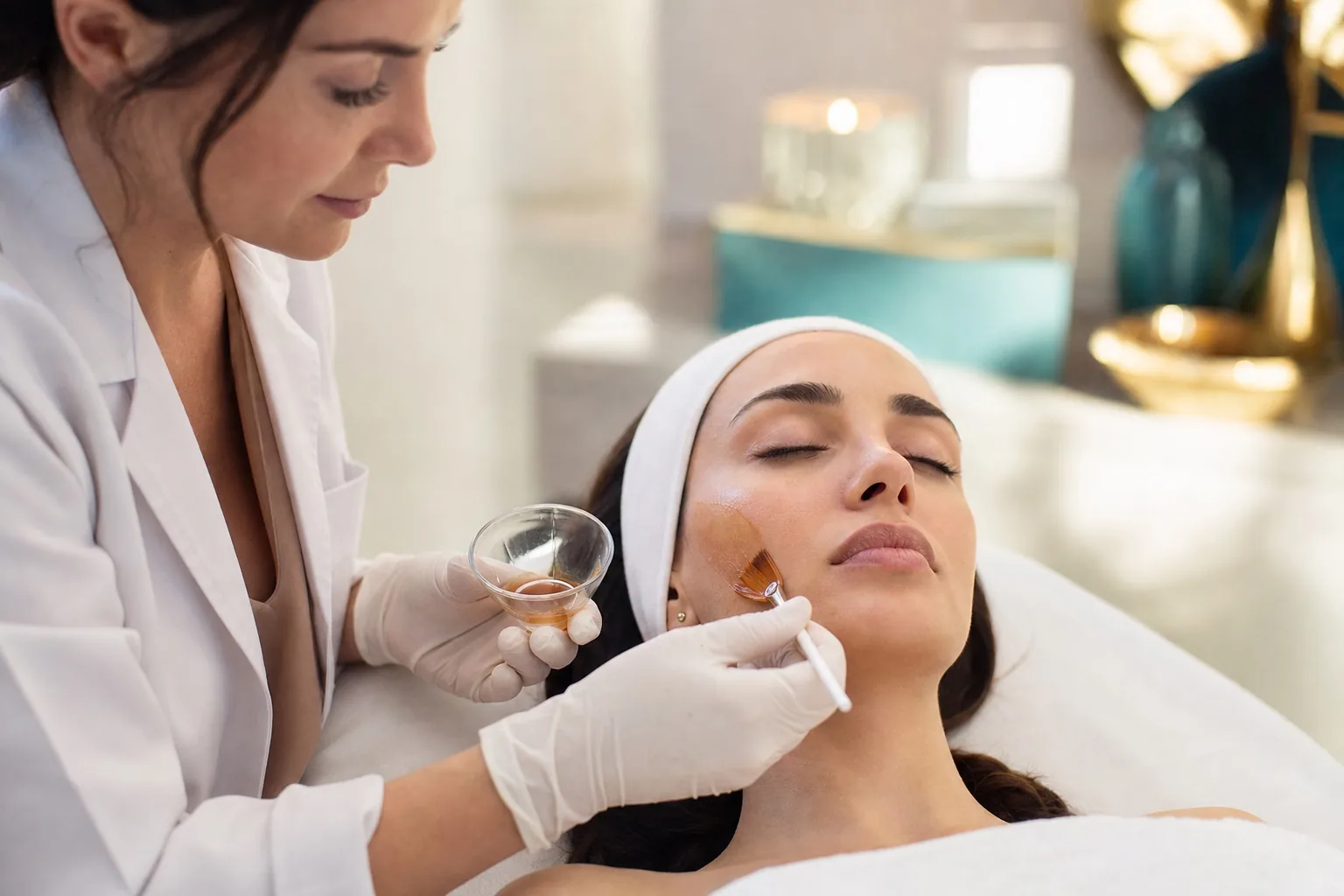
- Layered application. The solution goes on in even coats. The blue tint shows exactly where each coat has landed, and the physician watches the skin’s response, adding coats only until the intended depth is reached. Expect a strong stinging or heat sensation for two to three minutes per coat, usually managed with a handheld fan or cool air rather than sedation.
- Endpoint check. Visible changes in the skin, including an even frost beneath the blue tint, tell the physician the target depth has been reached, so the peel is stopped based on what the skin shows rather than a fixed clock time.
- Post peel care. A soothing ointment is applied, and you leave with written aftercare instructions and a follow up plan. The blue tint typically washes away over the first day or two.
Who Is a Candidate? Safety and Risks
Good candidates for the classic Blue Peel are generally healthy adults with sun damage, wrinkles, pigment concerns, or mild scarring that superficial peels have not resolved, plus the schedule flexibility to accept about a week of visible peeling. Because this is a true medium depth peel, screening is stricter than it is for light peels. Physicians typically postpone or avoid the procedure in patients with active skin infections or cold sore outbreaks, a history of keloids or abnormal scarring, recent isotretinoin use, poorly controlled medical conditions, or expectations no peel can meet. Pregnant and nursing patients are usually advised to wait. The Obagi Blue chemical peel is not an at home product at any strength; TCA at these concentrations can injure skin badly when applied without training, which is why medium and deep peels belong in professional hands.
Expected side effects include redness, swelling, tightness, and the dramatic peeling itself. Less common risks include prolonged redness, infection, cold sore reactivation, uneven pigment changes, and scarring. The American Academy of Dermatology places TCA peels in the medium depth tier, the level where provider training and judgment matter most, so choose the person before you choose the peel.
Is It Safe for Darker Skin Tones?
Medium depth TCA peels carry a higher risk of post inflammatory hyperpigmentation in deeper skin tones (Fitzpatrick types IV through VI) than superficial peels do. Obagi designed the blue base and the weeks of pre peel conditioning to make TCA more controlled, but the risk of post inflammatory hyperpigmentation still rises with skin depth, so conservative technique and provider experience with skin of color matter most. Ask any prospective provider direct questions about both during your consultation.
Melasma is a special case: because medium depth TCA can trigger rebound hyperpigmentation, most physicians manage it first with superficial peels and topicals rather than a medium peel. If melasma is your primary concern, start with our guide to chemical peels for hyperpigmentation before considering resurfacing at this depth.
Obagi Blue Peel Recovery, Day by Day
Obagi Blue Peel recovery follows the usual medium depth rhythm: roughly a week of visible peeling, then several weeks of steadily improving color and glow. A typical course looks like this:
- Day of treatment. Skin feels tight and warm, like a strong sunburn, and carries a bluish tint that washes off over the first day or two.
- Days 1 to 3. The treated skin darkens, stiffens, and begins to crack and lift, most noticeably around the mouth and eyes. Mild swelling peaks early in this window and then settles.
- Days 3 to 7. Old skin peels away in sheets, revealing pink, fresh skin underneath. Do not pull or pick at peeling skin; picking is how scarring and pigment problems start.
- Days 7 to 10. Most visible peeling finishes, and many people feel comfortable in public again, often with a mineral makeup their physician approves.
- Weeks 2 to 6. Residual pinkness fades and the result continues to sharpen as the new skin matures.
Aftercare is simple but strict: gentle cleansing, the ointment or moisturizer your physician recommends, no scrubs or exfoliating actives until you are cleared, and daily broad spectrum sunscreen, because freshly resurfaced skin burns and discolors easily.
Results: Before and After, and How Long They Last
Obagi Blue Peel before and after photos typically show smoother texture, softened lines, more even color, and a brighter overall complexion once healing is complete, with the full result visible about four to six weeks after treatment. Improvement from a single medium depth peel is usually meaningful rather than subtle, which is exactly why many patients choose it over a long series of light peels. Results commonly last for years when the new skin is protected with daily sunscreen, though no peel stops the aging process, and fresh sun damage can slowly recreate old problems. Some patients repeat the peel after a year or more; others maintain with lighter peels and medical grade skincare. Before choosing a provider, read our guidance on evaluating before and after photos and ask each physician to show healed results on patients whose skin resembles yours.
How Much Does an Obagi Blue Peel Cost?
As an industry estimate, a classic Obagi Blue Peel commonly runs about $500 to $1,500 per treatment in the United States, and prices can climb higher in large metropolitan markets or when the peel is paired with other procedures. The fee reflects physician time, the depth of the procedure, pre peel conditioning products, and follow up visits, which is why it sits well above the roughly $100 to $300 typical of superficial peels, including Blue Radiance sessions. Cosmetic peels are not typically covered by insurance. These figures are industry estimates, not a quote; ChemicalPeel.org is an education resource, not a clinic, so confirm pricing directly with a provider. For a side by side look at what every peel type costs, see our chemical peel cost guide.
Obagi Blue Peel vs Obagi Blue Radiance
The two Obagi peels serve different skin problems and different schedules. Here is how they compare:
| Obagi Blue Peel (classic) | Obagi Blue Radiance | |
|---|---|---|
| Active acid | Trichloroacetic acid (TCA) in a blue base | Salicylic acid blend |
| Depth | Medium, reaches the upper dermis | Superficial, epidermis only |
| Who performs it | Physician, or trained clinician under physician supervision | Licensed clinician in an office or med spa |
| Downtime | About a week of visible peeling | Minimal, light flaking for a few days |
| Best for | Wrinkles, sun damage, uneven pigment, mild scarring | Dullness, mild texture, congested skin |
| Sessions | Usually one, repeated only if needed | Series of four to six, spaced weeks apart |
Choose the classic Blue Peel when the damage is structural, such as etched lines, rough texture, or stubborn pigment. Choose Blue Radiance when you want a gentle refresh with almost no interruption to your week. A consultation settles the question for your specific skin.
Frequently Asked Questions
What is an Obagi Blue Peel?
The Obagi Blue Peel is a physician applied chemical peel that mixes trichloroacetic acid (TCA) with a proprietary blue base. The base slows how quickly the acid penetrates, and its color shows the physician where each coat has been applied. Layered to a controlled depth, it is best known as a medium depth peel for wrinkles, texture, and pigment.
What does the Obagi Blue Peel treat?
The classic Blue Peel treats fine lines and moderate wrinkles, rough sun damaged texture, uneven pigment such as sun spots and blotchy discoloration, and mild acne scarring. It can be used on the face as well as the neck, chest, and hands. It cannot lift significantly loose skin or erase deep scars.
How much does an Obagi Blue Peel cost?
As an industry estimate, a classic Obagi Blue Peel typically costs about $500 to $1,500 per treatment in the United States, depending on region, physician credentials, and peel depth. The lighter Blue Radiance peel usually runs about $100 to $300 per session. These figures are estimates rather than quotes, so confirm pricing with a provider.
What is Obagi Blue Peel recovery like?
Plan on roughly a week of visible recovery. Skin tightens and darkens over the first two to three days, peels in sheets through about day seven, and looks pink but presentable by days seven to ten. The blue tint washes off within a day or two. Strict sun protection and gentle care are essential while the new skin matures.
Obagi Blue Peel vs Blue Radiance, what is the difference?
They are different procedures that share a brand name. The classic Blue Peel is a TCA based, medium depth, physician applied resurfacing peel with about a week of peeling. Blue Radiance is a salicylic acid based superficial peel with minimal downtime, performed as a quick office treatment and repeated in a series for gradual improvement.
How long do Obagi Blue Peel results last?
Results from a classic Blue Peel commonly last for years when the new skin is protected with daily sunscreen, though no peel stops the aging process. New sun exposure can gradually bring back pigment and texture problems. Many patients maintain their result with medical grade skincare or occasional lighter peels rather than repeating the full procedure.
Medical Disclaimer
This page is provided by ChemicalPeel.org for patient education and is not medical advice. Individual results vary, and the information here does not replace a consultation with a qualified, board-certified provider. Always discuss your medical history and treatment options with a licensed clinician before pursuing any chemical peel.
Ready to Explore the Blue Peel?
The Obagi Blue Peel puts real resurfacing power behind a single appointment, and the outcome rests on the physician who performs it. Find a qualified provider near you to ask whether the classic Blue Peel or the lighter Blue Radiance suits your skin, or keep researching and compare chemical peel types and depths before you book a consultation.