Written by the ChemicalPeel.org editorial team. Published November 26, 2026.
Clinical review pending. This page has not yet been reviewed by a licensed clinician; read it as patient education, not medical advice. How we review
Chemical peels do not treat eczema. If you have atopic dermatitis or eczematous skin, cosmetic chemical peels are not a therapy for dry plaques, itching, or flares, applying exfoliating acids onto active, cracked, weeping, or inflamed skin accelerates uncontrolled penetration, triggers painful chemical burns, invites secondary bacterial or viral infection, and worsens dark marks. Review full exclusion criteria on our who should not get a chemical peel checklist before scheduling any resurfacing visit.
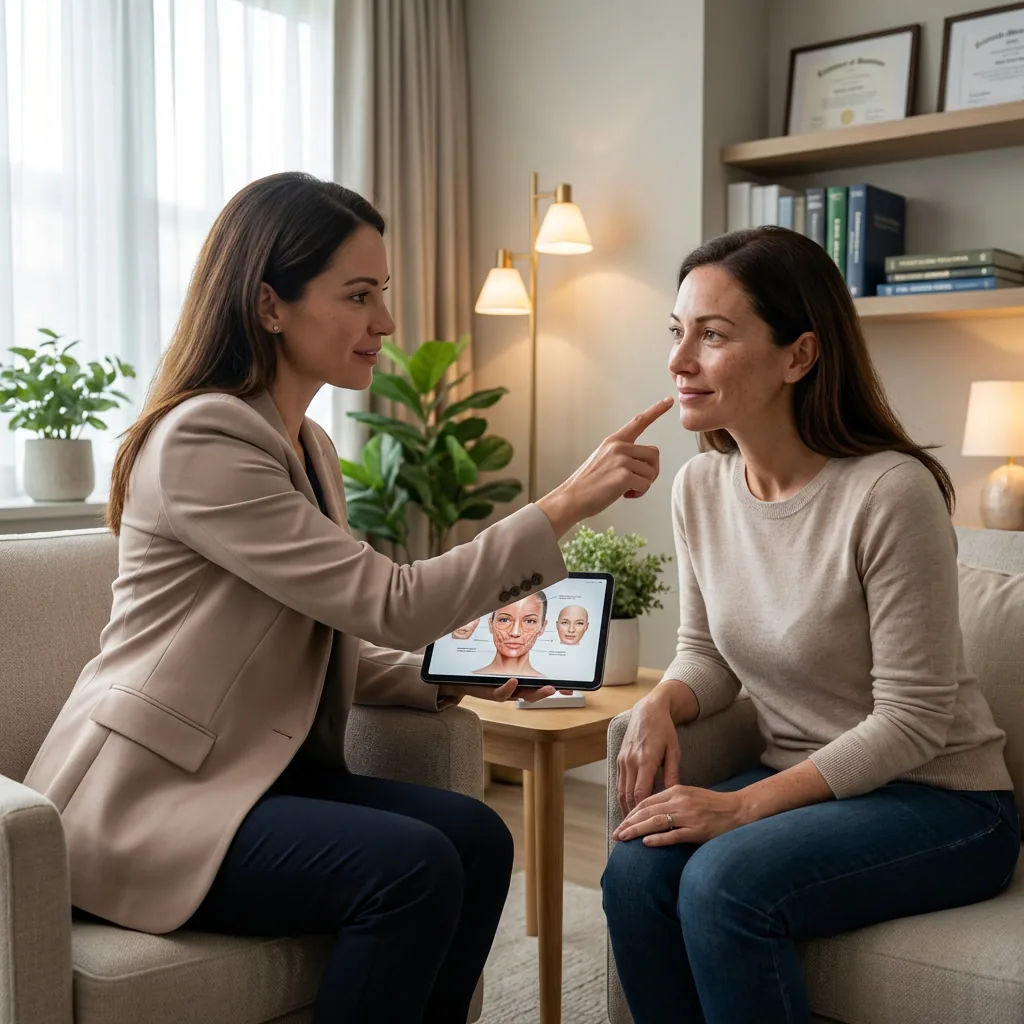
Patients often ask whether a gentle facial peel can polish leftover roughness or post-flare brown discoloration once an eczema patch stops itching. Because eczema reflects structural filaggrin and lipid-barrier vulnerability rather than simple stacked dead skin cells, apparently calm skin between flares can still react unpredictably to low-pH acids. Personalized clearance from the supervising medical specialist who manages your eczema directly is mandatory before considering even the mildest resurfacing treatment.
Active Eczema vs. Quiet Periods: Why the Barrier Stays Vulnerable
Healthy stratum corneum blocks acidic penetration smoothly like tightly mortared bricks, whereas eczema skin exhibits microscopic lipid gaps, elevated water loss, and heightened inflammatory cytokines even on areas that temporarily look clear in the mirror. Applying glycolic acid, salicylic acid, or TCA across uneven micro-fissures allows acid to surge unevenly into deeper nerve-rich layers.
| Skin Presentation | Candidacy Verdict | Biological Risk If Peeled | Required Medical Step |
|---|---|---|---|
| Active, itchy, fissured, or weeping eczema | Strict contraindication (Defer) | Severe stinging burn, oozing flare, MRSA/staph or eczema herpeticum risk | Treat eczema medically; avoid all clinic & home acid peels |
| Recently calmed skin within weeks of flare | Defer / High reactivity risk | Subclinical barrier micro-gaps still provoke rebound erythema and swelling | Maintain gentle ceramide therapy and clinical follow-up |
| Long-quiescent history seeking mild glow elsewhere | Individualized dermatology clearance only | Patch reactivity cannot be ruled out reliably by a single test spot alone | In-person medical review of full medication history |
| Post-eczema hyperpigmentation (PIH) after full healing | Cautious barrier-first management | Aggressive acids re-trigger inflammation and darken residual patches | Prioritize broad-spectrum SPF 30+ and prescribed non-acid brighteners first |
As documented in the American Academy of Dermatology atopic dermatitis overview and DermNet atopic dermatitis reference, an impaired skin barrier increases moisture loss and sensitivity to external irritants, fragrances, and harsh topicals, requiring gentle lipid restoration rather than caustic stripping. Compare dry non-eczema care on our dry skin peel guide and barrier rules on our sensitive skin peel guide.
Never Stop Prescribed Eczema Treatments Just to Book a Peel
You must never discontinue prescription topical corticosteroids, calcineurin inhibitors, PDE4/JAK topicals, or systemic eczema therapies simply to satisfy a pre-peel cosmetic checklist or "clear" skin temporarily for a spa visit. Unplanned medication pauses spark rebound flares that require far longer medical recovery, while applying acid onto thinned steroid-exposed skin creates unpredictable burn depth.
Coordinate every skincare change directly with your prescribing clinician per AAD eczema treatment guidelines:
- Do not rely on a small patch test as a guarantee of safety: While clinicians perform spot checks on mildly reactive skin, a quiet jawline patch cannot predict how thinner eyelid creases or previously flared cheek zones will tolerate a full-face pass.
- Avoid at-home peel pads and scrubs completely: Even mild drugstore AHA/BHA toners trigger chronic low-grade dermatitis cycles on atopic skin.
- Evaluate safer cosmetic focus areas first: Prioritizing daily barrier repair alongside preventative habits across our best age to start chemical peels guide and skincare regimen for your 30s guide keeps skin calm without gambling an eczema flare.
If Your Clinician Clears Quiescent Skin: Conservative Safeguards
Only after an evaluating medical clinician confirms sustained eczema remission and stable barrier hydration, sometimes months after the most recent flare, might a clinic discuss ultra-gentle superficial alternatives, and even then conservative non-acid facials often remain safer.
Whenever skin clinicians discuss ultra-mild resurfacing options for long-quiescent atopic patients, conversations center on strict guardrails:
- Skip high-strength unbuffered glycolic, Jessner's, and medium TCA peels because intense protein coagulation and alcohol solvents strip essential ceramides rapidly.
- Consider high-molecular-weight humectants or PHAs only under medical guidance (reviewed on our PHA peel guide) with minimal contact duration and immediate buffering.
- Prioritize non-irritating dark-spot fading alternatives first if residual post-eczema hyperpigmentation bothers you more than surface texture, focusing on daily mineral SPF 30+ and bland soothing topicals before adding exfoliants.
When to Seek Urgent Medical Care After Accidental Irritation
If you accidentally used an over-the-counter peel acid near an eczematous patch and develop oozing yellow crusts, spreading painful heat, grouped fluid blisters, swollen eyelids, or fever, rinse immediately with cool water and seek prompt urgent medical evaluation rather than masking the reaction with heavy scented lotions. Compromised atopic skin carries higher vulnerability to secondary bacterial infection and widespread viral herpes simplex flares (eczema herpeticum).
Frequently Asked Questions
Can a chemical peel cure or remove eczema patches?
No, chemical peels do not treat or cure eczema. Eczema is a chronic barrier and immune-driven skin condition treated with medical barrier repair and clinician-prescribed anti-inflammatory care; applying acidic peels onto eczema plaques worsens irritation, burns, and cracking.
Can you get a gentle lactic or PHA peel if your eczema has been clear for months?
Possibly only with individualized medical clearance from your treating specialist, because quiescent atopic skin still retains subtle barrier fragility even when patches look clear. A provider should never proceed solely on the basis of an unremarkable single spot test without full dermatologic evaluation.
Will a chemical peel fade dark spots left behind after an eczema flare?
While clinicians sometimes treat stubborn post-inflammatory pigmentation on normal skin with peels, aggressive peeling on eczema-prone skin frequently re-triggers flare inflammation and makes brown marks darker. Clinicians typically prioritize strict mineral SPF 30+, soothing barrier creams, and gentle non-acid pigment suppressors first.
What happens if you apply salicylic or glycolic acid over active eczema?
Applying AHA or BHA acids over open, red, or fissured eczema lets acid seep uncontrolled into inflamed dermis, causing sharp burning pain, oozing erythema, crusting, and high risk of secondary skin infection or scarring.
Should you stop prescription eczema cream before a chemical peel consultation?
Never stop prescribed eczema medication on your own to book an aesthetic peel. Keep using your medical treatment as directed and have your prescribing specialist and aesthetic clinician review exact prescriptions together first.