Written by the ChemicalPeel.org editorial team. Published November 26, 2026.
Clinical review pending. This page has not yet been reviewed by a licensed clinician; read it as patient education, not medical advice. How we review
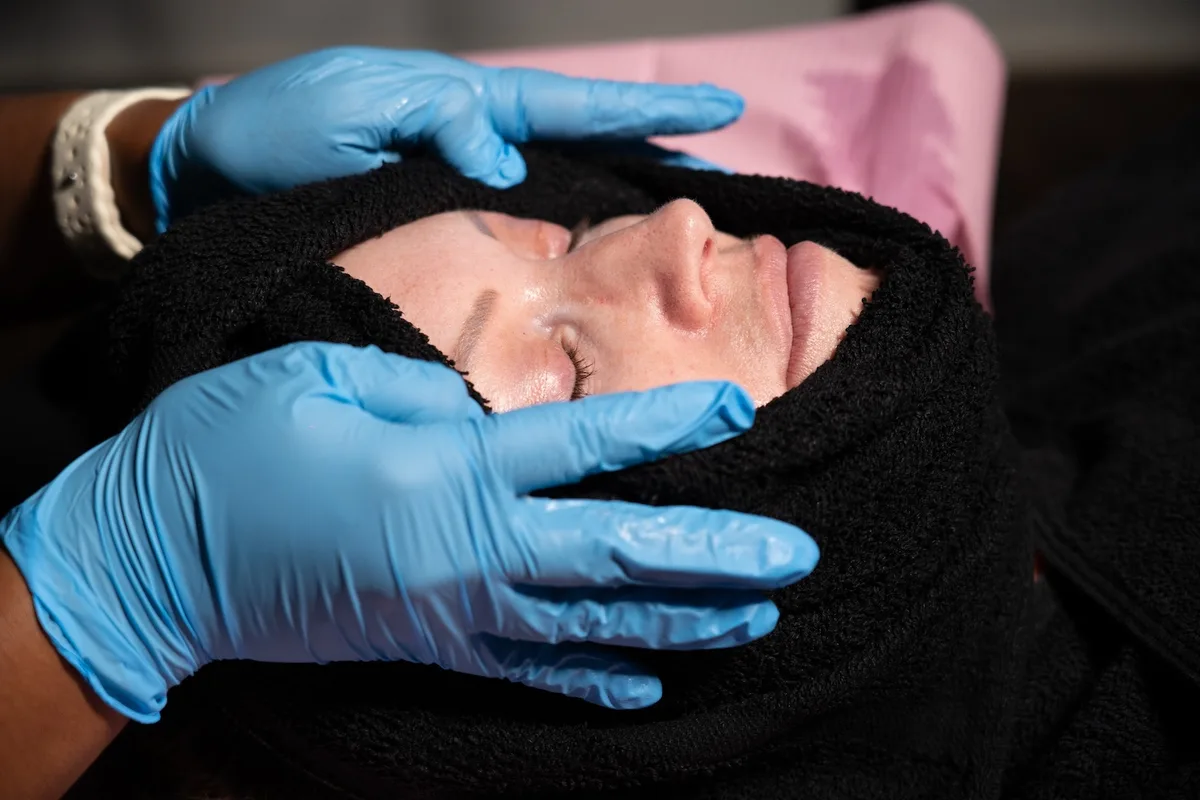
Seeing little or no visible peeling after a chemical peel is common after light superficial formulas and does not determine by itself whether treatment worked or failed. Visible flaking varies sharply by acid choice, concentration, exposure time, skin oiliness, and post-peel moisturizing habits, and visible sheet shedding alone never serves as the metric for safe collagen renewal or pigment improvement across our chemical peel recovery timeline guide.
Patients expecting dramatic sheets of shedding skin often feel anxious by day 3 or 4 when their reflection still looks smooth or mildly glossy. That worry becomes dangerous when someone assumes the solution failed and layers another peel kit, scrub, or strong retinoid on top of freshly treated skin. Chemical remodeling happens at cellular depth governed by formulation chemistry rather than dramatic flake volume.
Does Not Peeling Mean Your Chemical Peel Failed?
Visible desquamation is neither proof of success nor proof of failure: some patients experience gentle cellular turnover without conspicuous skin sheets, whereas heavy frosting or aggressive shedding can signal unnecessarily harsh injury if mismatched to your skin type. Conversely, a superficial peel can simply be too mild, under-timed, or buffered by excess surface sebum for stubborn pigment goals.
| Treatment Profile | Why Visible Peeling Often Looks Minimal | What Happens Clinically Instead | Safe Next Step |
|---|---|---|---|
| Polyhydroxy (PHA), mandelic, or 20% lactic acid | Large molecules work slowly within outer corneocytes | Mild, uniform desquamation during normal face washing | Review gentler shedding expectations on our PHA peel guide |
| Well-hydrated or retinoid-prepped skin | Pre-conditioned stratum corneum is already compact and smooth | Faster barrier recovery with faint powdery dryness instead of large flakes | Continue gentle moisturizer and daily SPF |
| Rich occlusive balm use after treatment | Healing ointments trap loose microscopic flakes gently in place | Keeps microscopic shedding supple and less visible in the mirror | Avoid stripping moisturizers just to see flakes |
| Under-degreased thick oily skin | Surface lipid film blocks water-soluble AHAs unevenly | Lighter contact penetration across forehead and nose | Discuss tailored acid or degreasing prep with your clinic at follow-up |
As reviewed in the Cleveland Clinic chemical peel overview, light peels produce minimal visible downtime and gentle superficial flaking, while only medium and deep peels drive pronounced crusting and heavy sheet peeling. Compare acid strength differences on our glycolic vs. lactic acid peel guide.
Five Biological Factors That Control How Much Skin Peels
How heavily a face sheds after chemical exfoliation depends on baseline skin thickness, recent topical prep, and acid pharmacology rather than whether you felt painful stinging in the chair. Two patients receiving the exact same percentage can heal completely differently over the same seven days.
Clinicians consider five variables when evaluating mild shedding:
- Peel agent and pH: Unbuffered trichloroacetic acid (TCA) triggers protein coagulation and sheet shedding, whereas buffered glycolic, mandelic, or salicylic solutions often leave faint powdery flaking.
- Prior exfoliant conditioning: Skin acclimated to nightly prescription tretinoin already carries thinner compacted dead layers, leaving less loose keratin to peel off visibly.
- Moisture-barrier occlusion: Applying frequent ceramide cream or petrolatum keeps detached surface cells hydrated and inconspicuous until they rinse off quietly in the shower.
- Contact duration and pass count: A conservative single pass meant for first-time safety intentionally limits visible peeling to protect barrier stability.
- Sebum density and oil control: Heavy surface lipids slow penetration of hydrophilic acids unless degreasing prep matches skin oiliness.
If your concern is not lack of flaking but temporary roughness, purging, or uneven blotchiness during healing week, read our skin looks worse after a chemical peel troubleshooting guide.
Never Re-Treat, Scrub, or layer Acids Early If You Do Not Peel
You must never repeat a chemical peel early, reach for a higher-percentage bottle at home, or rub skin with scrubs because visible peeling looks minimal at day 4. Even when the surface looks intact, intercellular junctions remain temporarily loosened and epidermal stem cells stay active beneath the surface.
Re-applying exfoliants before full epidermal turnover completes, typically 2 to 4 weeks for light peels and longer for medium peels, dramatically raises risks of chemical burns, raw erosions, prolonged erythema, and stubborn post-inflammatory hyperpigmentation. Follow chemical peel aftercare rules strictly: keep your barrier calm with lukewarm water, bland moisturizer, and mineral SPF 30+, and never assume "microscopic peeling" automatically guarantees dramatic clinical transformation without a trained follow-up assessment.
When Should You Follow Up With Your Provider?
Wait the full post-peel evaluation window (usually 2 to 4 weeks after superficial visits) before deciding with your clinician whether to adjust acid choice, contact time, or multi-session spacing. Photographing your skin in consistent daylight on day 0, day 7, and day 21 lets both of you compare actual tone and clarity rather than counting flakes.
During your follow-up consultation, ask these specific questions, whether you are planning facial series or broader body care like our chemical peel for the chest overview:
- Were pre-treatment goals clear for superficial versus medium depth? Gentle lunchtime acids target gradual radiance over a multi-visit plan rather than one-session heavy shedding.
- Do we need better pre-peel prep next visit? Modifying cleanser pH or pausing heavy occlusive creams cleanly right before the visit can equalize absorption.
- Should we step up concentration gradually or adjust expectations? Follow product-specific clinician timing reviewed in AAD chemical peel FAQs instead of rushing into harsh passes.
Frequently Asked Questions
How many days after a chemical peel should peeling start?
When visible peeling occurs, superficial AHA or BHA peels usually show light flaking between days 2 and 4 and resolve within a week, while medium-depth TCA or blended peels generally initiate flaking between days 3 and 5 and shed through days 7 to 14. Some light peels finish without obvious sheet peeling at all.
Does microscopic exfoliation still count as a successful chemical peel?
Visible shedding is not required for cellular renewal, but mild peeling alone does not guarantee dramatic results either. Clinicians evaluate improvement by pigment clarity, texture smoothness, and pore cleanliness 3 to 4 weeks after each peel rather than assuming microscopic exfoliation automatically proves strong efficacy.
Can thick moisturizers hide skin peeling after a chemical peel?
Yes, frequent application of bland creams and healing ointments softens detached outer cells so they wash away invisibly during gentle cleansing instead of lifting as dry white flaps. Keeping skin hydrated supports healthy recovery and should never be skipped just to force visible flakes.
When is it safe to get another chemical peel if I barely peeled the first time?
Follow your clinician's scheduled interval, typically at least 2 to 4 weeks for gentle superficial peels and longer for blended medium protocols, regardless of whether you saw visible flaking. Repeating an acid within the first week or two invites barrier breakdown and pigment rebound.
Why did my forehead peel while my cheeks did not?
Facial skin varies in oil density, thickness, and product pooling across zones; thinner forehead tissue over frontal bone often flakes sooner than oilier cheeks or thicker jawline skin. Uneven absorption can also occur if heavier creams remained in creases prior to acid application.