Written by the ChemicalPeel.org editorial team. Published July 16, 2026. Updated September 2, 2026.
Clinical review pending. This page has not yet been reviewed by a licensed clinician; read it as patient education, not medical advice. How we review
The VI Peel is a branded, medium-depth chemical peel that blends trichloroacetic acid (TCA), salicylic acid, retinoic acid, vitamin C, and a low concentration of phenol into a single professional formula. Developed by the Vitality Institute, now VI Aesthetics, it is designed to fade pigmentation, calm acne, and soften early signs of aging with a short, predictable week of peeling, and it is one of the few medium peels formulated with a broad range of skin tones in mind. This guide explains what a VI Peel is, what it treats, how the in-office visit and the at-home steps work, what recovery looks like day by day, what results and pricing to expect, and how it compares with a traditional TCA peel.
What Is a VI Peel?
A VI Peel is a blended chemical peel that combines several exfoliating and brightening ingredients at moderate strengths instead of relying on one acid at high strength. That blended approach is the core idea behind the brand. Instead of one concentrated acid, which can be harder to tolerate and, in some skin tones, more likely to trigger unwanted pigment changes, the VI Peel layers several lower-concentration ingredients that work through different pathways, aiming for a similar level of renewal with a gentler experience.
The treatment is applied only by trained professionals in medical spas, dermatology practices, and plastic surgery offices. The appointment usually takes around thirty minutes, the solution keeps working for about four hours after you leave, and visible peeling arrives a few days later and resolves within about a week.
What Is in a VI Peel? The Ingredient Blend
The original VI Peel formula combines five active ingredients, each with a defined role:
- Trichloroacetic acid (TCA). The classic medium-depth peeling agent, used here at a lower concentration than in a standalone TCA peel to resurface the outer skin and reach into the upper dermis.
- Salicylic acid. An oil-soluble beta hydroxy acid that clears pores and exfoliates, which is part of why the peel suits acne-prone skin.
- Retinoic acid. A prescription-strength vitamin A derivative that accelerates cell turnover; it also appears in the post-peel towelettes you apply at home.
- Phenol, in a low concentration. At this small dose it acts mainly as a numbing and penetration agent. This is very different from a deep phenol peel, which uses phenol as the primary peeling agent and requires physician care with cardiac monitoring. The trace amount in a VI Peel does not call for that level of monitoring.
- Vitamin C (ascorbic acid). An antioxidant that supports brightening and skin quality.
VI Aesthetics also makes targeted variations of the formula. VI Peel Precision Plus adds skin brighteners such as hydroquinone and kojic acid for stubborn pigmentation and melasma. VI Peel Purify adds benzoyl peroxide for active acne, and Purify with Precision Plus combines the acne and pigment boosters for breakouts that leave dark marks behind. A body formulation covers areas beyond the face, and your provider selects the version that matches your primary concern.
Where the VI Peel Sits on the Depth Ladder
Chemical peels are grouped by how deeply they work. Superficial peels, such as glycolic acid and other alpha hydroxy acid peels, exfoliate the epidermis with minimal downtime. Medium-depth peels, such as TCA alone or combined with Jessner’s solution, reach the upper dermis and involve seven to 14 days of crusting and peeling (Cleveland Clinic). Deep phenol peels reach the mid-reticular dermis and are once-in-a-lifetime medical procedures. The VI Peel generally behaves as a light-to-medium peel, reaching through the epidermis and into the upper dermis depending on the formula chosen and how many layers the provider applies. If you are early in your research, our overview of chemical peel types walks through every depth and how to choose among them.
What a VI Peel Treats
Because the blend works on pigment, oil, and cell turnover at the same time, the VI Peel is used for a fairly wide list of concerns:
- Uneven skin tone, sun spots, and other forms of hyperpigmentation and melasma, which respond to the pigment-focused formulas in particular
- Active acne and the dark marks or rough texture breakouts leave behind
- Fine lines and early signs of sun damage
- Enlarged-looking pores and dull, rough skin texture
- Keratosis pilaris and body breakouts, treated with the body formulation
One point deserves emphasis for anyone with a deeper complexion. Strong single-acid peels have historically carried a higher risk of post-inflammatory hyperpigmentation in Fitzpatrick skin types IV through VI, and the VI Peel was formulated with that problem in mind. The risk is reduced, not eliminated, so an experienced provider should still evaluate your skin before treatment.
How the VI Peel Procedure Works
A VI Peel is unusual in that part of the protocol happens at home. Here is how a typical treatment unfolds:
- Consultation and preparation. Your provider reviews your skin, goals, medications, and history, chooses the right formula, and may ask you to pause other actives beforehand, and Cleveland Clinic says not to use any products containing retinoids (such as tretinoin) one to two weeks before treatment, unless your physician tells you differently.
- Cleansing and degreasing. The skin is cleansed and prepped so the solution penetrates evenly.
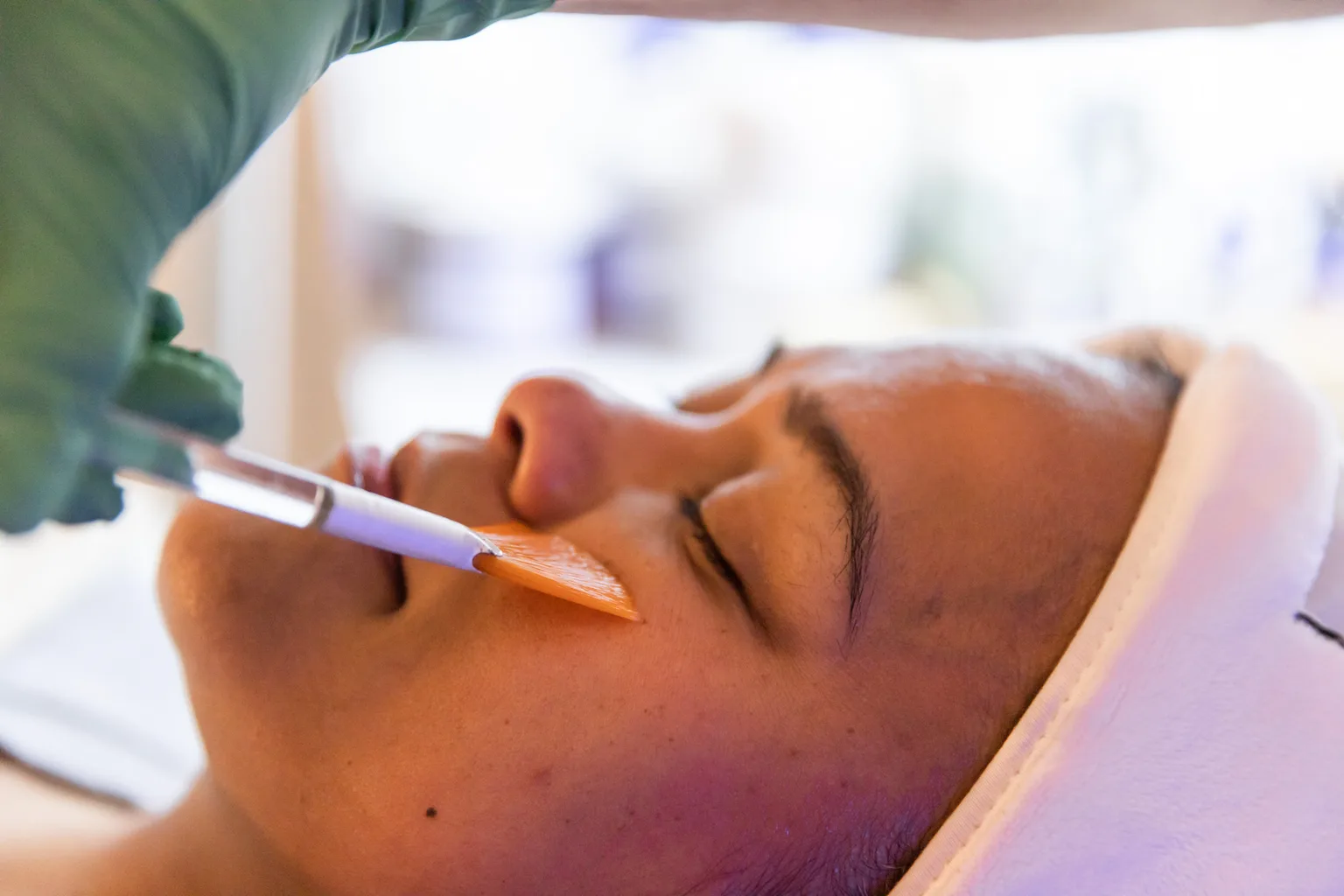
- Layered application. The provider applies the solution in two or more passes. You will feel tingling or brief stinging that fades quickly as the numbing effect sets in, and the skin may show a light white frost, the visual cue that the peel has reached its intended depth.
- The leave-on period. Unlike many peels, the solution is not neutralized in the office. You leave with it on the skin, and it continues working for about four hours, or as directed for your specific protocol.
- Wash-off and towelettes at home. At the instructed time you rinse the peel off with water and begin the aftercare kit, which includes retinoic acid towelettes applied during the first one to two days to support even peeling.
- Peeling and follow-up. Visible flaking starts around day three and finishes near the end of the week. Your provider may recommend a short series of peels and set the spacing.
Who Is a Candidate? Safety and Side Effects
Most healthy adults researching a first professional peel are reasonable candidates for a VI Peel, and its suitability across skin tones is one of its defining strengths. It is still a real chemical peel with real considerations. Expect temporary redness, tightness, sensitivity, and several days of visible flaking. Less common issues include prolonged redness, breakouts as congested pores clear, temporary darkening of treated spots before they flake away, and, rarely, pigment changes or infection when aftercare instructions are not followed.
Certain situations call for postponing or avoiding treatment. You should not have a VI Peel if you are pregnant or nursing, if you have an aspirin or salicylate allergy (the formula contains salicylic acid), or if you have recently taken isotretinoin, until your prescriber clears you. A history of cold sores matters too, since any peel can reactivate them; providers often prescribe a preventive antiviral first. People with active skin infections, open lesions, or a history of keloid scarring need individual evaluation. The safest path is a consultation with someone who performs these peels regularly, so find a qualified provider and bring your full medical history to that conversation.
VI Peel Recovery: Day by Day
Recovery is short compared with a traditional medium peel, and it follows a predictable rhythm:
- Day 1. The skin may look slightly red or bronzed after you wash the solution off. It often feels tight, like a mild sunburn. You apply the first post-peel towelette as directed.
- Day 2. Tightness increases and the skin can look darker or slightly weathered. This is expected and temporary.
- Day 3. Peeling typically begins, usually around the mouth first, where facial movement is greatest.
- Days 3 to 5. This is the heaviest peeling window. Do not pick or pull at the skin, since peeling early can cause irritation or pigment marks. Keep the skin moisturized with the products in your kit.
- Days 6 to 7. Flaking tapers off and finishes, revealing brighter, smoother skin.
- Weeks 2 to 4. Tone and clarity continue to improve as the new skin settles. If a series is planned, your provider sets when the next peel is scheduled.
Throughout recovery, strict sun protection is essential. Freshly revealed skin is more vulnerable to UV damage, and unprotected sun exposure is the fastest way to undo pigment improvements. Daily broad-spectrum sunscreen should continue well beyond the first week.
Results: What to Expect and How Long They Last
You may see a noticeable change after a single peel: brighter, smoother, more even-toned skin once flaking finishes around the one-week mark. Before and after photos of the VI Peel can show faded sun spots and post-acne marks, calmer breakouts, and refined texture, with the most dramatic comparisons coming after a series rather than a single session. Deeper concerns such as melasma, established acne, or years of sun damage may need a short series of treatments, spaced as your provider advises; melasma can return, so ask your provider whether and when to repeat treatment.
How long results last depends on your skin, your sun habits, and the concern being treated. Mayo Clinic says peel results may not be permanent; daily sunscreen helps maintain results, and your provider can tell you whether and when to repeat a peel. Results vary from person to person, so look for a provider who can show you their own before and after outcomes for skin similar to yours.
How Much Does a VI Peel Cost?
ChemicalPeel.org does not publish a VI Peel price because it has no verified fee to cite. Pricing varies with the formula used, the provider’s credentials, and your region, and because a plan may involve a short series of peels, ask what the full series would cost. ChemicalPeel.org is an education resource rather than a clinic, so ask each provider for a written quote during consultation. For industry estimates by peel depth, which describe a depth and are not a VI Peel price, see our chemical peel cost guide.
VI Peel vs. TCA Peel: Which Is Right for You?
Because TCA is the workhorse ingredient inside the VI Peel, many people weigh the branded blend against a traditional TCA peel at full strength. The right choice depends on your concern, your skin tone, and how much downtime you can accept.
| Comparison factor | VI Peel (blended) | Traditional TCA peel |
|---|---|---|
| Formula | TCA, salicylic acid, retinoic acid, low-dose phenol, vitamin C | TCA alone, typically at higher concentration |
| Depth | Light to medium, epidermis into upper dermis | Medium, upper dermis |
| Best for | Pigmentation, acne, tone and texture, first-time peels | Moderate wrinkles, more pronounced sun damage and scarring |
| Comfort | Brief tingling, self-numbing effect | More intense stinging, often with topical numbing |
| Downtime | Peeling days 3 to 7 | Skin crusts and peels off over 7 to 14 days after a medium peel (Cleveland Clinic) |
| Deeper skin tones | Formulated for a broad range of Fitzpatrick types | Higher pigment risk, needs careful provider selection |
| Typical plan | A short series; your provider sets the spacing | Single treatment or occasional repeats |
As a rule of thumb, the VI Peel favors tone, clarity, and gentler recovery, while a full-strength TCA peel favors deeper textural change in exchange for a harder week. A provider who offers both can tell you honestly which one matches your goals.
VI Peel Before and After: What Changes and When
A VI Peel before and after comparison follows a fairly predictable script, because the blended formula is designed for a short, contained recovery rather than a dramatic single event. On day one, right after the solution is removed, skin looks slightly red or bronzed and feels tight, but there is no visible peeling yet. Tightness builds through day two, and by day three the skin usually starts to flake, most noticeably around the mouth where movement is greatest. Days three through five are the heaviest peeling window, and flaking tapers off and finishes by around day six or seven, when the new skin underneath is fully revealed.
Because that new skin is what shows up in a before and after photo, most people cannot judge the real result until the flaking is completely finished, usually right around the one week mark. At that point, a single VI Peel commonly shows brighter, more even tone, calmer breakouts, and smoother texture. Sun spots and post-acne marks fade noticeably but rarely disappear after only one treatment.
How many sessions a before and after comparison needs depends on the concern. Uneven tone, early sun damage, and mild texture issues may show a satisfying change after a single peel. Deeper concerns, including established melasma, active acne, and years of accumulated sun damage, may need a short series of sessions, spaced as your provider advises, before the full before and after difference is visible; melasma can return, so ask your provider whether and when to repeat treatment. Our TCA peel guide and our overview of chemical peel depths put the VI Peel’s short recovery in context against other medium-depth options.
Frequently Asked Questions
What is a VI Peel?
A VI Peel is a branded, medium-depth chemical peel that blends trichloroacetic acid (TCA), salicylic acid, retinoic acid, a low concentration of phenol, and vitamin C. It is applied by a trained professional and is designed to improve pigmentation, acne, and early signs of aging with about a week of visible peeling.
What does a VI Peel do?
A VI Peel exfoliates the epidermis and reaches into the upper dermis to fade dark spots and melasma, calm acne, soften fine lines, and smooth uneven tone and texture. Your provider may recommend a short series of peels and set the spacing.
What do VI Peel before and after results look like?
You may see brighter, more even-toned skin within about a week of a single peel, once flaking finishes. Before and after photos can show faded dark spots, fewer breakouts, and smoother texture after a series, though individual results vary with skin type, concern, and aftercare.
How much does a VI Peel cost?
ChemicalPeel.org does not publish a VI Peel price because it has no verified fee to cite. Prices vary by provider, region, and formula, so ask for a written quote during a consultation.
Does a VI Peel hurt?
Most people feel tingling or mild stinging for a few minutes rather than real pain. The low concentration of phenol in the solution has a numbing effect, so discomfort usually fades quickly as the layers are applied. The days that follow feel more like a tight sunburn than pain.
How long does it take to peel after a VI Peel?
Peeling usually begins around day three after treatment, is heaviest on days three through five, and finishes by about day six or seven. Skin generally looks fresh and even by the end of the first week, though timing varies from person to person.
When do VI Peel before and after results actually show up?
You may see a visible change about a week after a single VI Peel, once the heaviest peeling on days three through five finishes and flaking tapers off by day six or seven. A single session can brighten tone and calm breakouts, while deeper concerns such as melasma or established acne marks may need a short series of sessions, spaced as your provider advises.
Medical Disclaimer
This page is provided by ChemicalPeel.org for patient education and is not medical advice. Individual results vary, and the information here does not replace a consultation with a qualified provider. Always discuss your medical history and treatment options with a licensed clinician before pursuing any chemical peel.
Ready to Take the Next Step?
The VI Peel pairs meaningful results with a manageable week of recovery, and the outcome depends heavily on who applies it. Find a qualified VI Peel provider near you to discuss which formula matches your goals, or keep researching and compare all chemical peel types to be confident this is the right depth for your skin.