Written by the ChemicalPeel.org editorial team. Published November 26, 2026.
Clinical review pending. This page has not yet been reviewed by a licensed clinician; read it as patient education, not medical advice. How we review
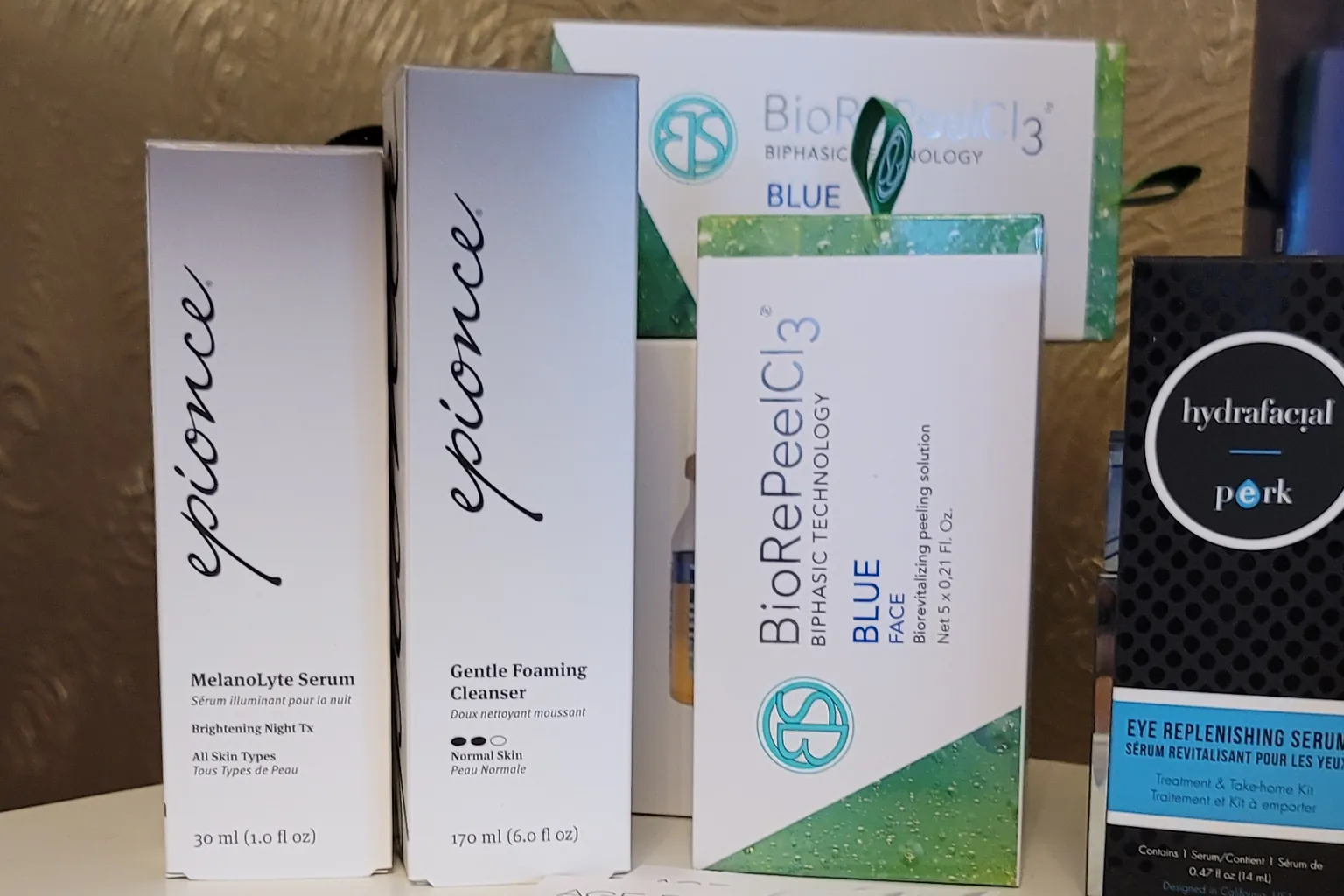
BioRePeelCl3 and VI Peel both use trichloroacetic acid (TCA) without requiring prolonged weeks of heavy crusting, yet they differ cleanly in formulation chemistry, in-clinic wipe-off versus home wash-off application, and predictable visible shedding. As outlined on our BioRePeel clinical guide, BioRePeelCl3 FND pairs 35% TCA for face, neck, and decolletage (or 50% TCA in BioRePeelCl3 BODY) with amino acids, vitamins, and a lipophilic squalane top phase wiped clean in clinic, whereas VI Peel layers TCA alongside salicylic acid, retinoic acid, phenol, and vitamin C inside a timed home-rinse kit.
Clarifying those structural differences keeps patients from believing marketing shorthand claiming BioRePeel produces zero visible flaking under every circumstance or expecting identical recovery when schedules demand camera-ready appearances. Compare adjacent non-frosting options on our PRX-T33 vs. BioRePeel overview and traditional medium comparisons on VI Peel vs. TCA peel.
BioRePeel vs. VI Peel: Side-by-Side Comparison
Biphasic lipophilic shielding gives BioRePeel a short in-clinic contact protocol with lighter surface disruption, whereas VI Peel leaves five synergistic acids on intact skin for several hours to stimulate broader sheet peeling.
| Clinical Factor | BioRePeelCl3 (FND / BODY) | VI Peel |
|---|---|---|
| Primary TCA fraction & formula | FND: 35% TCA (BODY: 50% TCA) buffered with salicylic, tartaric, lactobionic, citric acids, amino acids & squalane phase | Lower-fraction TCA combined with retinoic acid, salicylic acid, phenol & vitamin C |
| Application workflow | Applied in clinic for timed contact (several minutes), then wiped off cleanly before leaving | Layered in clinic and left on the skin roughly 4 hours before patient washes at home |
| Typical visible shedding | Often mild or subtle powdery flaking around days 2 to 5 (visible peeling still possible; not guaranteed "no-peel") | Usually visible peeling starting around day 3 and resolving over days 5 to 7+ |
| Session cadence | Commonly spaced every 7 to 14 days across a short series (often 4 to 6 visits) | Typically spaced every 4 to 6 weeks per treatment cycle |
| Shared precautions | Confirm aspirin/salicylate allergies, skin tone priming, and retinoid hold rules | Contraindicated in aspirin allergy, pregnancy, breastfeeding, and active cold sores |
According to Cleveland Clinic chemical peel guidance and DermNet chemical peel standards, even buffered medium-acid products require trained clinician assessment because stinging, uneven absorption, and post-inflammatory pigment shifts still occur when contraindications or home prep rules are ignored.
Why "No-Peel" Shorthand Misleads Patients Considering BioRePeel
While BioRePeel's squalane upper layer slows immediate surface dehydration so patients frequently see far less dramatic sheet shedding than traditional unbuffered TCA or VI Peel, no 35% TCA medical product carries an unconditional guarantee of zero flaking. Skin barrier dryness, ongoing tretinoin use, and sun damage all determine whether a cheek stays smooth or sheds dusty white flakes between days 2 and 5.
Conversely, a classic VI Peel protocol expects clear visible peeling during week 1 as retinoic acid accelerates upward epidermal shedding alongside salicylic comedolysis. Review pigment-heavy blend differences in our VI Peel vs. The Perfect Derma Peel guide if target spots sit inside stubborn dermal melasma or deep post-acne discoloration.
Which Peel Fits Your Goals, Cadence, and Event Calendar?
Choosing cleanly between BioRePeel and VI Peel depends on whether you want minimal calendar downtime paired with shorter biweekly visits or a single multi-day peel cycle addressing deeper tone and acne marks.
Discuss these practical selection points during intake:
- Explore BioRePeelCl3 FND when: You want gradual tone brightening, mild acne congestion smoothing, and flexible week-to-week social schedules without prominent multi-day sheet peeling, and can complete 4 to 6 shorter visits spaced 1 to 2 weeks apart.
- Explore VI Peel when: You can protect 5 to 7 days of noticeable flaking for deeper solar pigment, stubborn acne marks, or textured tone using a structured post-care packet at home.
- Confirm cost transparently before starting: ChemicalPeel.org does not publish a fixed VI Peel price; inspect itemized clinic package fees using our VI Peel cost guide rather than comparing single-visit headline stickers against 4-session bundles.
Mandatory Safety Screening Before Either TCA-Based Blend
Both BioRePeelCl3 and VI Peel contain salicylic acid alongside TCA, requiring identical intake discipline: screen for aspirin (salicylate) allergies, pause prescription retinoids 5 to 7 days prior unless cleared, avoid recent tanning beds or active sunburn, and defer treatment completely over broken barrier eczema, active cold sores, pregnancy, or nursing.
Following strict mineral zinc oxide SPF 30+ and bland ceramide moisture after either treatment protects healing melanocytes across all Fitzpatrick phototypes.
Frequently Asked Questions
Is BioRePeel really a "no-peel" peel compared with VI Peel?
No formula guarantees zero peeling for every patient. BioRePeel's lipophilic shielding typically yields far subtler powdery flaking (or minimal visible shedding) compared with VI Peel's multi-day peeling sheets, though mild dryness and light flaking between days 2 and 5 are still common.
Does BioRePeel contain a higher percentage of TCA than VI Peel?
BioRePeelCl3 FND lists 35% TCA (and BioRePeel BODY lists 50% TCA) buffered inside an amino-acid and lipid-phase carrier cleared after minutes in the chair, whereas VI Peel uses a lower TCA fraction blended with retinoic acid and phenol left on for 4 hours. Acid percentage alone never determines depth without pH and contact protocol.
How many BioRePeel sessions equal one VI Peel?
No fixed conversion holds across every skin type, as providers often schedule 3 to 6 biweekly BioRePeel sessions for gradual texture and acne maintenance, versus 1 to 3 VI Peels spaced monthly for targeted melasma or acne discoloration.
Which peel hurts less, BioRePeel or VI Peel?
Most patients describe mild transient warmth or tingling for both treatments: BioRePeel benefits from brief contact time before wiping clean, while VI Peel contains phenol for mild local numbing during application.
Can you switch from BioRePeel to VI Peel later?
Yes, once your skin completes its initial biweekly recovery series and barrier hydration remains steady, a clinician can transition to a VI Peel for deeper seasonal pigment clearing if clinically appropriate.