Written by the ChemicalPeel.org editorial team. Published November 25, 2026.
Clinical review pending. This page has not yet been reviewed by a licensed clinician; read it as patient education, not medical advice. How we review
VI Peel and traditional trichloroacetic acid (TCA) peels both deliver medium-depth resurfacing, yet they differ sharply in formulation design, comfort during application, and suitability across skin tones. While a classic TCA peel uses titrated concentrations of single-agent TCA to coagulate skin proteins, the proprietary VI Peel buffers a lower TCA fraction alongside retinoic acid, salicylic acid, phenol, and vitamin C inside standardized peel depths.
Choosing between these two medical-grade options starts with clarifying your primary skin concern, Fitzpatrick phototype, and tolerance for downtime. Practices customize traditional TCA concentrations from light 10% passes up to strong 35% dermal resurfacing, whereas VI Peel kits follow standardized timed leave-on protocols with included post-care packets. Neither option is universally superior; both require in-person screening by a qualified clinician.
VI Peel vs. TCA Peel: Side-by-Side Comparison
Traditional TCA relies on acid percentage and layer count to drive dermal coagulation, whereas VI Peel blends multiple lower-strength actives to reach medium-depth turnover with less acute stinging. The table below contrasts formulation, depth, and recovery expectations.
| Feature | VI Peel | Traditional TCA Peel |
|---|---|---|
| Active ingredients | Proprietary blend of TCA, retinoic acid, salicylic acid, phenol, and vitamin C | Single-agent trichloroacetic acid (10% to 35%+) |
| Depth classification | Standardized medium-depth blend | Adjustable from superficial (10% to 15%) to medium (20% to 35%) |
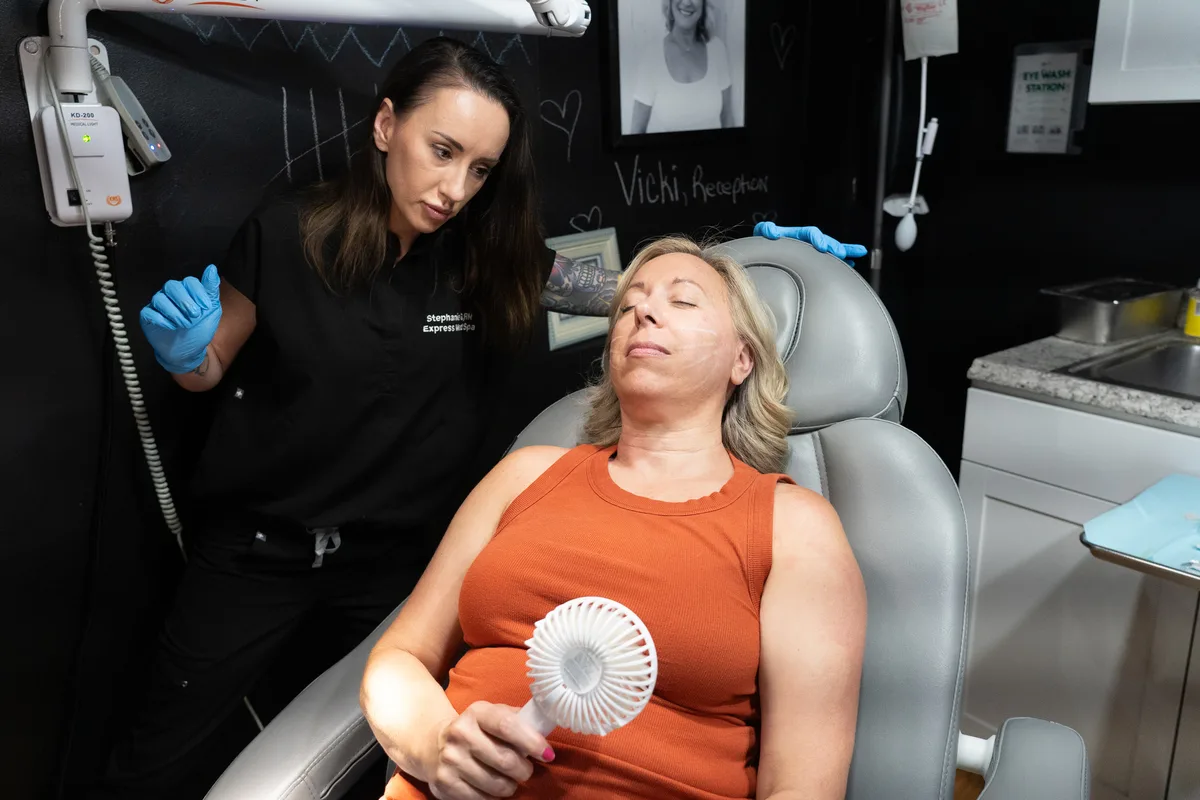
| Application sensation | Mild tingling; phenol provides slight local numbing | Moderate to intense stinging/heat; requires cooling fan |
| Visible endpoint | Minimal to mild uniform erythema before leaving clinic | Distinct white frosting from epidermal protein coagulation |
| Typical recovery timeline | Peel left on 4 hours; flaking days 3 to 7 | Darkening and heavy crusting/peeling over 7 to 14 days |
| Fitzpatrick IV to VI risk | Formulated for broader skin-tone versatility with strict post-care | Higher risk of post-inflammatory pigment changes above 15% to 20% |
As documented in DermNet chemical peel clinical standards, traditional TCA remains the benchmark agent for medium-depth peels reaching the papillary dermis, while blended commercial systems aim to moderate acute caustic irritation.
How Does a Blended VI Peel Differ From Pure TCA?
A VI Peel spreads resurfacing work across five synergistic ingredients rather than relying on high-percentage TCA protein coagulation alone. Salicylic acid clears oil-filled pores, retinoic acid accelerates cellular turnover, phenol reduces immediate discomfort and aids penetration, and vitamin C supplies antioxidant brightening alongside the TCA base.
This multi-pathway design allows providers to pick targeted kits such as acne-focused or pigment-focused variants without manually mixing acids chairside. Conversely, a traditional TCA peel gives trained clinicians precise anatomical control, letting them layer stronger acid selectively over etched perioral wrinkles or deep focal acne scars while keeping surrounding areas lighter. For deeper comparison of combination systems, read our Jessner vs TCA peel guide.
Which Peel Is Safer for Darker Skin Tones?
Blended VI Peel formulations generally carry lower thermal-coagulation shock on Fitzpatrick IV to VI skin than unbuffered medium-strength TCA peels, though pigment risk still exists with either treatment. High-concentration traditional TCA causes brisk epidermal injury and white frosting that can overstimulate melanocytes in melanin-rich complexions.
Patients with medium-to-deep skin tones seeking pigment correction should review our chemical peels for dark skin guide before committing to any medium peel. Clinicians frequently require 2 to 4 weeks of pre-conditioning with tyrosinase inhibitors and strict broad-spectrum sunscreen regardless of whether they select a buffered VI Peel or low-percentage TCA.
What Does Recovery Look Like for Each Peel?
Recovery after a VI Peel follows a structured 7-day schedule using manufacturer-supplied cleansers and protectant creams, whereas traditional TCA recovery varies from 5 days to 14 days depending on percentage and layering. Understanding visible shedding windows prevents premature picking and scheduling conflicts.
According to the Cleveland Clinic chemical peel recovery overview, medium peels commonly produce redness, swelling, and 7 to 14 days of crusting and peeling. With a VI Peel, patients leave the solution on the skin for roughly 4 hours before washing at home; sheet flaking typically starts on day 3 and subsides by day 7. Stronger 25% to 35% TCA causes immediate tightening, temporary bronze darkening, and thicker shedding over 1 to 2 weeks.
How Should You Compare Cost Quotes for VI Peel vs. TCA?
Comparing quotes between a VI Peel and a traditional TCA peel requires requesting an itemized written estimate covering the visit fee, included post-care products, and follow-up checks. ChemicalPeel.org does not publish a fixed VI Peel price because verified fee ranges vary by clinic and we do not quote unsourced national VI Peel pricing.
Check our VI Peel cost guide and TCA peel cost guide to see which factors change clinic quotes, including geographic setting, provider credentials, series packages, and whether soothing recovery kits are bundled into the total fee. Always confirm pre-treatment prep instructions and emergency after-hours contact details before paying a deposit.
Pre-Peel Preparation Rules for Both Medium-Depth Peels
Both VI Peel and traditional TCA peels require disciplined pre-peel preparation for 7 to 14 days so active ingredients penetrate evenly without patchy hot spots. Pausing prescription retinoids, harsh scrubs, and facial waxing beforehand prevents accidental over-exfoliation and lowers post-inflammatory darkening risk across medium-depth resurfacing.
Follow chemical peel preparation guidelines and AAD patient preparation steps carefully: disclose any history of facial cold sores so antiviral prophylaxis can be arranged if indicated, avoid sunburn or self-tanner before the visit, and confirm oral isotretinoin has been discontinued for the full medical waiting window.
How to Decide Between VI Peel and Traditional TCA at Consultation
Selecting between a VI Peel and a traditional TCA peel comes down to whether your skin responds better to a multi-ingredient buffered protocol or single-agent depth titration. Discussing scar depth, melasma triggers, aspirin allergies, and available social downtime lets a qualified clinician recommend the safer option.
Use this decision checklist when reviewing options at a qualified aesthetic clinic:
- Prioritize VI Peel if: You want standardized 7-day peeling for acne marks, melasma variants, or mixed tone across diverse skin types and have no aspirin allergy.
- Prioritize traditional TCA if: You need customizable focal strength for deeper wrinkles, solar elastosis, or ice-pick acne scars under close clinical titration.
- Pause and reassess if: You are pregnant, breastfeeding, actively sunburned, or unable to stay strictly shaded during recovery week.
Frequently Asked Questions
Is a VI Peel stronger than a TCA peel?
No, a traditional medium-to-high-percentage TCA peel (25% to 35%) generally penetrates deeper and causes heavier protein coagulation than a standard VI Peel. A VI Peel contains TCA blended at lower strength with salicylic acid, retinoic acid, phenol, and vitamin C for controlled medium-depth resurfacing with milder discomfort.
Which is better for acne scars, VI Peel or TCA?
Superficial rolling scars and post-acne discoloration often respond well to a series of VI Peels, particularly acne-targeted variants. Deeper ice-pick or stubborn atrophic acne scars frequently require higher-strength traditional TCA peels or focal TCA CROSS performed by an experienced aesthetic clinician.
Can you get a VI Peel if you are allergic to aspirin?
No, traditional VI Peel formulations contain salicylic acid, a beta hydroxy acid chemically related to aspirin (salicylates). Patients with documented aspirin or salicylate allergies should disclose that history during intake so their clinician can recommend an alternative salicylic-free peel protocol.
Does a VI Peel hurt less than a TCA peel?
Most patients report that a VI Peel stings less than an unbuffered medium-depth TCA peel because the formula includes phenol, which produces a mild numbing sensation, alongside lower-percentage TCA. Traditional TCA creates an intense temporary burning heat that clinicians manage with handheld cooling fans and cold compresses.
How many sessions of VI Peel vs. TCA are needed?
Many patients achieve noticeable brightening after 1 VI Peel, though providers often recommend a series of 2 to 3 peels spaced 4 to 6 weeks apart for stubborn melasma or acne scars. Medium-depth traditional TCA peels are often performed as a single corrective session spaced months apart.