Written by the ChemicalPeel.org editorial team. Published September 25, 2026.
Clinical review pending. This page has not yet been reviewed by a licensed clinician; read it as patient education, not medical advice. How we review
Jessner's solution and trichloroacetic acid, TCA, come up together whenever a concern may need more than a superficial refresh. Both can work at a medium depth, both are sometimes used in the same appointment, and both come up when the topic is pigment, acne or rough texture. They are not interchangeable. One is a fixed blend where the number of coats does the work; the other is a single acid whose strength sets the depth. This guide compares the two so you can ask the right questions at a consultation.
What Each Peel Actually Is
Jessner's solution is a fixed formula, not a single acid. The classic version combines salicylic acid, lactic acid and resorcinol at equal strength, commonly 14 percent each, dissolved in ethanol. Salicylic acid is oil soluble, so it can work into oily pores. A modified, resorcinol-free version replaces it with citric acid. Our Jessner's peel guide covers the full formula.
TCA is different in kind, not just in name. It is one acid, used across a wide strength range, from light concentrations for a superficial refresh to stronger solutions for real medium depth work. Because it is a single ingredient, the provider's control over concentration, passes and technique matters more than the number on the label. Our TCA peel guide covers those strength ranges.
How Depth Is Controlled
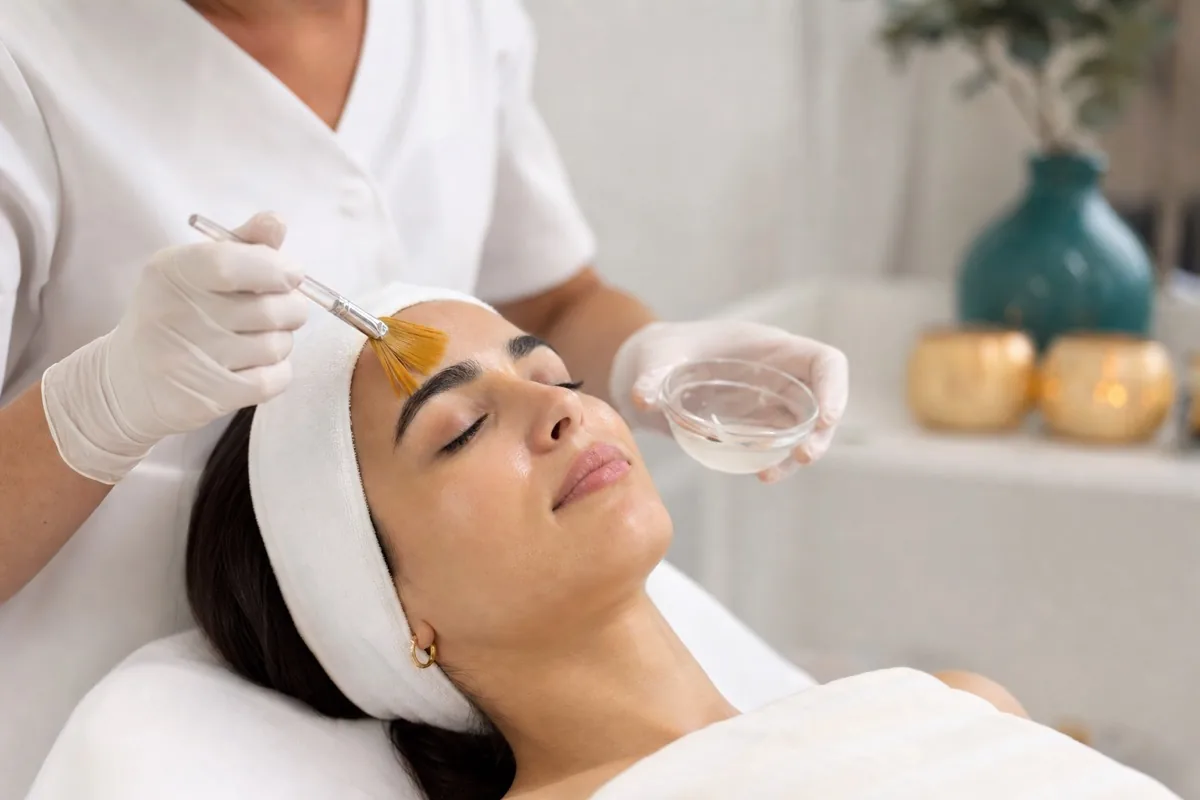
With Jessner's solution, depth is mostly a function of coats. A single coat stays superficial, within the outer skin layer. The formula itself does not change, so each added coat takes the peel deeper, toward medium depth.
TCA works the opposite way: the strength of the solution changes, not how many times it goes on. Lower concentrations stay superficial, medium strengths reach further into the skin, and the provider picks a starting concentration for the goal, sometimes adding extra passes. Depth builds with each pass, so the provider judges it by how the skin responds rather than by the concentration alone.
Both peels sit on the same superficial to medium scale used across chemical peels generally. A single coat of Jessner's and a light TCA concentration both stay superficial; layered Jessner's, medium strength TCA and the two combined reach further, into the upper dermis. Our chemical peel depths guide explains that scale in full.
Frosting: What the Whitening Signals
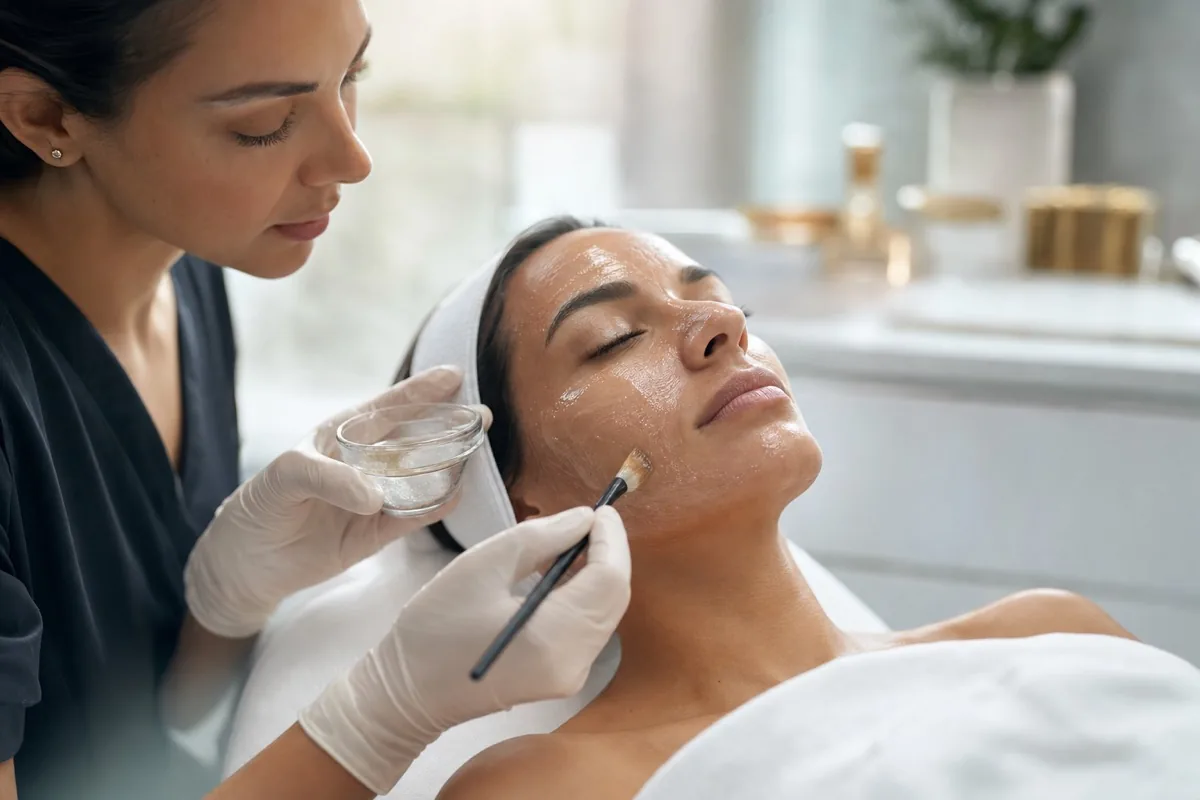
During either peel, treated skin can turn white as the acid reacts. This is called frosting, and providers use it as a real-time sign of how deep the peel has gone, not as a side effect. A light, patchy frost with redness showing through is typical of a superficial peel. A uniform, white-coated frost with redness still showing through is the usual target for a medium depth peel, and a solid white frost with little or no redness, linked to the acid passing through the papillary dermis, is sometimes needed on thicker or more sun-damaged skin. The frost from Jessner's solution is much lighter than the frost from TCA. With TCA, the provider waits a few minutes for the frost to reach its peak, then touches up any area that frosted unevenly.
Jessner's and TCA Together: The Combination Peel
Providers often want a medium depth result without pushing TCA strength as high as it would otherwise need to go, which is what a combined Jessner's and TCA peel does. Jessner's solution goes on first. It breaks up the outer skin layer's barrier, which lets a lower strength of TCA, commonly 35 percent, penetrate deeper and more evenly than the same TCA would on its own. The result reaches a similar depth to a stronger straight TCA peel while using less TCA, one reason the combination is linked to fewer complications, such as scarring. This is what people mean by a Jessner's and TCA peel done together, a medium depth technique described in the dermatology literature since 1989, not a shortcut.
Downtime and Peeling, Realistically
Recovery follows a similar arc for both at the same depth. After a medium depth peel, expect redness, swelling, stinging and flaking. Swelling can last or even worsen for about 48 hours, and blisters can form and break open. The skin then crusts and peels off over about one to two weeks. By the end of the first week the bright red has usually faded to pink, and the pink fades fully within two to three weeks. A single coat of Jessner's alone is a superficial peel, with scaling that usually lasts three to seven days, so ask which version is planned before comparing notes with a friend. Our peeling and recovery timeline guide covers day by day expectations.
What Each One Treats Best
Jessner's solution leans toward acne prone and oily skin, since its salicylic acid is oil soluble and works inside pores, and it has been used as an acne peel for more than a century. Our salicylic acid peel guide covers that mechanism on its own. As a light peel it also helps reduce pigment and surface dryness, but it works at the surface, so it is not the peel for acne scarring; our guide to chemical peels for acne scars covers the deeper options.
At medium strength, TCA reaches the upper dermis. It reduces blotchy pigmentation, freckling and the rough sun damage spots called actinic keratoses, and it makes fine wrinkles and some acne scars less obvious. A separate technique called TCA CROSS deposits a small amount of highly concentrated TCA onto individual depressed acne scars, including ice pick scars. See chemical peels for hyperpigmentation for how pigment responds. Neither peel treats deep wrinkles, deep scars or sagging skin, which respond poorly to chemical peels in general.
Skin Tone and the Risk of Dark Marks
The risk to plan around with either peel is post inflammatory hyperpigmentation, skin healing darker than the area around it once the peel's inflammation settles. Because of that risk, providers usually choose lighter peels for darker skin. That is not a reason to avoid a peel with deeper skin; it is a reason to favor a lighter one, such as a single coat rather than layered Jessner's, or a lower TCA strength. Our chemical peels for dark skin guide covers how providers adjust peel choice and strength for deeper skin tones.
Who Should Apply These Peels
A single light coat of Jessner's solution is a superficial peel, the kind a trained nurse or esthetician may perform. Layered Jessner's, medium strength TCA and the two combined are medium depth work, usually performed by a dermatologist or plastic surgeon. Ask who will apply your peel and how often they work at that depth. The FDA advises using a chemical peel only under the supervision of a licensed, trained provider, so neither peel belongs at home. Our notes on choosing a provider cover what to ask before you book.
Both peels are generally postponed during pregnancy and breastfeeding, and the treatment area must be free of open sores, lesions or skin infections, as our guide to who should not get a chemical peel explains. Tell your provider about any history of keloid scarring and any recent isotretinoin use. A dermatology consensus found no good evidence for delaying a superficial peel after isotretinoin; that finding covers superficial peels, so ask your provider about timing for a medium depth peel. Mention any history of cold sores too, since a peel can reactivate one and your provider can prescribe medicine to reduce that chance.
Call your provider, rather than waiting it out, for spreading redness, pus, fever or worsening pain. Redness, swelling, stinging and flaking are expected; those signs are not. Our chemical peel side effects guide and aftercare guide cover what is normal and what is not.
Jessner's Peel vs TCA Peel at a Glance
| Feature | Jessner's solution | TCA |
|---|---|---|
| Ingredients | Salicylic acid, lactic acid and resorcinol, or citric acid in modified versions, in ethanol | A single acid, trichloroacetic acid, at a chosen strength |
| Depth control | Number of coats applied | Acid concentration, number of passes and technique |
| Typical depth | Superficial at one coat, medium with layering | Superficial at low strength, medium at higher strength |
| Frosting | Light, patchy frost, much lighter than TCA's | Uniform white frost, sometimes solid white, at medium depth |
| Typical downtime | About three to seven days for a single coat, one to two weeks layered | About one to two weeks at medium strength |
| Common uses | Acne, oily skin, pigment, surface dryness | Pigment, sun damage, fine wrinkles, some acne scars |
| Who applies it | Single coat: a trained nurse or esthetician may apply it. Layered: usually a dermatologist or plastic surgeon | Medium strength: usually a dermatologist or plastic surgeon |
What These Peels Cost
Fees for either peel vary by depth, provider and region, so treat any number you see online as a starting point rather than a quote. Our chemical peel cost guide and TCA peel cost guide cover the site's typical United States ranges by depth.
Choosing Between Them
If oiliness, breakouts or dull texture are the main complaint, Jessner's solution alone is usually the simpler starting point. If pigment, sun damage, fine wrinkles or some acne scars are the target, medium depth TCA, sometimes primed with Jessner's, is the more direct route. A consultation with an experienced provider, not a search result, decides which one is right for you. You can find a provider near you to start that conversation, or browse every option in our peel types guide.
Medical Disclaimer
This page is provided by ChemicalPeel.org for patient education and is not medical advice. Individual results vary, and nothing here replaces a consultation with a qualified, licensed clinician who has examined your skin.
Frequently Asked Questions
What is the difference between a Jessner's peel and a TCA peel?
Jessner's solution is a fixed blend of salicylic acid, lactic acid and resorcinol, and depth is controlled mainly by how many coats are applied. TCA is a single acid used across a range of strengths, so depth is controlled mainly by concentration, the number of passes and technique. Both can reach a superficial or medium depth depending on how they are used.
Can Jessner's solution and TCA be used together?
Yes. Providers commonly apply Jessner's solution first to break up the outer skin layer's barrier, then follow with a lower strength of TCA, commonly 35 percent, that penetrates deeper and more evenly as a result. This combination reaches a medium depth similar to a stronger TCA peel alone, while using less TCA.
Which is better for acne scars, Jessner's or TCA?
TCA. At medium strength it makes fine wrinkles and some acne scars less obvious, and a technique called TCA CROSS deposits highly concentrated TCA onto individual depressed acne scars, including ice pick scars. Jessner's solution is used for acne itself rather than for scarring. Neither peel treats deep scars.
Are Jessner's and TCA peels safe for darker skin tones?
Both can be used in darker skin tones, but the main concern is post inflammatory hyperpigmentation, skin healing darker than the surrounding area. Because of that risk, providers usually choose a lighter peel for darker skin: a single coat of Jessner's rather than layering, or a lower TCA strength.
How long does peeling last after a Jessner's or TCA peel?
After a medium depth Jessner's, TCA or combined peel, expect redness and swelling that can worsen for about 48 hours, then crusting and peeling over about one to two weeks. The red fades to pink by about the end of the first week and fades fully within two to three weeks. A single light coat of Jessner's scales for about three to seven days.
Who should perform a Jessner's or TCA peel?
A single light coat of Jessner's solution is a superficial peel, which a trained nurse or esthetician may perform. Layered Jessner's, medium strength TCA and the two combined are medium depth peels, usually performed by a dermatologist or plastic surgeon. The FDA advises using a chemical peel only under the supervision of a licensed, trained provider, so neither belongs at home.