Written by the ChemicalPeel.org editorial team. Published July 18, 2026. Updated September 2, 2026.
Clinical review pending. This page has not yet been reviewed by a licensed clinician; read it as patient education, not medical advice. How we review
A Jessner’s peel is a multi-acid chemical peel that combines salicylic acid, lactic acid, and resorcinol to lift away damaged surface skin and improve acne, uneven pigment, and rough texture. What makes it unusual among professional peels is its adjustable depth: a single coat produces a light, superficial treatment, while additional coats push it toward a medium-depth peel with more dramatic results and more visible peeling. This guide explains what a Jessner’s peel is, what it treats, how the layered procedure works, what recovery and aftercare look like day by day, and how it compares with a TCA peel, so you can discuss it confidently with a qualified provider.
What Is a Jessner’s Peel?
A Jessner’s peel is a professional chemical peel performed with Jessner’s solution, a formula developed by the dermatologist Dr. Max Jessner that blends three exfoliating ingredients into one treatment. That combination lets clinicians treat several concerns at once, which is why Jessner’s peels remain a staple for acne-prone skin, discoloration, and dull, rough texture decades after the formula was introduced.
Jessner Peel Ingredients: What Is in the Solution?
The classic Jessner’s solution contains three actives in an ethanol base, traditionally mixed at 14 percent each:
- Salicylic acid (14%). A beta hydroxy acid that dissolves in oil, so it travels into pores to clear congestion and calm breakout-prone skin.
- Lactic acid (14%). An alpha hydroxy acid that loosens the bonds holding dead cells to the surface while helping the skin hold moisture.
- Resorcinol (14%). An exfoliating antiseptic that boosts and evens out the penetration of the other two acids.
Many practices now also offer a modified Jessner’s solution, which replaces resorcinol with gentler ingredients such as citric acid. Clinicians often choose the modified version for sensitive skin or for deeper skin tones, where resorcinol’s added strength can raise the chance of irritation and post-treatment dark marks.
Where It Sits on the Chemical Peel Depth Ladder
Peels are grouped by how deeply they work. Superficial peels, such as a glycolic acid peel, exfoliate only the epidermis and involve minimal visible peeling. Medium-depth peels, most often TCA and layered Jessner’s peels, reach the upper dermis and treat more established pigment and texture concerns, with several days to about a week of peeling. Deep phenol peels reach the mid-reticular dermis and are reserved for severe damage under physician care. A Jessner’s peel is classically grouped with the medium peels, but its true depth depends on how many coats the clinician applies, which is why one person’s Jessner’s experience can be far milder than another’s. If you are early in your research, start with the chemical peel depth ladder to see how every option compares.
What a Jessner’s Peel Treats
Because it blends three complementary ingredients, a Jessner’s peel is one of the most versatile treatments in professional skincare. Providers most often recommend it for:
- Acne and congested, oily skin. The salicylic acid component clears pores while the peel as a whole reduces the buildup that feeds breakouts. Learn more about how chemical peels for acne are planned and sequenced.
- Melasma and hyperpigmentation. Layered exfoliation gradually lifts excess pigment, softening sun spots, melasma patches, and the dark marks acne leaves behind.
- Fine lines and early sun damage. Removing damaged surface layers smooths shallow lines and encourages fresher, more evenly toned skin.
- Rough texture and dullness. A full-face Jessner’s peel resurfaces uneven, flaky, or thickened skin so light reflects more evenly.
It is equally important to know what a Jessner’s peel does not treat well. Deep wrinkles, etched-in scarring, and significant skin laxity sit beyond its reach and usually call for a medium TCA peel, deeper resurfacing, or a different modality altogether. A board-certified provider can tell you honestly which category your concerns fall into.
How the Procedure Works
A Jessner’s peel appointment is short, typically 20 to 30 minutes, and the layering process is what sets it apart. Here is what a clinician does during a professional treatment:
- Consultation and skin prep. Your provider reviews your history, medications, and goals, and may have you prep the skin for two to four weeks, then pause retinoids for several days before the peel.
- Cleansing and degreasing. The skin is cleansed and wiped with a degreasing agent so the solution absorbs evenly rather than pooling where oil remains.
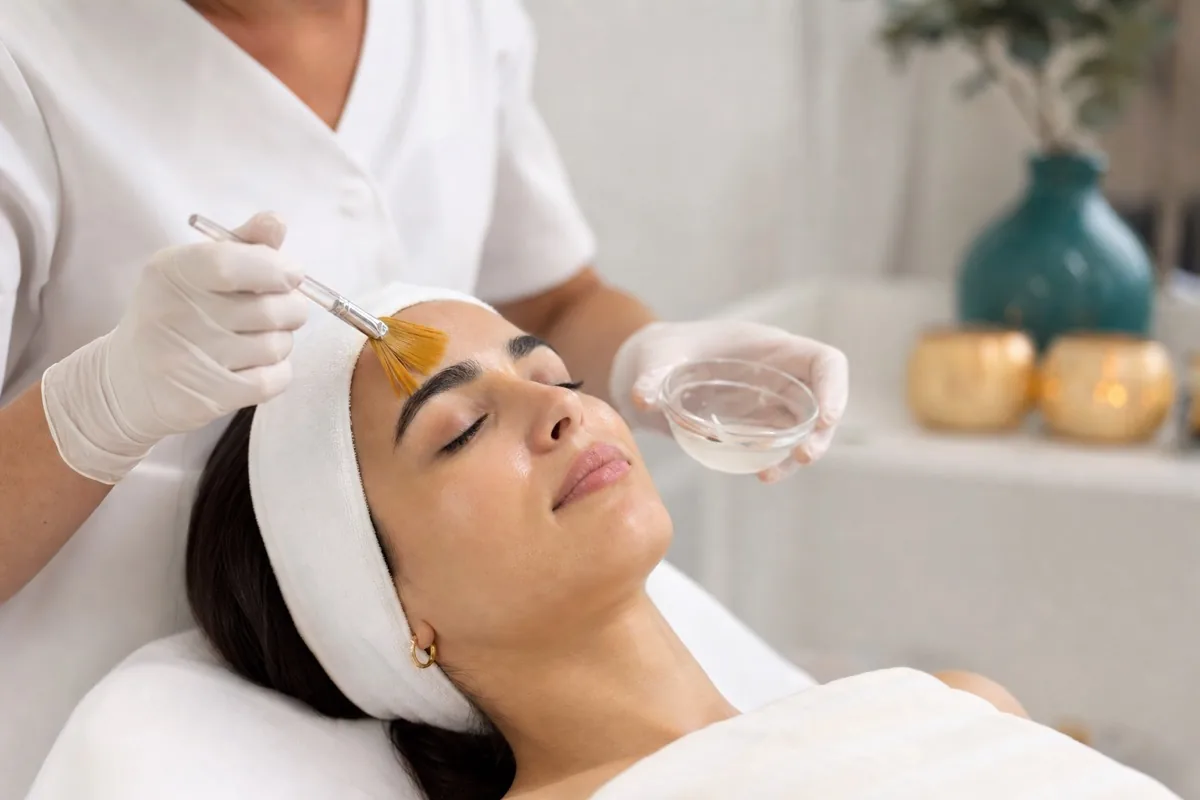
- First coat. The clinician applies Jessner’s solution in a thin, even layer with gauze or a brush. Expect warmth, tingling, or a mild sting that a handheld fan usually keeps comfortable.
- Assessment between coats. Jessner’s solution is self-neutralizing, so instead of rinsing it off, the clinician watches the skin’s response. Uniform redness and a light, speckled white frosting signal how deeply the peel has worked.
- Additional coats as needed. Most treatments use one to three coats. Each added layer deepens the peel, so the clinician stops as soon as the intended endpoint for your skin and goals is reached.
- Finishing and home instructions. The skin is cooled and protected with a bland moisturizer or ointment and sunscreen, and you leave with written aftercare directions.
Clinicians also use Jessner’s solution as the first step of a well-established combination medium peel, priming the skin so a layer of 35 percent TCA penetrates more evenly. That pairing is a deeper treatment with a longer recovery, and it belongs in experienced clinical hands.
Safety, Risks, and Who Should Avoid It
Performed by a trained professional on well-selected skin, a Jessner’s peel has a long safety record, but it is still a real chemical exfoliation with real considerations. Expected effects include redness, tightness, temporary darkening of the treated skin, and several days of flaking. Less common risks include prolonged redness, post-inflammatory hyperpigmentation (new dark marks triggered by irritation), infection, cold sore flare-ups in people prone to them, and, rarely, scarring when a peel is taken too deep or picked at during healing.
Certain people should avoid a Jessner’s peel or wait until circumstances change. Because the solution contains salicylic acid, anyone with an aspirin or salicylate allergy is not a candidate. The salicylic acid and resorcinol content also makes it unsuitable during pregnancy or breastfeeding. Providers screen for recent isotretinoin use, active skin infections, open lesions, and a history of cold sores, which may call for preventive antiviral medication first. Resorcinol deserves its own note: with repeated large-area use it has been linked to thyroid and sensitization concerns, one reason modified formulas exist.
Are You a Candidate?
Good candidates have acne-prone skin, surface pigment concerns, early sun damage, or rough texture, along with realistic expectations and a willingness to protect healing skin from the sun. With careful technique, Jessner’s peels can be performed across a wide range of skin types, and many clinicians favor the modified solution with gradual, conservative layering for deeper Fitzpatrick skin tones to lower the chance of post-inflammatory hyperpigmentation. Depth also determines who should perform the treatment. A light, single-coat Jessner’s peel may be offered by licensed skincare professionals where regulations allow, but layered, medium-depth applications belong with a physician, nurse practitioner, physician assistant, or clinician-supervised practice experienced in medium peels. This is not an at-home product, and copycat solutions sold online skip every safeguard the professional version relies on.
Recovery Timeline and Aftercare, Day by Day
Recovery from a Jessner’s peel is measured in days, not weeks. A typical course after a layered treatment looks like this:
- Day 1. Skin looks flushed and feels tight, similar to a sunburn or windburn. Redness is usually mild enough to go about your day.
- Days 2 to 3. The treated skin darkens slightly and may look tan or bronzed as the old surface layer prepares to release. Peeling usually begins around the mouth and chin, where the face moves most.
- Days 3 to 5. Peak flaking. Sheets or flakes of dry skin lift away. This is the stretch where resisting the urge to pick matters most, because pulling skin off early is the main preventable cause of dark marks and scarring.
- Days 5 to 7. Peeling finishes and fresh, smoother skin is fully visible. Slight pinkness can linger into the second week and fades on its own.
Aftercare is simple but non-negotiable. Follow your provider’s written instructions, which typically include:
- Wash with a gentle, non-exfoliating cleanser and lukewarm water.
- Keep the skin comfortable with a bland moisturizer or recommended ointment.
- Apply a broad-spectrum SPF 30 or higher sunscreen every morning and avoid direct sun while the skin heals.
- Do not pick, peel, or scrub loose skin. Let it release on its own.
- Pause retinoids, exfoliating acids, and scrubs for about a week, until your provider clears them.
- Skip heavy sweating, saunas, and hot yoga for the first 48 to 72 hours.
Results: Before and After Expectations
Jessner’s peel before and after photos generally show the same pattern: smoother, brighter skin with fewer active breakouts, softer fine lines, and more even tone once peeling completes. Pigment concerns respond gradually rather than instantly. Melasma patches and post-acne marks lighten step by step, which is why providers usually plan a series of three to six peels spaced about four to six weeks apart rather than a single session. Improvements in texture and clarity are often visible after the first peel, while meaningful pigment change builds across the series.
Results are lasting but not lifelong. Sun exposure, hormonal pigment triggers, and normal aging continue after treatment, so most people maintain results with daily sunscreen, a provider-guided home routine, and periodic maintenance peels. During a consultation, ask to see before and after photos of the provider’s own patients with skin similar to yours rather than stock imagery.
How Much Does a Jessner’s Peel Cost?
A standalone Jessner’s peel is one of the more affordable professional peels. As industry estimates, single sessions commonly run in the range of roughly $150 to $450, depending on your region, the provider’s credentials, the number of coats, and any add-ons such as prep products. Combination treatments that pair Jessner’s solution with TCA are deeper procedures and often cost more, frequently $500 to $1,000 or beyond. Because pigment and acne plans usually involve a series, many practices offer package pricing. These figures are industry estimates, not a quote; ChemicalPeel.org is an education resource, not a clinic, so always confirm pricing directly with a provider.
Jessner’s Peel vs TCA Peel: Which Is Right for You?
The most common fork in the road for someone researching a Jessner’s peel is TCA, the workhorse medium-depth peel. The two overlap, but they favor different problems.
| Jessner’s peel | TCA peel | |
|---|---|---|
| Depth | Superficial to medium, controlled by coats | Medium, reaching the upper dermis |
| Best for | Acne, oiliness, surface pigment, texture, dullness | Moderate wrinkles, sun damage, mild scarring |
| Downtime | About 3 to 7 days of flaking | Several days to about a week or more of heavier peeling |
| Comfort | Warmth and tingling, usually fan-managed | Stronger stinging, often with topical numbing |
| Typical cost | Lower | Moderate |
| Frequency | Series every 4 to 6 weeks | Repeated periodically, less often |
If breakouts, congestion, and surface discoloration are your main concerns, a Jessner’s series is often the better starting point. If established wrinkles and deeper sun damage bother you more, read our TCA peel guide and raise both options at your consultation. Many providers will also explain whether the combined Jessner’s plus TCA approach fits your skin.
Frequently Asked Questions
What is a Jessner’s peel?
A Jessner’s peel is a professional chemical peel that combines salicylic acid, lactic acid, and resorcinol to exfoliate the outer layers of the skin. Depending on how many coats the clinician applies, it works at a superficial to medium depth, making it a flexible option for acne, uneven pigment, and rough texture.
What does a Jessner’s peel treat?
A Jessner’s peel treats acne and congested skin, melasma and other forms of hyperpigmentation, fine lines, sun damage, and rough or dull texture. It is not deep enough for severe wrinkles or deep acne scars, which usually call for a medium TCA peel or deeper resurfacing.
How many coats or layers does a Jessner’s peel use?
Most Jessner’s peels use one to three coats. One coat produces a light, superficial peel, while additional coats push the treatment toward medium depth. The clinician evaluates the skin between coats, watching for redness and light frosting, and stops when the intended depth is reached.
How much downtime is there after a Jessner’s peel?
Plan for roughly three to seven days of visible flaking and peeling. The skin often looks slightly darker and feels tight for the first two days, peels most heavily around days three to five, and reveals fresh skin by about day seven. Most people continue normal activities and simply avoid heavy sweating, sun exposure, and strong skincare actives while they heal.
What do Jessner’s peel before and after results look like?
After healing, most people see smoother texture, fewer breakouts, brighter tone, and softer fine lines. Pigment concerns such as melasma and post-acne marks fade gradually, and results build across a series of three to six peels spaced about four to six weeks apart. Individual results vary with skin type, peel depth, and sun protection afterward.
Jessner’s peel vs TCA peel, what is the difference?
A Jessner’s peel is generally lighter than a TCA peel. Jessner’s solution works at a superficial to medium depth and favors acne, oiliness, and surface pigment, while a TCA peel reaches the upper dermis and better addresses moderate wrinkles, sun damage, and mild scarring. Clinicians sometimes apply Jessner’s solution first so a TCA layer penetrates more evenly.
Medical Disclaimer
This page is provided by ChemicalPeel.org for patient education and is not medical advice. Individual results vary, and the information here does not replace a consultation with a qualified, board-certified provider. Always discuss your medical history and treatment options with a licensed clinician before pursuing any chemical peel.
Ready to Take the Next Step?
A Jessner’s peel rewards good planning: the right formula, the right number of coats, and a provider who peels skin like yours regularly. Find a qualified provider near you to discuss whether a Jessner’s series fits your goals, or compare every chemical peel type before you book a consultation.