Written by the ChemicalPeel.org editorial team. Published September 25, 2026.
Clinical review pending. This page has not yet been reviewed by a licensed clinician; read it as patient education, not medical advice. How we review
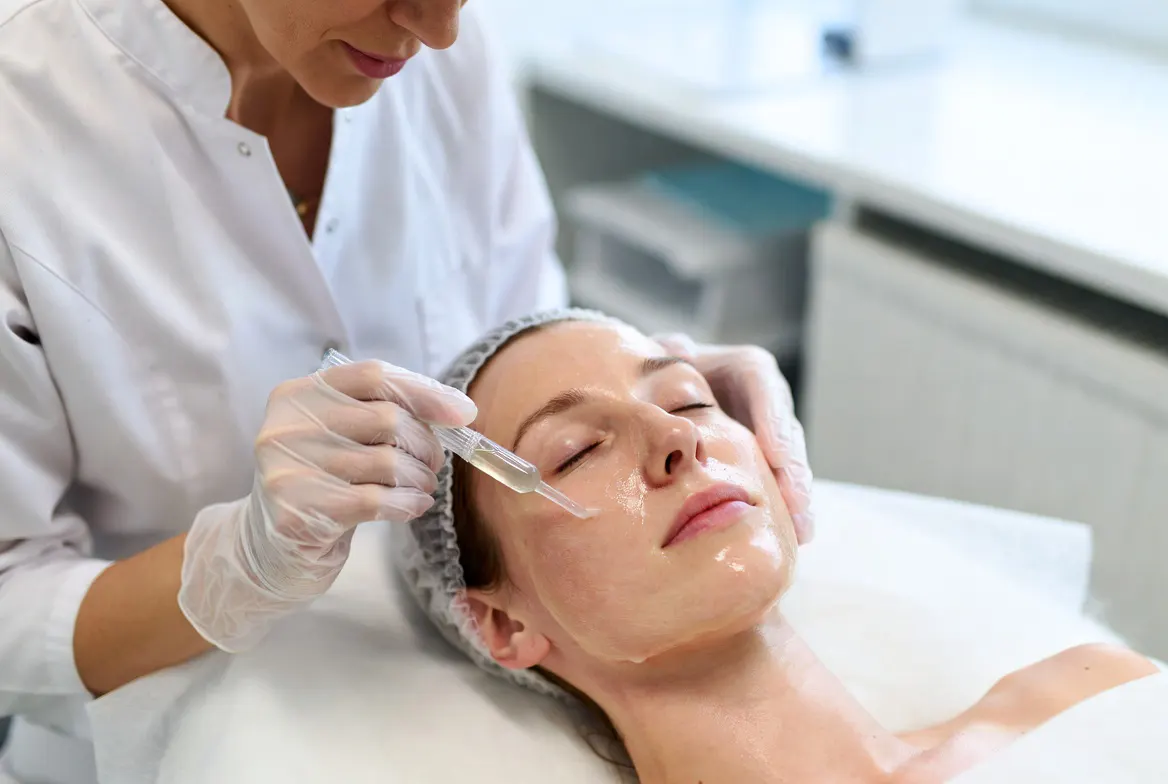
A chemical peel facial is a professional treatment that uses a single acid at facial strength to exfoliate the outer layer of skin, even out tone, and smooth texture, usually in one appointment lasting well under an hour. The phrase gets used loosely online for three different services: a spa facial with a light acid added in, an actual chemical peel facial performed at a med spa or dermatology office, and a standalone medical-depth peel that goes well beyond what a facial-length visit delivers. This guide, part of our chemical peel guides library, sorts out which one you are booking, walks through the appointment step by step, names the acids providers use, and covers who it suits, what it cannot do, downtime, and cost.
What "Chemical Peel Facial" Actually Means
Where an appointment lands on the spectrum depends on three things: the acid, the strength, and who is holding the applicator.
A Spa Facial With an Acid Step
Many day spas fold a mild acid into an otherwise standard facial, often a low percentage glycolic solution or a pre-mixed acid pad used alongside extraction, massage, and a mask. The concentration stays low enough that no downtime is planned, and the acid is one ingredient in a longer service rather than the point of the visit. This is closer to an enhanced facial than to a peel.
A Chemical Peel Facial
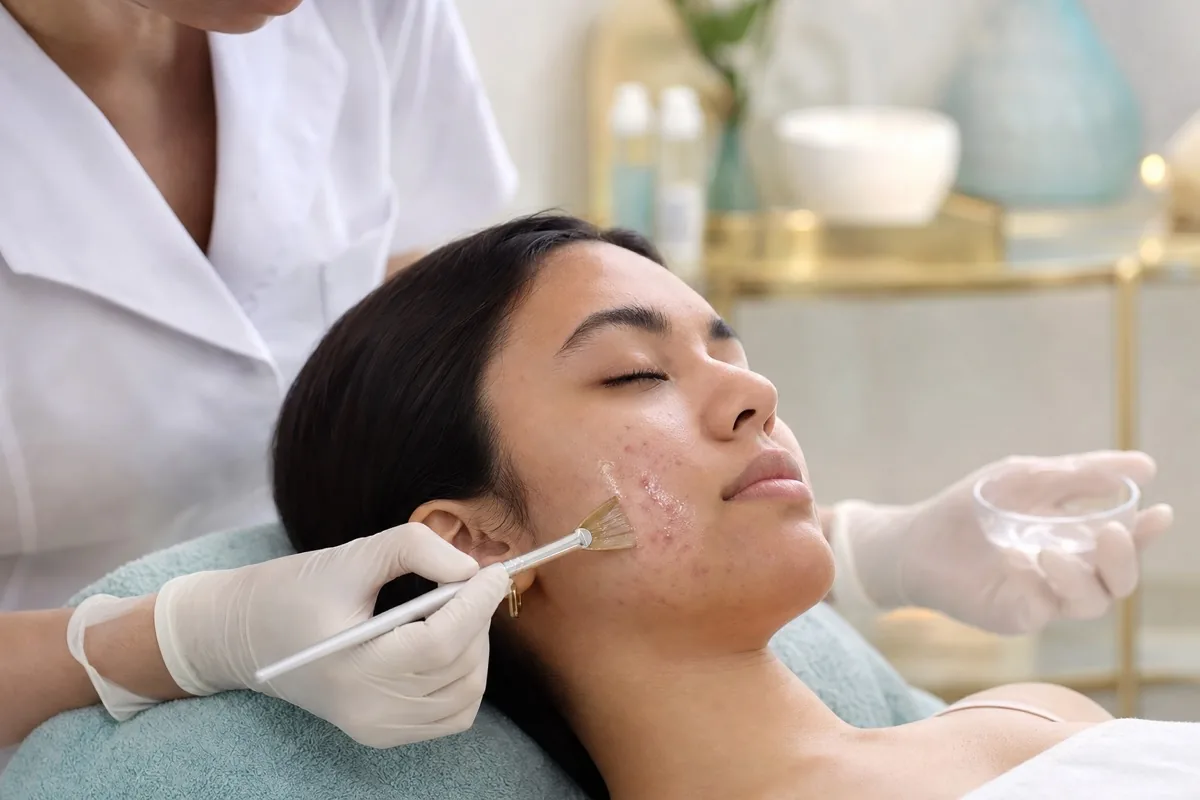
At a med spa or a dermatology office, a chemical peel facial is its own appointment. An esthetician or nurse working under a provider's protocol, or clinical staff in a dermatology practice, applies a single acid at facial strength for a set number of minutes, then neutralizes and calms the skin. Mild flaking for a few days afterward is common and expected, which is what separates it from the spa version above. Our overview of what a chemical peel is covers the mechanics behind every level of this spectrum.
A Standalone Medical-Depth Peel
A medical-depth peel, such as a higher-strength TCA or a phenol formula, is a different service. It is performed by a physician or a closely supervised clinician, produces visible peeling for a week or more, and targets deeper wrinkles, significant sun damage, or scarring rather than the tone and texture goals a facial-length peel is built for.
| Feature | Spa Facial With an Acid Step | Chemical Peel Facial | Medical-Depth Peel |
|---|---|---|---|
| Typically performed by | Esthetician at a day spa | Esthetician or nurse at a med spa, or dermatology staff | Physician or closely supervised clinician |
| Typical acid strength | Low, often under 10 percent | Facial strength: moderate glycolic, lactic, mandelic, or salicylic, or a light Jessner blend | Higher-strength TCA or phenol |
| Visible peeling | Rare to none | Mild flaking for a few days is common | Noticeable peeling for a week or more |
| Downtime | None | Zero to a few days | One to two weeks or more |
| Main goal | A brighter look for a single event | Improved tone, texture, mild breakouts, and dullness across a series | Noticeable change in deeper wrinkles, scarring, or sun damage |
| Often quoted price | Bundled into the facial price | $150 to $400 per session | $500 to $1,500 or more, sometimes a single treatment |
Which Acids Are Used at Facial Strength
Chemical peel facials draw on the same acids covered elsewhere on this site, measured and layered for a shorter, gentler appointment.
Glycolic Acid
A glycolic acid peel is the most familiar choice. It is a small molecule that penetrates quickly, smooths texture, and helps fade dullness, usually applied at a moderate strength for a facial-length session.
Lactic Acid
A lactic acid peel is gentler and more hydrating than glycolic, which makes it a common choice for dry or sensitive skin that still wants brightening.
Mandelic Acid
Mandelic acid is a larger molecule that penetrates more slowly and evenly, so it tends to cause less irritation, particularly on reactive or deeper skin tones.
Salicylic Acid
A salicylic acid peel is oil soluble, so it travels into the pore itself, which makes it the usual pick for oily or breakout-prone skin.
A Light Jessner Blend
A light Jessner's peel, diluted or applied in fewer passes than a standard medical session, is sometimes used as the stronger end of a facial-length appointment for skin that has already tolerated the acids above.
What Happens During a Chemical Peel Facial Appointment
Most sessions follow the same basic sequence, whatever acid is chosen. Reading our how to prepare for a chemical peel guide before you go makes each of these steps go more smoothly.
- Cleanse. Your face is washed to remove makeup, sunscreen, and oil so the acid contacts clean skin.
- Degrease. A prep solution wipes away any remaining surface oil, which helps the acid absorb evenly rather than pooling in oilier areas.
- Application. The acid is brushed or wiped on in even passes, avoiding the eyes, lips, and any broken skin. Expect tingling, warmth, or mild stinging that builds for a minute or two.
- Timing. The provider watches the skin closely and times the exact minutes the acid stays on, adjusting for how your skin is responding that day.
- Neutralize. Depending on the acid, it is neutralized with a buffering solution or simply rinsed off once the timing window ends.
- Calm. A soothing serum or moisturizer goes on to settle any redness and support the skin barrier.
- SPF. Broad-spectrum sunscreen is applied before you leave, since freshly treated skin is more sensitive to sun.
The whole visit typically runs 30 to 45 minutes with no anesthesia and no downtime built in, which is why it is often grouped with other quick, lunchtime treatments you can fit around a workday.
Who a Chemical Peel Facial Suits
A chemical peel facial is a good fit for dull or uneven tone, rough texture, mild and occasional breakouts, early sun spots, enlarged pores, and general maintenance between deeper treatments. It also works well as a single pre-event brightening session, since there is little to no visible recovery. People managing ongoing breakouts with a chemical peel for acne plan often use a facial-strength salicylic version as one part of a longer program rather than a one-time fix.
What It Can and Cannot Do
A single facial-strength peel, or even a short series, can reasonably brighten tone, soften rough texture, calm mild breakouts, and refine the look of pores. It is not designed to erase deep wrinkles, remove pitted or raised scars, or meaningfully reduce significant sun damage. Those goals generally need a medical-depth peel, a different modality entirely, or a longer series planned with a provider who has examined your skin. Treat a chemical peel facial as a maintenance and brightening tool rather than a substitute for a medical procedure.
Downtime After a Chemical Peel Facial
Downtime is minimal by design. Most people leave with skin that looks slightly pink or flushed for a few hours, and some mild flaking can appear around day two or three and finish within about a week. Our peeling and recovery timeline shows what a given day tends to look like, and our general aftercare guide covers cleansing, moisturizing, and sun protection in the days that follow. Do not pick at any flaking; let it come off on its own to avoid a dark mark.
How Often to Get a Chemical Peel Facial
Because each session removes so little, results build across a series rather than arriving after one visit. A common starting plan is four to six sessions spaced two to four weeks apart, followed by maintenance every one to three months. Our guide to how often to get a chemical peel covers the reasoning behind that spacing in more detail.
What a Chemical Peel Facial Costs
A single session is often quoted at about $150 to $400, depending on the acid used, the provider, and your region, and many clinics discount a prepaid series. Our chemical peel cost guide breaks pricing down by peel type. ChemicalPeel.org is an education resource, not a clinic, so confirm exact pricing at your consultation.
Who Should Not Get a Chemical Peel Facial
Talk to a provider before booking if any of the following apply:
- Pregnancy or breastfeeding. Salicylic acid and some other peel ingredients are usually avoided; the decision belongs to your obstetrician and skin provider together.
- Isotretinoin in the past six to twelve months. Isotretinoin changes how skin heals, so many providers wait several months after the last dose.
- An active infection or open skin. Cold sores, active breakouts with open lesions, and any undiagnosed rash need to be addressed first.
- A history of keloids or thick scarring. These raise the risk of an unusual healing response.
- Recent laser treatment or waxing on the area. Wait until the skin has fully recovered before adding an acid on top.
Redness and light flaking are expected. Blistering, spreading redness, pus, or pain that worsens instead of easing are not; contact your provider, and see our guide to chemical peel side effects for what warrants a same-day call.
Choosing a Provider for a Chemical Peel Facial
Because the acid, the strength, and the timing all change the outcome, choose a provider who examines your skin before recommending a plan and can name exactly what they intend to use. You can find a qualified provider near you, or browse our med spa directory to compare options in your area.
Frequently Asked Questions
Is a chemical peel facial worth it?
For dullness, uneven tone, rough texture, and mild breakouts, most people find a chemical peel facial worthwhile, especially as part of a short series rather than a single visit. It is not the right tool for deep wrinkles or true scarring, so whether it is worth it depends on matching the treatment to a goal it can actually reach.
Does a chemical peel facial hurt?
Not much. Expect tingling, warmth, or mild stinging that builds for a minute or two during application and then settles once the acid is neutralized or rinsed. A light Jessner blend or a higher concentration acid can sting more and leave skin tight for a few hours, but facial-strength peels are generally well tolerated without numbing.
How long does a chemical peel facial last?
A single session typically brightens tone for a few weeks before it fades back toward baseline. Because the changes build across a series, four to six sessions spaced two to four weeks apart produce results that last longer, and a maintenance peel every one to three months keeps tone and texture where you want them.
Can I wear makeup after a chemical peel facial?
Most providers ask you to skip makeup for the rest of the day so the skin barrier is not disturbed while it settles. Once any flaking has finished, usually within about a week, normal makeup use can resume; ask your provider for guidance specific to the acid and strength used on you.
What is the average cost of a chemical peel facial?
A single session is often quoted at about $150 to $400, depending on the acid used, the provider, and your region. Because results build with repetition, budget for a series of four to six sessions rather than a single visit, and ask whether a prepaid package brings the per-session price down.
What are the downsides of a chemical peel facial?
The main downsides are mild, temporary flaking, a short window of sun sensitivity, and the need for repeat visits to see a real result rather than a one-time fix. Less commonly, irritation, breakouts, or a dark mark can follow, particularly if aftercare or sun protection is skipped. Choosing an experienced provider and following aftercare closely lowers these risks.