
Written by the ChemicalPeel.org editorial team. Published September 25, 2026.
Clinical review pending. This page has not yet been reviewed by a licensed clinician; read it as patient education, not medical advice. How we review
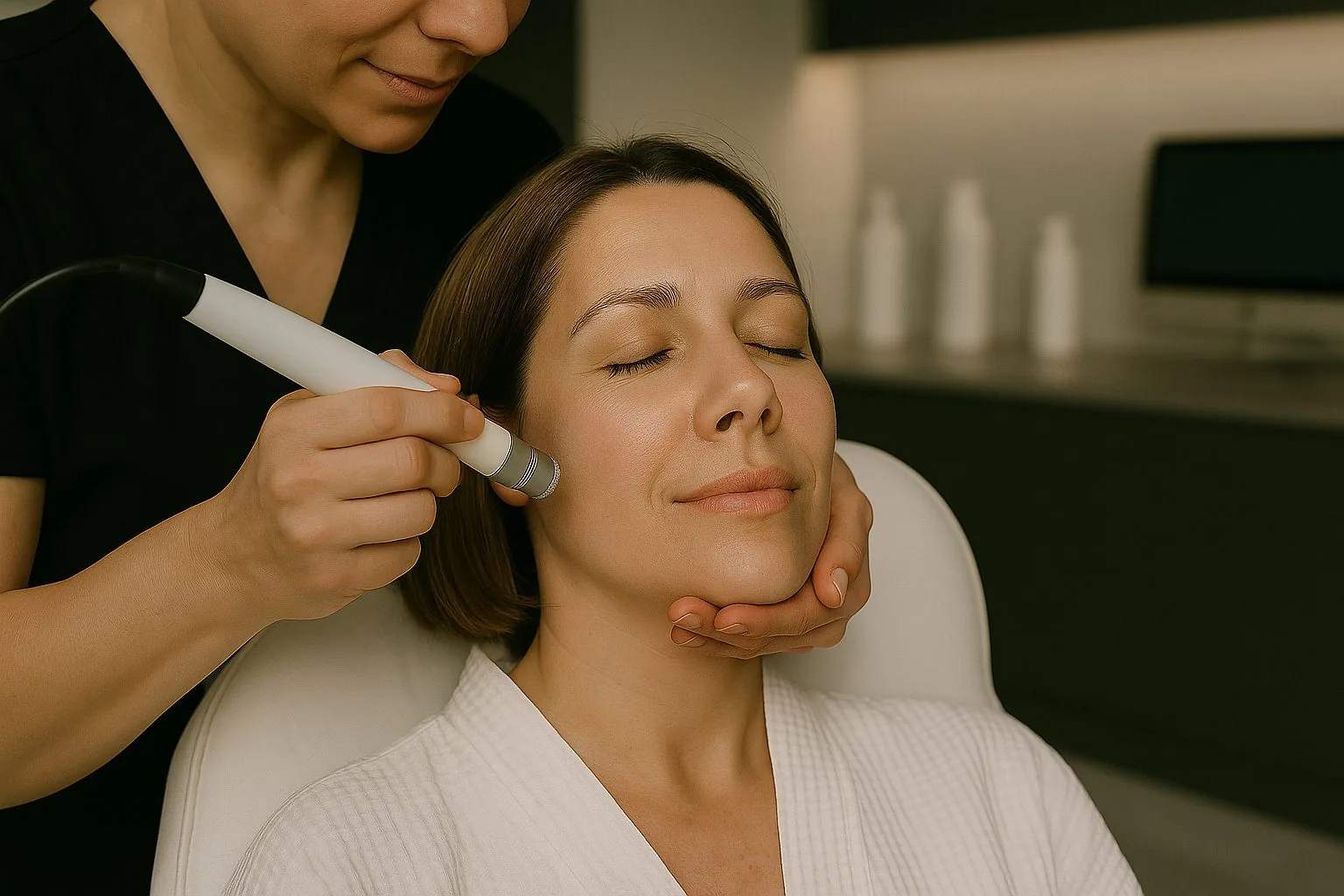
A chemical peel for the neck uses the same acids as a facial peel, but with a lighter, more cautious hand. Neck skin is thinner, has far fewer oil glands and hair follicles, and heals more slowly, raising the stakes for scarring if a peel goes too deep. It is also one of the most sun-exposed and most neglected parts of routine skincare, which is why sun damage, tech-neck lines, crepey texture, and mottled redness show up there years before the face catches up. This guide covers why the neck gets its own protocol, which peels providers use on it, what a session and recovery look like, and what results are realistic.
Why the Neck Is Treated Differently From the Face
Providers do not simply move a facial peel protocol six inches south. The neck's anatomy and daily habits change the plan.
- Thinner skin. Fewer cell layers than the face, so it is easier to over-treat and slower to rebuild after an acid injury.
- Fewer sebaceous glands and hair follicles, the structures facial skin heals from. The neck has far fewer, so healing is slower and scarring risk is higher at the same depth.
- More accumulated sun damage, since sunscreen routines often stop at the jaw, leaving the neck to collect decades of exposure that surfaces as blotchy pigment and rough texture.
- Tech-neck lines from hours spent looking down at phones and screens, which crease the same horizontal bands and contribute to persistent lines.
- Crepey texture, since thin, sun-exposed skin with less collagen support looks finely wrinkled and papery rather than smooth.
- Poikiloderma-style redness and mottling: red-brown discoloration and fine wrinkling on the sides and front of the neck, often with a lighter patch under the chin that stays shaded. Providers sometimes call this poikiloderma.
What a Neck Peel Can and Cannot Do
A neck peel can fade sun-related pigment, soften rough or crepey texture, smooth fine superficial lines, and even out poikiloderma-style mottling with a careful series. Our guide to chemical peels for sun damage covers how that repair works.
It cannot fix skin laxity, tighten sagging at the jawline, or erase deep, static wrinkles and platysmal bands, the vertical cords some people develop in the neck muscle. Those are structural or muscular changes below where a peel reaches. Our peels for wrinkles guide draws that same line for the face, and it carries over to the neck.
Which Peels Providers Use on the Neck
Because the neck heals more slowly and scars more easily, providers generally work a step gentler here, even for a similar concern.
Superficial Acids: Glycolic, Lactic, and Mandelic
A glycolic acid peel is the default, exfoliating the surface and fading pigment and texture. A lactic acid peel is gentler and more hydrating, suiting sensitive skin. A mandelic acid peel penetrates more slowly and evenly, a common choice for deeper skin tones or a first neck peel. Providers run these as a series at a lower strength than on the face.
Light Jessner's Solution
A Jessner's peel combines salicylic acid, lactic acid, and resorcinol, going deeper than a single superficial acid. On the neck, providers typically use fewer passes or a lighter version than on the face.
Low-Strength TCA, With Caution
A TCA peel at a low concentration sometimes treats stubborn pigment or texture, usually only once superficial peels there are well tolerated, applied as a light, even coat with careful blending.
Why Medium and Deep Peels Are Generally Avoided
Medium-strength TCA, phenol, and other deeper formulas are generally avoided on the neck, or used only in heavily modified, low-dose form. With fewer oil glands and follicles to drive resurfacing, a depth that heals predictably on the face can leave the neck scarring or losing pigment. Our guide to peel depths explains why depth and anatomy have to be considered together.
| Peel type | Suitability on the neck | Notes |
|---|---|---|
| Glycolic acid | Good, first choice | Series at a lower strength than the face |
| Lactic acid | Good, gentle option | Suits sensitive or reactive skin |
| Mandelic acid | Good, especially for deeper skin tones | Slower, more even penetration |
| Jessner's solution | Used with caution | Fewer passes or a lighter version than the face |
| Low-strength TCA | Used with caution | Only after superficial peels are well tolerated |
| Medium or deep TCA, phenol | Generally avoided or heavily modified | Higher risk of scarring and pigment loss |
The Decolletage Is Often Treated Alongside the Neck
The chest, or decolletage, shares the neck's thin skin, sparse oil glands, and heavy sun exposure, so many people ask about a peel for the neck and chest together. Treating both in one session lets a provider blend color and texture instead of leaving a visible boundary, with the same cautious, superficial-first approach on both.
What a Neck Peel Session Looks Like
- Assessment. The provider examines your neck and chest, reviews your history and medications, and confirms which concerns a peel can realistically address.
- Cleansing and degreasing with a prep solution so the acid absorbs evenly.
- Application in careful passes, often at a lighter concentration or shorter contact time than on the face, feathered at the jaw and collar so the treated area blends rather than stops abruptly.
- Timing and neutralizing. Superficial peels stay on briefly, then are neutralized or rinsed, depending on the formula.
- Finish with a calming moisturizer and broad-spectrum sunscreen. A neck session typically takes about 20 to 30 minutes.
How Many Sessions It Takes
A single neck peel makes a modest difference at best. Providers typically plan a series of four to six superficial peels, often spaced further apart than a facial series, roughly four weeks rather than two, so the slower-healing neck recovers fully between sessions. Pigment and mottling improve gradually over the series and for months afterward, while texture and fine lines respond faster. Many people then move to a light maintenance peel every few months. Our guide to how often to get a chemical peel covers the general scheduling logic.
Recovery and Risks Specific to the Neck
Expect redness, tightness, and light flaking, similar to a facial peel but sometimes lasting a day or two longer. A few risks matter more here than on the face:
- Post-inflammatory hyperpigmentation: the neck healing darker than it started, especially in medium and deeper skin tones. Our guide to peels for hyperpigmentation covers how depth and skin tone interact.
- Scarring, more likely with fewer follicles to resurface from, plus constant motion from talking, swallowing, and turning the head, if a peel runs too strong or is picked at while healing.
- A healing line at the jaw where treated neck meets untreated jawline or chest, if the peel is not blended carefully. Ask your provider how they plan to feather the edges before you book.
Blistering, spreading redness, pus, or pain that worsens instead of settling are not expected; call your provider, and see our guide to chemical peel side effects for the full list of what is normal.
Aftercare
Our general aftercare guide applies, and the neck adds a few habits of its own.
- Keep jewelry and collars off the area, since necklaces and tight collars rub healing skin.
- Cleanse gently with a mild, fragrance-free cleanser, patted rather than rubbed dry.
- Moisturize regularly, which supports even healing and lowers the chance of dark marks.
- Protect it from the sun with a scarf outdoors and broad-spectrum SPF 30 or higher on exposed skin.
- Do not pick or peel flakes early; flaking can run a little longer than on the face.
- Pause actives until your provider clears retinoids and exfoliants.
Who Should Not Get a Neck Peel
Talk to a provider rather than booking if any of these apply:
- Isotretinoin in the past six to twelve months, which changes how skin heals.
- Active infection or broken skin on the neck, including any rash or undiagnosed condition.
- A history of keloids or thick scarring, especially on the chest and shoulders.
- Pregnancy or breastfeeding, since several peel ingredients are usually avoided; the decision belongs to your obstetrician and skin provider together.
- Recent laser treatment or waxing on the neck, until the skin barrier has fully recovered.
What a Neck Peel Costs
Superficial glycolic, lactic, or mandelic peels on the neck are often quoted at about $150 to $400 per session, similar to a facial superficial peel, and since the area usually needs a series, plan for four to six sessions. Low-strength TCA is typically priced higher, often quoted in the $500 to $1,500 range depending on concentration and whether the chest is included. Treating the neck alongside the face generally raises the total, and cosmetic peels are not covered by insurance. Our cost guide covers pricing by peel type. ChemicalPeel.org is an education resource, not a clinic, so confirm current pricing at your consultation.
Alternatives and Combinations
A chemical peel is often paired with other habits rather than used alone. Daily sunscreen and a retinoid-based skincare routine slow new damage and extend results. For concerns a peel cannot reach, such as sagging skin or deep muscular bands, providers may discuss other in-office procedures, such as microneedling or laser resurfacing.
When to See a Provider
The neck heals more slowly, scars more easily, and is harder to judge on your own than the face, so this is not an area for guesswork or over-the-counter strength acids. Choose a provider who examines your neck and chest first, explains which acid and strength they intend to use, and can describe how they will blend the treated area into your jawline. Find a qualified provider near you, browse our med spa directory, or explore more of our skin concerns guides.
Frequently Asked Questions
Can you get a chemical peel on your neck?
Yes. The neck can be safely peeled, but providers usually choose gentler acids and lower strengths than they would use on the same person's face, because neck skin is thinner, has fewer oil glands and hair follicles, and heals more slowly. A superficial series of glycolic, lactic, or mandelic acid is the typical starting point.
Why is a chemical peel for the neck different from a face peel?
The neck has thinner skin and far fewer sebaceous glands and hair follicles than the face, which slows healing and raises the risk of scarring at the same depth. It also carries more accumulated sun damage and constant motion from talking and turning the head. Providers generally use lighter concentrations, fewer passes, and more spacing between sessions on the neck.
Can a chemical peel treat neck wrinkles?
It depends on the type of wrinkle. Fine, crepey surface lines respond to a series of superficial peels, which smooth texture and support gradual improvement. Deep static wrinkles and platysmal bands, the vertical cords some people develop in the neck muscle, sit below where a peel reaches and are not something a peel fixes.
Can you get a chemical peel on your neck and chest at the same time?
Yes, and many providers recommend it. The chest, or decolletage, shares the neck's thin skin, sparse oil glands, and heavy sun exposure, so treating both areas together in one session helps color and texture blend evenly instead of stopping abruptly at the collarbone.
How many sessions does a neck peel take?
Most providers plan a series of four to six superficial peels, often spaced about four weeks apart to give the slower-healing neck time to recover fully between sessions. Pigment and mottling continue to improve gradually over the series and for some months after, and many people then continue with occasional maintenance peels.
What are the risks of a chemical peel on the neck?
The main risks are post-inflammatory hyperpigmentation, where the treated area heals darker than the surrounding skin, and scarring, which is more likely on the neck because it has fewer follicles to resurface from and more constant motion. A poorly blended peel can also leave a visible healing line at the jaw. Choosing a conservative depth and an experienced provider lowers all three risks.