Written by the ChemicalPeel.org editorial team. Published September 22, 2026.
Clinical review pending. This page has not yet been reviewed by a licensed clinician; read it as patient education, not medical advice. How we review
A chemical peel for sun damage uses a controlled acid solution to remove weathered surface layers so fresher, more evenly toned skin can take their place. Sun damage accumulates invisibly for years, which is why it tends to surface in your forties, fifties, and beyond as brown spots, rough patches, fine lines, and a dull, leathery quality. Peels are among the best established in-office answers to that combination, ranging from light exfoliation to deep resurfacing performed by a physician. This guide covers what photoaging is, why a provider must evaluate suspicious spots first, which peel depths match which degree of damage, and what recovery and pricing look like.
What Sun Damage Actually Is
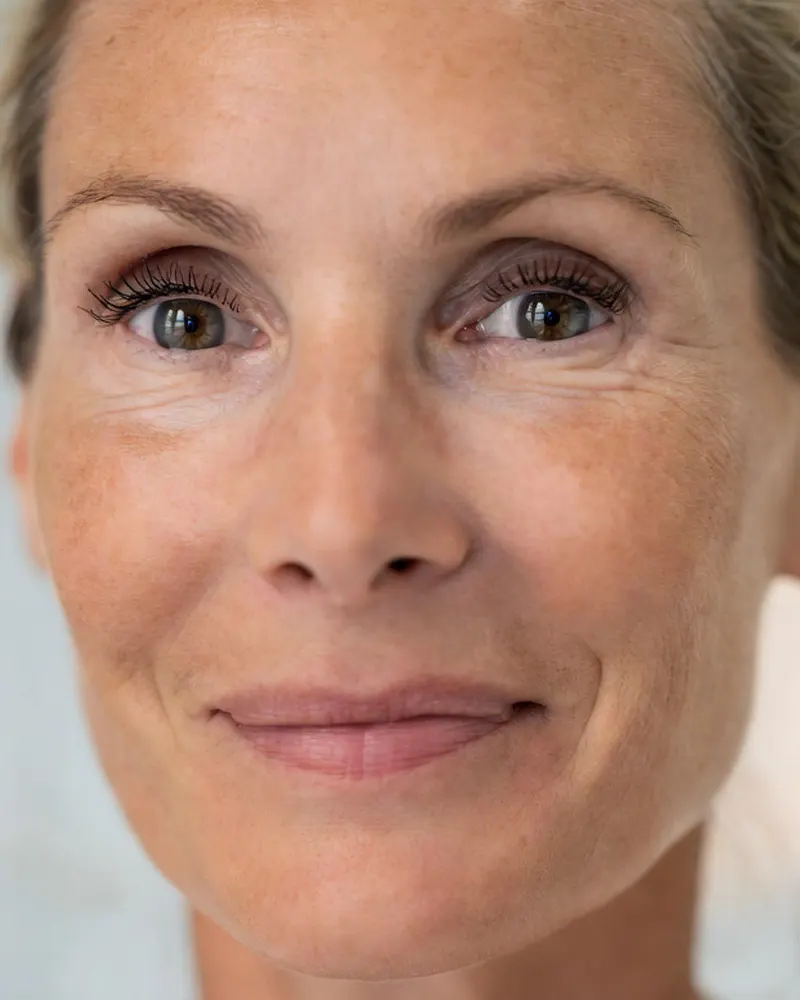
Dermatologists call it photoaging: the changes ultraviolet light produces in skin over years, as distinct from what time does on its own. UV exposure degrades collagen and elastin, stimulates pigment cells unevenly, and damages cell DNA. The results stack up, which is why sun-damaged skin rarely has one complaint:
- Sun spots. Flat brown patches, also called solar lentigines or age spots, on the face, chest, shoulders, forearms, and backs of the hands.
- Uneven tone. A mottled look, with blotchy pigment and diffuse redness rather than one even color.
- Rough, dry texture. A sandpapery surface that moisturizer never quite fixes.
- Fine lines and crepiness. Thinner, less elastic skin that creases and stays creased, especially around the eyes and on the chest.
- Actinic keratoses. Scaly, gritty spots that represent sun-induced cell damage and need a clinician's attention.
Have Suspicious Lesions Evaluated Before Any Peel
This step is not optional. Sun-damaged skin is exactly where precancers and skin cancers appear, and a chemical peel treats neither. A peel can also blur the surface appearance of a lesion for a while, delaying a diagnosis that depends on how a spot looks and changes. Before booking, have a clinician examine your skin and specifically check anything new, growing, changing color or shape, asymmetric, irregularly bordered, itchy, crusty, scaly, or bleeding. A rough patch that keeps returning after it flakes off deserves attention rather than an acid.
Sequence the two visits sensibly: skin check first, treatment planning second. If your clinician finds an actinic keratosis or something more concerning, that gets treated on its own terms and cosmetic resurfacing waits. Ask your provider directly whether they examined your skin before recommending a peel. Our guide to choosing a provider covers what qualifications to look for.
What a Peel Can and Cannot Fix
Peels work best on the parts of photoaging that live in the upper layers of skin: surface pigment, rough texture, dullness, and fine surface lines. Deeper peels reach far enough to stimulate some collagen remodeling over the following months. Our explainer on how a chemical peel works covers the mechanism.
What peels do not fix is structural sagging, which is a matter of volume and support, or deep static wrinkles that remain when your face is fully relaxed, though our peels for wrinkles guide covers where that line falls. Broken capillaries and diffuse redness respond better to light-based devices. And no peel undoes the DNA damage underneath, which is why sun protection is permanent rather than an aftercare instruction that expires.
Matching Peel Depth to the Damage
Peel selection is mostly a conversation about how much damage you have and how much downtime you can absorb. Our overview of chemical peel types lays out the full depth ladder.
| Depth | Typical acids | Best for | Downtime |
|---|---|---|---|
| Superficial | Glycolic, lactic, mandelic, salicylic | Early damage, dullness, mild spots | Light flaking for a few days |
| Medium | TCA, Jessner's solution, blends | Moderate photoaging, stubborn spots, fine lines | About a week of visible peeling |
| Deep | Phenol | Severe photoaging with deep wrinkling | About two weeks, redness for months |
Superficial Peels
Light peels exfoliate within the epidermis. One session is subtle, but a series of four to six spaced two to four weeks apart brightens tone, smooths texture, and softens early spots with almost no downtime. A glycolic acid peel is the classic starting point for sun-damaged skin.
Medium-Depth Peels
When damage has accumulated, a medium peel accomplishes far more per session. A TCA peel reaches the upper dermis and is the workhorse for moderate photoaging, while Jessner's solution is often applied first to help it penetrate evenly. Blended branded formulas such as the VI Peel aim for similar results with a more predictable recovery. Plan on roughly a week away from public-facing commitments.
Deep Peels
Deep phenol peels reach the mid dermis and produce the most dramatic change in severely sun-damaged skin. They are physician-performed procedures requiring cardiac monitoring and sedation, carry a real risk of permanent lightening of treated skin, and involve a long recovery, so they are generally reserved for fair-skinned patients with advanced photoaging.
Sun Damage Beyond the Face
Sun damage rarely stops at the jawline. The chest, neck, forearms, and backs of the hands often show it worse, because they get daily incidental exposure and are left out of most routines. They can be peeled, but they heal more slowly than facial skin, with fewer oil glands and follicles to drive regeneration, so providers treat the body conservatively with lighter peels and more sessions. Ask your provider to plan the chest and neck alongside your face so the color match stays believable.
What the Process Looks Like
- Skin examination. A clinician evaluates your skin, addresses suspicious or precancerous lesions, and reviews your history, medications, and any history of cold sores.
- Peel selection. Your provider matches depth to your degree of photoaging, your skin tone, and the downtime you can take.
- Priming. For medium and deep peels, two to six weeks of prescribed topicals plus daily sunscreen.
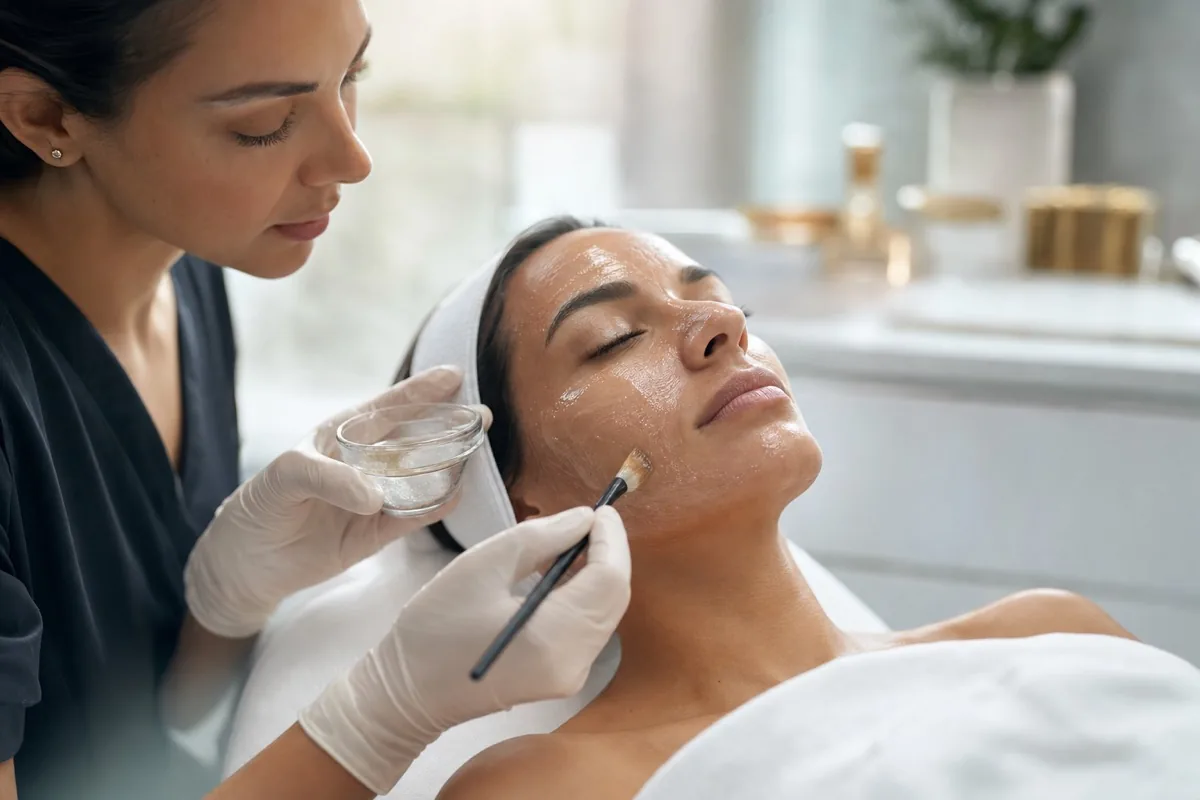
- Treatment day. Skin is cleansed and degreased, then the solution is applied in controlled passes. Medium peels produce a characteristic frosting at the target depth.
- Healing. Skin darkens and tightens before it sheds, and the new skin underneath is pink and fragile.
- Maintenance. Daily sunscreen, provider-directed topicals, and periodic lighter peels hold the result.
Recovery
Downtime tracks depth closely. After a superficial peel, expect mild pinkness and light flaking for two to five days with normal activities uninterrupted. After a medium peel, treated skin darkens and tightens for a few days, then sheds in sheets from roughly day three through day seven, with pink new skin for another week or two. After a deep peel, expect two weeks of intensive wound care and redness that can last months. Our day-by-day peeling timeline and aftercare guide cover each stage. The universal rules: do not pick, keep skin moisturized, stay out of the sun while healing, and call your provider about anything that looks infected.
Peels Versus Lasers for Photoaging
Both resurface, and the right answer depends on your skin, your budget, and your provider's expertise. Peels cost less per session and treat broad areas economically, while lasers offer more precise depth control and can target vessels and pigment selectively. Our comparison of peels versus laser resurfacing covers the tradeoffs.
What It Costs
Treat the following as industry estimates rather than quotes. Superficial peels commonly run about $100 to $300 per session in the United States, and photoaging usually calls for a series. Medium-depth TCA and blended peels commonly range from roughly $300 to $1,500 depending on strength, area, and provider. Deep phenol peels are surgical-grade procedures commonly quoted in the several-thousand-dollar range with facility and anesthesia costs. Treating the chest, neck, or hands adds to the total, and cosmetic resurfacing is not typically covered by insurance. See our cost guide, and confirm pricing at your consultation, since ChemicalPeel.org is an education resource, not a clinic.
Protecting the Result
Sun damage is the one skin concern whose cause is within your control going forward. Daily broad-spectrum SPF 30 or higher, reapplied every two hours outdoors, is the highest-return habit available, and freshly peeled skin burns and pigments more easily than the skin it replaced. Add a wide-brimmed hat, seek shade at midday, and remember that UVA passes through window glass. Retinoids and antioxidants extend results between treatments, and our regimen guides for your forties and fifties cover how to build that routine.
Medical Disclaimer
This page is provided by ChemicalPeel.org for patient education and is not medical advice. Individual results vary, and the information here does not replace a consultation with a qualified, board-certified provider. Always discuss your medical history and treatment options with a licensed clinician before pursuing any chemical peel.
Get Your Skin Checked, Then Make a Plan
Photoaged skin deserves two things in order: an examination by someone qualified to spot what a peel cannot treat, and a resurfacing plan matched to your damage. Find a qualified provider near you to do both, or keep researching with our guide to peels for dark spots and age spots if pigment is your main concern.
Frequently Asked Questions
Does a chemical peel remove sun damage?
A chemical peel can substantially improve sun damage rather than remove it. Peels fade surface pigment, smooth rough texture, and soften fine lines, and medium and deep peels reach far enough to stimulate some collagen remodeling. They do not undo the underlying DNA damage or prevent new damage, so daily sun protection stays part of the plan permanently.
Which chemical peel is best for sun-damaged skin?
It depends on how much damage you have and how much downtime you can take. A series of superficial glycolic or lactic peels suits early damage and dullness, a medium-depth TCA or blended peel handles moderate photoaging with about a week of peeling, and deep phenol peels are reserved for severe photoaging and are physician-performed. Your provider matches depth to your skin.
Should I see a doctor before getting a peel for sun damage?
Yes. Sun-damaged skin is exactly where precancerous lesions and skin cancers appear, and a peel treats neither. A clinician should examine any spot that is new, growing, changing, irregular, scaly, crusty, or bleeding before resurfacing is scheduled, because a peel can temporarily blur the appearance of a lesion and delay a diagnosis.
Can chemical peels treat sun damage on the chest and hands?
Yes, but more cautiously than on the face. The chest, neck, and hands have fewer oil glands and hair follicles, so they heal more slowly and tolerate less aggressive treatment. Providers typically use lighter peels and more sessions in those areas, and often treat them alongside the face so color and texture stay consistent.
How many peels do I need for sun damage?
Superficial peels are usually planned as a series of four to six sessions spaced two to four weeks apart, with improvement building gradually. A single medium-depth peel accomplishes more at once and may be repeated after a year or more. Most people then continue with periodic lighter peels and daily sunscreen to maintain the result.
How long do results from a sun damage peel last?
That depends mostly on your sun habits. Spots that are fully cleared can stay away for years with diligent daily sunscreen, but new ultraviolet exposure creates new pigment and new damage. Think of the peel as resetting the surface and your sun protection routine as what determines how long the reset holds.