Written by the ChemicalPeel.org editorial team. Published September 25, 2026.
Clinical review pending. This page has not yet been reviewed by a licensed clinician; read it as patient education, not medical advice. How we review

A PRX-T33 peel is a branded biorevitalization treatment made by an Italian manufacturer and commonly described as a "no-peel peel." It combines a high concentration of trichloroacetic acid (TCA) with hydrogen peroxide and kojic acid, carried in a formula designed to reach the dermis without frosting the surface or causing the visible flaking most people associate with a chemical peel. This guide covers what PRX-T33 is, how it differs from a classic TCA peel, how a session goes, what it treats, what a PRX-T33 before and after timeline looks like, and what it often costs.
What Is PRX-T33 and How Does It Differ From a Classic TCA Peel?
A classic TCA peel is applied to the surface, where it coagulates surface proteins and produces a visible white "frosting" that sheds over the following days. PRX-T33 uses a much higher concentration of TCA than a surface peel would tolerate, but the hydrogen peroxide and kojic acid in the formula, combined with how the solution is massaged into the skin rather than left to sit, keep it from fully coagulating the surface. The result is a treatment that can act deeper, in the dermis, without the frosting, crusting, or multi-day peeling a surface-level TCA application causes.
Because it skips visible surface injury, PRX-T33 does not fit neatly into the usual superficial, medium, and deep classification most peels use; our guide to chemical peel depths explains that scale. It is best understood as its own category, a biorevitalization treatment rather than a resurfacing peel. For background on the wider family of treatments, see what is a chemical peel, or browse every option in our peel types guide.
How a PRX-T33 Session Goes
A typical session runs in a few steps:
- Cleansing. The skin is cleansed and degreased so the solution absorbs evenly.
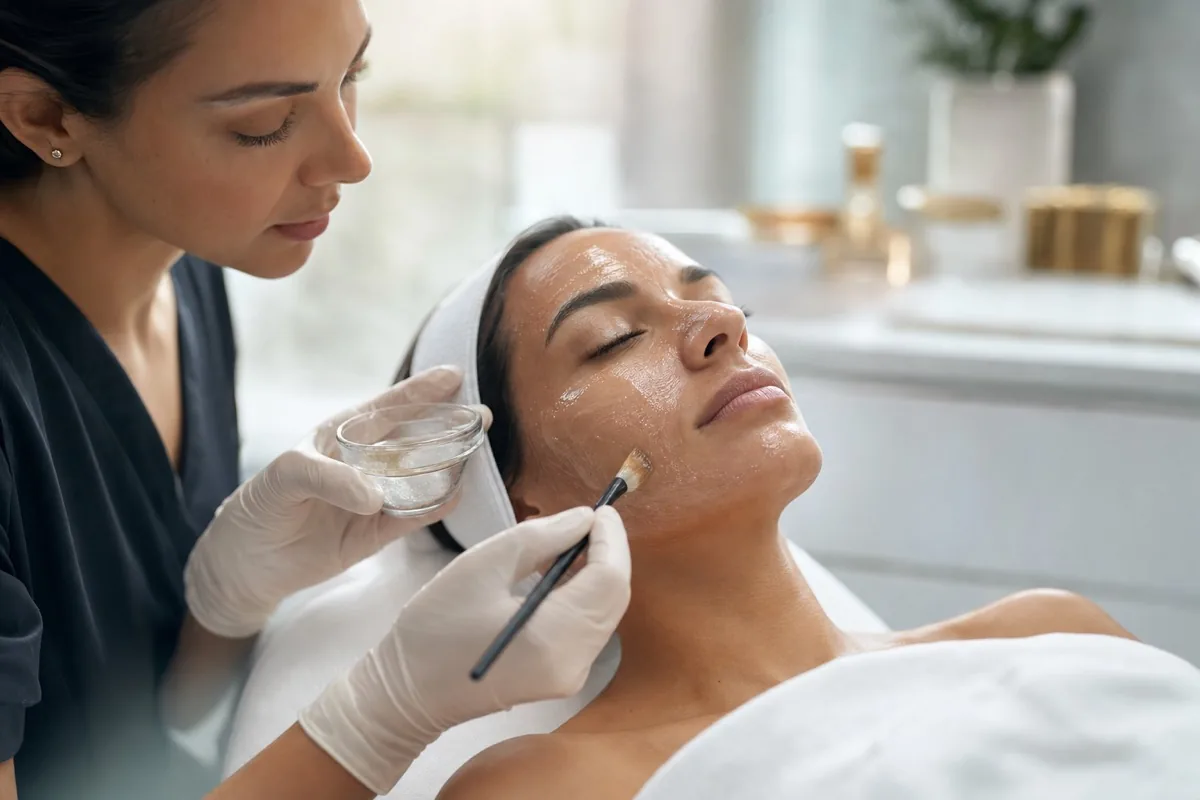
- Massage application. The provider massages the solution into the skin in two to four passes rather than painting it on and leaving it to sit; the massage itself is part of how the formula works.
- Sensation. Most people feel warmth, mild stinging, or tingling, generally milder than a classic TCA peel.
- Finish. A calming moisturizer and sunscreen go on, and you can typically return to normal activities the same day.
PRX-T33 is not a one-and-done treatment; providers typically plan a series of four to six sessions spaced about a week or two apart, then reassess. Our guide to how often to get a chemical peel covers how series schedules work across peel types.
What PRX-T33 Is Used For
Providers use PRX-T33 for a range of concerns, most often:
- Texture and tone. A rougher, uneven, or dull complexion is one of the most common reasons people book a series.
- Mild skin laxity. Because the formula acts in the dermis, some providers use it to support firmness in early laxity, though it does not replace a lifting procedure.
- Acne scars. It is often used alongside other treatments to soften shallow acne scarring; see chemical peel for acne scars for what peels can and cannot do.
- Dark spots. The kojic acid is a brightening ingredient, and providers use it for uneven pigmentation; see chemical peel for hyperpigmentation.
- Stretch marks, off the face. PRX-T33 is also used on the body, including for stretch marks, since the no-frosting design suits areas where peeling is hard to manage.
PRX-T33 is commonly described as an option on darker skin tones because it avoids visible surface injury, but pigmentation risk still depends on your skin and the provider's protocol. Confirm candidacy with your provider; our guide to chemical peels for dark skin explains how providers adjust peel choice and strength.
Who PRX-T33 Suits and Who Should Avoid It
PRX-T33 suits people who want gradual improvement in texture, tone, or mild laxity without taking time off for visible peeling. Talk to a provider first if any of the following apply:
- Pregnancy or breastfeeding. Refer the decision to your obstetrician and skin provider before any peel.
- Isotretinoin in the past six to twelve months. Isotretinoin changes how skin heals, and many providers wait several months after the last dose before any peel.
- Active infection or a compromised skin barrier. Open wounds, active breakouts with broken skin, or an unexplained rash need to be addressed first.
- A history of keloids. Tell your provider if you scar easily.
- Recent laser treatment or waxing on the area. Wait until the skin has fully recovered before adding an acid treatment.
What PRX-T33 Does Not Do
PRX-T33 is not a substitute for a surgical lift, and it will not remove deep static wrinkles or significant sagging. It also will not remove true pitted or raised scars, which sit deeper than a biorevitalization treatment reaches; providers more often reach for microneedling or laser for that, sometimes alongside a peel series for surrounding texture. See our comparison of chemical peels versus microneedling for how the two differ. It also will not produce a dramatic change after one session; results build gradually across the series.
PRX-T33 Before and After: What to Expect
Immediately after a session, expect mild redness and warmth that settle within a few hours. Some people see a little light flaking over the following days, though many see none at all. There is generally no need to plan downtime.
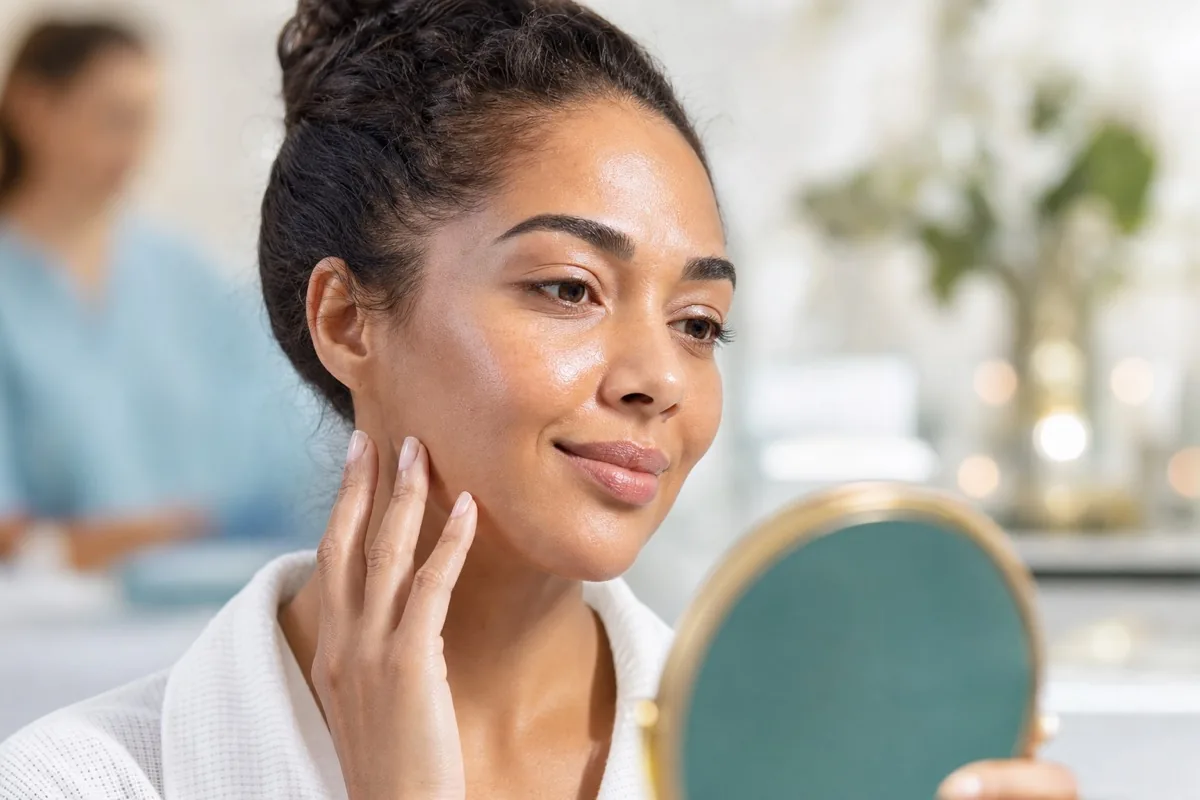
Because there is little to no visible peeling, results are gradual rather than dramatic. Skin often looks brighter and feels smoother within the first week, but fuller change in texture, tone, and firmness builds across the series as the dermis responds to repeated treatments. PRX-T33 before and after photos online typically compare the start of a series with its completion months later, not a single visit. Ask your provider what a realistic timeline looks like for your concern.
What a PRX-T33 Peel Costs
PRX-T33 is a superficial-strength, no-downtime treatment, and pricing is often quoted in a similar range to other superficial peels: roughly $150 to $400 per session. Because it is done as a series, budget for four to six sessions rather than one. Some clinics discount a prepaid package. Pricing varies by provider, region, and the area being treated, and cosmetic peels are not covered by insurance. Our cost guide covers pricing by peel type more broadly. ChemicalPeel.org is an education resource, not a clinic, so confirm current pricing at your consultation.
PRX-T33 vs Classic TCA Peel vs VI Peel
| Feature | PRX-T33 | Classic TCA peel | VI Peel |
|---|---|---|---|
| Formula | High-strength TCA with hydrogen peroxide and kojic acid, massaged in | TCA solution applied to the surface | Proprietary blend of TCA, retinoic acid, salicylic and phenol |
| Visible frosting or peeling | Usually none, or very light flaking | Frosting on application, visible peeling for several days | Visible peeling for several days, see the VI Peel guide |
| Downtime | Little to none | Several days of flaking and redness | Several days of flaking, plan around it |
| Typical series | Four to six sessions, one to two weeks apart | Often a single session or a short series, spaced further apart | Often a single session or occasional repeats |
| Often quoted cost | $150 to $400 per session | $500 to $1,500 | See the VI Peel guide for current pricing |
Risks and Side Effects
PRX-T33 is generally well tolerated. Expected effects include warmth or mild stinging during application, temporary redness, occasional light flaking, and short-term dryness. Less commonly, people notice a breakout in the days after as pores clear, or mild irritation if skin was already compromised. Because the formula includes a high-strength acid even though it does not frost the surface, provider skill and correct protocol matter, and pigment changes are possible, particularly in darker skin tones treated without the right adjustments; confirm candidacy and strength with your provider rather than assuming. Call your provider, rather than waiting it out, for blistering, spreading redness, pus, or worsening pain. Our guide to chemical peel side effects covers what is expected versus what is not.
Aftercare
Aftercare for PRX-T33 is lighter than for a peel that visibly frosts, but it still matters. Our chemical peel aftercare guide applies; the basics are:
- Moisturize and protect from the sun. Use a gentle moisturizer and broad-spectrum SPF 30 or higher daily, since treated skin is more sun sensitive for a period afterward.
- Skip actives for a few days. Retinoids, exfoliating acids, and scrubs typically go back in on your provider's schedule, often about a week later.
- Do not pick at any flaking. If light flaking occurs, let it shed on its own to avoid marks.
- Keep the area clean. A gentle cleanser and lukewarm water are enough between sessions.
- Space sessions as directed. Going too soon between treatments does not speed results and can irritate unsettled skin.
Finding a Provider
PRX-T33 depends heavily on technique, since the massage application, the number of passes, and the pacing across a series all affect the result. Choose a provider who performs the treatment regularly, can describe the formula and protocol they use, and examines your skin before recommending a full series. Our guide to choosing a provider covers the questions worth asking before you book. You can find a qualified provider near you, or browse our med spa directory to compare options in your area.
Frequently Asked Questions
Does PRX-T33 really work?
PRX-T33 can improve skin texture, tone, and mild laxity, and it is commonly used for acne scars, dark spots, and stretch marks. Results build gradually across a series rather than after a single session, since the formula is designed to skip the visible peeling that signals a bigger single change. It is not a substitute for surgery or for treatments aimed at deep scarring, so match your expectations to what a dermal-level treatment can realistically do.
How much does a PRX-T33 peel cost?
PRX-T33 is often quoted at roughly $150 to $400 per session, in the same general range as other superficial, no-downtime peels. Because a full course usually takes four to six sessions, total cost adds up across the series, and some clinics discount a prepaid package. Pricing varies by provider and region, so confirm current numbers at a consultation.
Is a PRX-T33 facial worth it?
For people who want gradual improvement in texture, tone, dark spots, or mild laxity without downtime, many find a full series worth it. Because a single session rarely produces a dramatic change, it suits people planning to commit to four to six treatments rather than those looking for a one-time visible transformation. Discuss your specific goals with a provider before starting.
Is PRX-T33 better than microneedling?
Neither is universally better; they work differently and are often used for different goals. PRX-T33 works chemically, without needles, and suits texture, tone, and pigment concerns with no downtime. Microneedling creates controlled micro-injuries with fine needles and is often favored for deeper scarring or more pronounced skin remodeling, usually with more visible downtime. Some providers combine the two across a treatment plan. See our comparison of chemical peels versus microneedling for more detail.
What is PRX-T33 made of?
PRX-T33 combines a high concentration of trichloroacetic acid (TCA) with hydrogen peroxide and kojic acid in a proprietary vehicle. The formula and the massage-based application are designed to let the solution act in the dermis without fully coagulating the surface of the skin, which is why it typically does not produce the frosting or visible peeling associated with a classic TCA peel.
How many PRX-T33 sessions do I need?
Providers typically plan a series of four to six sessions spaced about one to two weeks apart, then reassess. Some people continue with an occasional maintenance session afterward. The exact number depends on your skin and the concern being treated, so your provider will adjust the plan as the series progresses.