⚕ PATIENT EDUCATION · CHEMICALPEEL.ORG
A TCA peel is a medium-depth chemical peel for sun damage, wrinkles, and acne scars. Learn uses, recovery, results, and cost, then find a qualified provider.
Patient Education
Published July 15, 2026
A TCA peel is a chemical peel that uses trichloroacetic acid to remove damaged outer layers of skin, most often at medium depth, so smoother and more even skin can regenerate in their place. It occupies the practical middle ground of chemical peels: strong enough to improve sun damage, uneven tone, fine to moderate wrinkles, and shallow acne scarring in a single session, yet far less demanding than a deep peel. This guide explains what a TCA peel is, what it treats, how the procedure works step by step, who makes a good candidate, what recovery looks like day by day, what before and after results are realistic, and what it typically costs, so you can decide whether it belongs on your consultation shortlist.
What Is a TCA Peel?
A TCA peel is a professional chemical peel based on trichloroacetic acid, a resurfacing agent clinicians have relied on for decades because its depth can be controlled with unusual precision. When the solution is applied, it coagulates proteins in the skin, and the treated layers later separate and peel away while fresh skin forms underneath. The depth of that effect depends mostly on the concentration. Strengths of roughly 10 to 15 percent act as superficial peels that refresh only the epidermis, the outermost layer. Strengths of roughly 20 to 35 percent produce the classic medium-depth TCA peel, reaching through the epidermis into the papillary and upper reticular dermis, which is where most of the visible improvement in sun damage and texture comes from.
Concentrations above roughly 35 percent are generally not applied across the whole face because the risk of scarring rises sharply. Very high strengths appear only in a focal technique called TCA CROSS, in which a physician places a tiny amount of concentrated acid inside individual icepick acne scars while leaving the surrounding skin untouched. Providers also frequently pair a medium TCA peel with a preparatory solution such as Jessner’s, a classic combination that lets a lower TCA strength penetrate more evenly and predictably. As the acid works, the treated skin turns white, a clinical endpoint called frosting that tells the clinician the intended depth has been reached. Unlike glycolic acid, TCA neutralizes itself as it reacts, so the clinician controls depth through concentration, technique, and the number of passes rather than by washing the acid off.
Where a TCA Peel Sits on the Depth Ladder
Chemical peels are grouped into three depths. Superficial peels, such as glycolic acid and other alpha hydroxy acid or salicylic acid peels, exfoliate only the epidermis and involve minimal downtime. Medium-depth peels, led by TCA and Jessner’s combinations, reach the upper dermis and typically involve about a week of visible peeling. Deep peels, meaning phenol and the Baker-Gordon formula, penetrate to the mid-reticular dermis and are physician-performed procedures that require cardiac monitoring. You can see where TCA sits on the depth ladder in our full overview, or read about the deeper phenol peel if your concerns are severe.
What a TCA Peel Treats
Clinicians choose a TCA peel when a concern needs more correction than surface exfoliation can deliver but does not justify the risks and recovery of a deep peel. Common uses include:
- Moderate sun damage and photoaging, including rough texture, dullness, and blotchy tone
- Dark spots, sun spots, and other uneven pigmentation, including melasma when a clinician judges a peel appropriate for your skin type
- Fine lines and moderate wrinkles, especially those etched in by years of UV exposure
- Shallow acne scars and lingering post-acne marks, an area where chemical peels for acne scars are often part of a broader plan
- Certain rough, precancerous spots such as actinic keratoses, when a clinician determines a peel is the right tool
A TCA peel improves the quality and evenness of the skin surface. It does not lift sagging tissue, remove deep etched-in creases, or flatten deep boxcar or rolling scars on its own.
How a TCA Peel Is Performed, Step by Step
A medium-depth TCA peel is an in-office procedure performed by a trained clinician. Knowing the sequence ahead of time makes the experience far less intimidating.
- Consultation and skin preparation. Your provider reviews your history, medications, and goals, then may have you condition the skin for two to four weeks with a retinoid or a pigment-suppressing agent such as hydroquinone. If you have a history of cold sores, an antiviral is typically prescribed, because resurfacing can reactivate the virus.
- Cleansing and degreasing. On treatment day the skin is washed and then degreased, often with acetone or alcohol, so the acid penetrates evenly instead of pooling in oily areas.
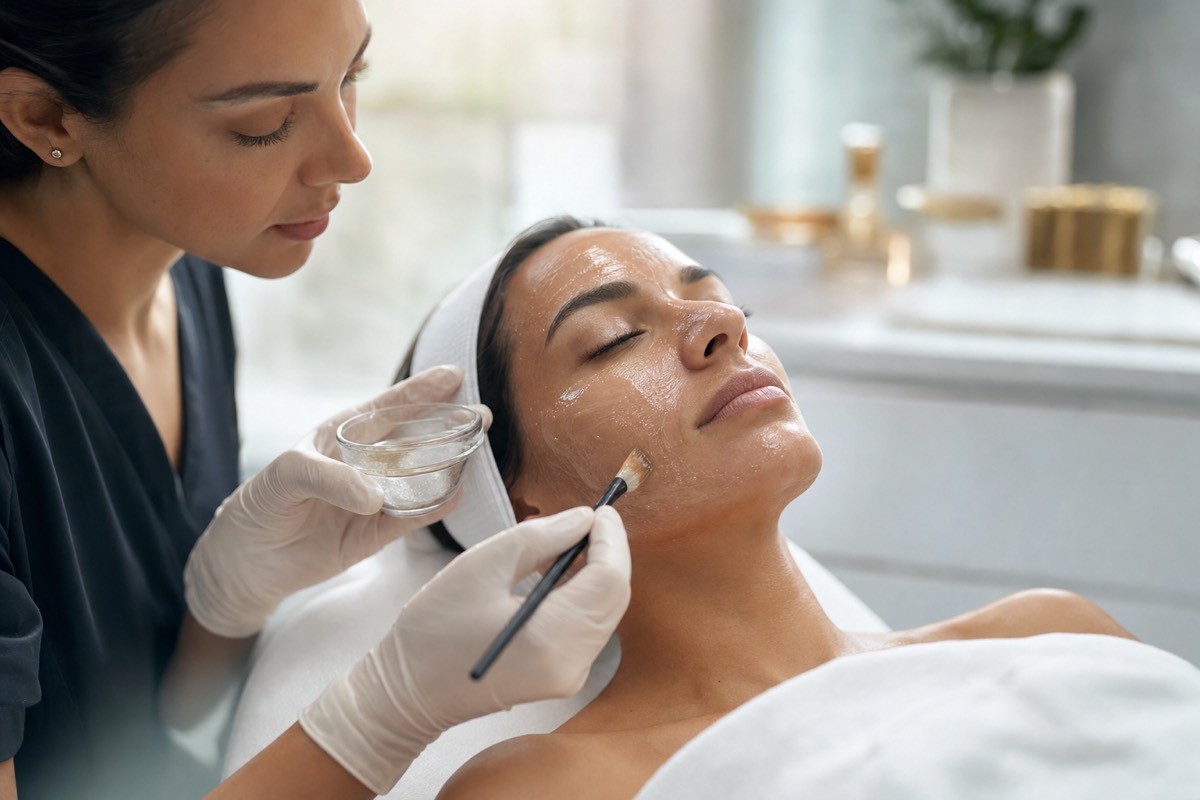
- Application in controlled passes. The clinician applies the TCA solution methodically with a gauze pad or brush, one facial zone at a time, sometimes after a preparatory Jessner’s layer. You will feel heat and stinging that builds for a few minutes; a handheld fan and cool compresses keep it tolerable, and most medium peels need no sedation.
- Watching for frosting. The provider watches the skin whiten and judges the level of frosting, applying additional passes only where more depth is needed. This endpoint-driven technique is the heart of a safe TCA peel.
- Comfort and cool-down. Because TCA self-neutralizes, there is nothing to rinse off to stop the reaction. Cool compresses ease the residual heat, which typically settles within twenty to thirty minutes.
- Aftercare instructions. You leave with a bland healing ointment, gentle cleansing instructions, and strict sun avoidance rules. Following them closely is what protects your result.
A full-face treatment usually takes thirty to forty-five minutes from cleansing to aftercare. You can drive yourself home afterward, which is one of the practical differences between a medium peel and a deep one.
Who Is a Candidate? Safety and Risks
Good candidates for a medium-depth TCA peel have moderate photoaging, uneven tone, or shallow scarring, are in good general health, and can commit to about a week of visible peeling plus diligent sun protection afterward. Results are most predictable in fair to light-medium skin tones, generally Fitzpatrick types I through III. Deeper skin tones, Fitzpatrick types IV through VI, can be treated, but they carry a meaningfully higher risk of post-inflammatory hyperpigmentation, so they call for an experienced provider, conservative strengths, and usually a pigment-suppressing preparation phase before the peel.
The most common side effects are temporary: redness, swelling, tightness, and several days of obvious peeling. Less common risks include post-inflammatory hyperpigmentation or lightening of the treated area, prolonged redness, infection, reactivation of cold sores, and, rarely, scarring, which is most associated with overly strong solutions or picking at healing skin. A TCA peel may not be appropriate if you have an active skin infection, have recently taken isotretinoin, are pregnant or nursing, have a history of keloid scarring, or cannot avoid significant sun exposure during healing. A board-certified provider screens for all of these during your consultation.
TCA Peel Recovery, Day by Day
Recovery from a medium-depth TCA peel follows a predictable arc, and knowing it in advance helps you schedule the treatment around work and social plans.
- Day 1. The skin feels tight, warm, and sunburned. Redness and mild swelling are normal. You cleanse gently and keep the skin coated in the ointment your provider recommends.
- Days 2 to 3. The treated skin darkens to a tan or brown shade and takes on a crinkled, weathered look. This stage looks worse than it feels and means the peel is progressing normally.
- Days 3 to 7. Peeling begins, often in sheets, usually starting around the mouth and chin. Do not pick or pull the skin; peeling early is the single most common way people cause pigment problems or scarring. Keep moisturizing and let it release on its own.
- Days 7 to 10. Most peeling finishes and fresh pink skin is revealed. Many providers clear light makeup and a return to normal routines around this point.
- Weeks 2 to 4. Pinkness fades, the new skin settles, and the result becomes clear. Collagen remodeling continues quietly for months, so texture can keep improving after the surface looks healed.
Daily broad-spectrum sunscreen is non-negotiable during and after recovery. The new skin is more vulnerable to UV, and unprotected sun exposure in the first months is the fastest way to undo the peel or trigger new pigmentation.
TCA Peel Before and After: Results and Longevity
Once peeling is complete, most people see smoother texture, a brighter and more even tone, visibly faded dark spots, and softened fine lines. The change from a single medium-depth peel is noticeably bigger than what a superficial peel series produces, which is why TCA remains a workhorse in dermatology. Browse real before and after photos to calibrate your expectations, and ask any provider you consult to show results from their own patients with skin similar to yours.
How long results last depends on your skin, your sun habits, and what was treated. Improvement in texture and pigment commonly holds for a year or longer with consistent sun protection, and many patients repeat a medium peel every twelve to twenty-four months to maintain the result. Aging and sun exposure continue after any peel, so think of the outcome as a lasting reset that you protect, not a fixed endpoint.
How Much Does a TCA Peel Cost?
As an industry estimate, a full-face TCA peel commonly runs roughly $500 to $2,000 per session, with spot treatments and smaller zones costing less and combination treatments costing more. Pricing varies with the provider’s credentials, your region, the strength used, and whether pre-peel skincare and follow-up visits are bundled. These figures are industry estimates, not a quote. ChemicalPeel.org is an education resource, not a clinic, so confirm current pricing directly with a provider during a consultation.
TCA Peel vs Glycolic Acid Peel
Many people deciding on a TCA peel are really choosing between a single medium-depth treatment and a series of gentler superficial peels. Here is how the two compare.
| TCA peel (medium) | Glycolic acid peel (superficial) | |
|---|---|---|
| Depth | Papillary to upper reticular dermis | Epidermis only |
| Best for | Moderate sun damage, wrinkles, shallow scars | Mild dullness, early texture and tone changes |
| Sessions | Usually one, repeatable every 1 to 2 years | Series of 4 to 6, spaced weeks apart |
| Downtime | About 7 to 10 days of visible peeling | Minimal, light flaking for a few days |
| Discomfort | Moderate heat and stinging during application | Mild tingling |
| Typical cost per session | Higher per session | Lower per session, but multiplied by the series |
If your concerns are mild and your priority is little to no recovery time, a series with the lighter glycolic acid peel may reach your goal gradually. If your concerns are moderate and you would rather trade one week of peeling for a bigger single-treatment change, TCA is usually the stronger fit.
Frequently Asked Questions
What is a TCA peel?
A TCA peel is a professional chemical peel that uses trichloroacetic acid to remove damaged outer layers of skin so smoother, more even skin can regenerate in their place. At the strengths most providers use, it is a medium-depth peel that reaches the upper dermis, deeper than a glycolic peel but far less intensive than a phenol peel.
What does a TCA peel treat?
A TCA peel treats moderate sun damage, uneven skin tone, dark spots and melasma, fine to moderate wrinkles, rough texture, and shallow acne scars. It is a common choice when superficial peels have stopped delivering enough change but a deep peel would be more than the concern requires.
What do TCA peel before and after results look like?
After the skin finishes peeling, most people see smoother texture, a brighter and more even tone, faded dark spots, and softened fine lines. The new skin is often pink for a few weeks, and the full result is typically visible about two to four weeks after treatment, with collagen-related improvements continuing for several months.
How long is TCA peel recovery?
Plan on about seven to ten days of visible recovery for a medium-depth TCA peel. The skin darkens and tightens over the first two to three days, peels in sheets from roughly day three through day seven, and reveals fresh pink skin by the end of the first week. Residual pinkness can take a few weeks to settle completely.
Can you do a TCA peel at home?
No, a medium-depth TCA peel is not safe to do at home. Medium-strength trichloroacetic acid can burn and scar skin quickly when the depth is not controlled, and products sold online are unregulated and unpredictable. Peels at this depth should be performed by a trained clinician. For at-home exfoliation, low-strength over-the-counter alpha hydroxy acid or salicylic acid products are the appropriate category.
TCA peel vs glycolic peel, what is the difference?
The main difference is depth. A glycolic acid peel is a superficial alpha hydroxy acid peel that exfoliates the epidermis with minimal downtime and works best as a series for mild concerns. A TCA peel at medium strength reaches the upper dermis in a single session, produces about a week of visible peeling, and delivers a bigger change for moderate sun damage, wrinkles, and shallow scarring.
Medical Disclaimer
This page is provided by ChemicalPeel.org for patient education and is not medical advice. Individual results vary, and the information here does not replace a consultation with a qualified, board-certified provider. Always discuss your medical history and treatment options with a licensed clinician before pursuing any chemical peel.
Ready to Take the Next Step?
A TCA peel rewards careful provider selection more than almost any other factor, because depth control is a hands-on skill. When you are ready, find a qualified provider who performs medium-depth peels regularly and can show you their own patient results. Still comparing options? Start with our overview of how the chemical peel types differ to confirm that a medium-depth peel matches your goals.
Related Articles
Article
A chemical peel for men treats thicker, oilier, shaved skin. Learn which peels fit male skin, how shaving changes the plan, and the downtime to expect.
Article
Chemical peel gone wrong? Learn which signs are normal healing, which mean a burn or infection, and when to call a provider or seek urgent care.
Article
A retinol peel works at the cell receptor level, not by dissolving skin. Learn why peeling starts on day 2 to 4, who it suits, and what a series costs.
Article
A chemical peel for under eyes can soften fine lines and true pigment, but it will not fix bags or vascular shadows. See what is safe and what is not.
Article
A mandelic acid peel is the gentlest AHA option for sensitive and melanin-rich skin. Learn benefits, results, cost, and safety, then find a provider.
Article
Chemical peel aftercare protects your results. Learn what to do after a peel, what to avoid, when makeup and sun are safe, and how often to get one.
The information on this page is for educational purposes only and is not a substitute for medical advice, diagnosis, or treatment from a qualified health care provider. Always consult a board-certified dermatologist or licensed medical professional before beginning any chemical peel regimen. Individual results may vary. ChemicalPeel.org does not endorse or guarantee any specific treatment outcome.