Written by the ChemicalPeel.org editorial team. Published September 25, 2026.
Clinical review pending. This page has not yet been reviewed by a licensed clinician; read it as patient education, not medical advice. How we review
A chemical peel for back acne applies an exfoliating acid, most often salicylic or glycolic acid, across the shoulders and back to unclog pores, calm active breakouts, and fade the dark marks old pimples leave behind. The back is not simply a larger face, though: its skin is thicker, its pores are bigger and oilier, it sweats under clothing all day, and it is nearly impossible to care for on your own. This guide covers why that matters, which peels providers use on the back, how a session goes, how many you are likely to need, what results are realistic, and how to look after a freshly peeled back.
Why Back Acne Is Different From Face Acne
The same process drives acne everywhere. What changes on the back is the terrain.
- Thicker skin. Back skin is among the thickest on the body, so it tolerates stronger peel concentrations than the face, but it also sheds and heals more slowly.
- Larger, oilier pores. The upper back and shoulders are dense with sebaceous glands, which is why bacne clusters there and why oil-soluble acids do well on it.
- Friction and sweat. Shirts, bra straps, backpacks, and workouts trap sweat and rub the skin for hours, feeding new breakouts and irritating healing ones.
- You cannot reach it. Most people cannot see or properly cleanse their own mid back, so home care is inconsistent.
- Higher risk of dark marks. Post-inflammatory hyperpigmentation, the flat brown or purple marks left after a pimple heals, tends to be darker and slower to fade on the back, especially in medium and deeper skin tones. Our guide to peels for hyperpigmentation explains why.
Look-Alikes That Are Not Acne
Not every crop of bumps on the back is acne. Bacterial folliculitis produces small, itchy pustules around hair follicles, fungal folliculitis looks like uniform itchy bumps that worsen with sweat, and keratosis pilaris makes rough, dry bumps on the upper arms and back. A provider should look at your back before recommending any peel, because an acid can irritate these without clearing them.
Which Peels Providers Use on the Back
Because back skin is thicker and oilier, providers often work a step stronger than they would on the same person's face. The workhorses are still superficial peels, applied in a series.
Salicylic Acid, 20 to 30 Percent
A salicylic acid peel is the most common choice for bacne. Salicylic acid is oil soluble, so it travels into the pore and dissolves the plug rather than only exfoliating the surface, and it is mildly anti-inflammatory. On the back, providers commonly use 20 to 30 percent concentrations, the higher end of what is used on the face.
Glycolic Acid
A glycolic acid peel exfoliates the surface, smooths rough texture, and helps fade dark marks. It is often alternated or blended with salicylic acid when marks and texture matter as much as active breakouts.
Jessner's Solution
A Jessner's peel combines salicylic acid, lactic acid, and resorcinol. It goes deeper than a single superficial acid and is a common step up for thick, congested backs with heavy post-acne marks. It produces more visible peeling, so the aftercare below matters more.
Low-Strength TCA
A TCA peel at low concentrations is sometimes used on the back for pigment and texture once active acne is under control. Higher-strength TCA is generally avoided on the body, because slower healing and constant friction raise the risk of complications.
Combination Peels
Many clinics use blended formulas that pair salicylic acid with lactic, mandelic, or a low dose of TCA. Ask what is in the blend and at what strength.
| Peel | Main job on the back | What to know |
|---|---|---|
| Salicylic acid, 20 to 30 percent | Active breakouts and clogged pores | First choice for oily, congested backs |
| Glycolic acid | Texture and dark marks | Often alternated or blended with salicylic |
| Jessner's solution | Thick, congested skin with heavy marks | More visible peeling for several days |
| Low-strength TCA | Pigment and texture once acne is controlled | Higher strengths avoided on the body |
| Combination blends | Oil, texture, and pigment together | Ask for the ingredients and strengths |
How a Back Peel Session Goes
- Assessment. The provider examines your back, asks about medications, and confirms the bumps are acne.
- Cleansing and degreasing. The back is cleansed and wiped with a prep solution so the acid works evenly.
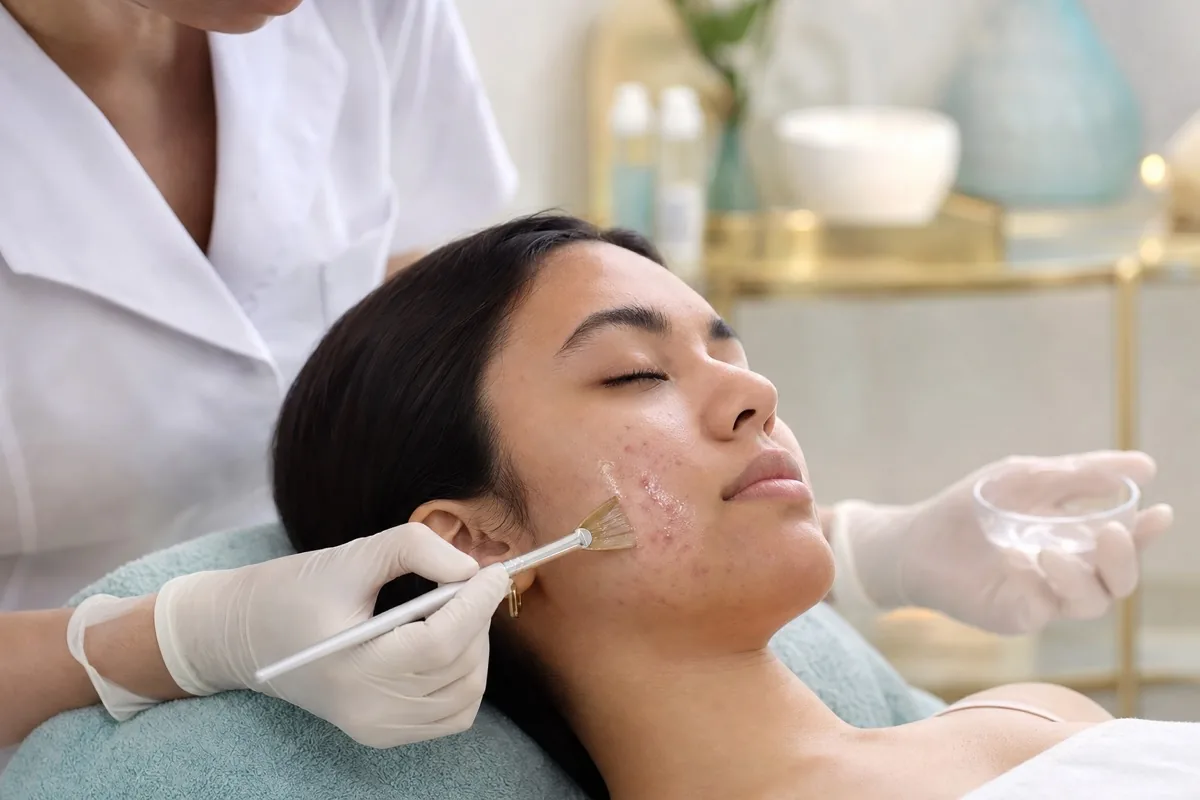
- Application. The acid goes on in passes across the shoulders and back with gauze or a brush. Expect stinging, warmth, and tingling that builds for a minute or two and then eases.
- Timing and neutralizing. Superficial peels stay on for a few minutes and are then neutralized or rinsed, depending on the formula.
- Finish. A calming moisturizer and sunscreen go on. The visit usually takes about 30 to 45 minutes.
How Many Sessions and How Far Apart
One back peel will not clear bacne. Providers typically plan a series of four to six superficial peels spaced two to four weeks apart, then reassess. Active breakouts usually calm first, while dark marks and texture keep improving for months as the series continues. Many people then move to a maintenance peel every one to three months. Our guide to how often to get a chemical peel covers the general logic.
What Results Are Realistic
A series of back peels can reasonably be expected to reduce active breakouts, unclog pores, fade post-inflammatory marks, and smooth rough, bumpy texture. If your bacne is cystic or widespread, a dermatologist may want to treat it medically first and use peels for the marks left behind. The peels for acne guide explains that division of labor.
What superficial peels do not do is remove true scars. Pitted or raised scars sit below where these peels reach. If scarring is your main concern, read our comparison of chemical peels versus microneedling first.
Aftercare for a Peeled Back
Our aftercare guide applies, and the back adds problems of its own.
- Skip sweaty workouts for two to three days. Sweat stings freshly peeled skin.
- Wear loose, soft, clean clothing. A clean cotton shirt beats anything tight or synthetic. Keep bra straps and backpacks off peeled skin for a few days.
- Shower lukewarm and briefly. Use a gentle cleanser, no scrubs or loofahs, and pat dry.
- Do not pick or peel. Flaking usually starts around day two or three and finishes within a week. Pulling skin off early is the fastest route to a new dark mark. Our peeling timeline shows what each day looks like.
- Moisturize twice a day. A long-handled applicator or a partner makes the mid back manageable.
- Protect it from the sun. Keep the back covered outdoors and use broad-spectrum SPF 30 or higher on exposed skin, since sun on healing skin darkens marks. No tanning or swimming until flaking has finished.
- Pause actives. Retinoids, benzoyl peroxide, and exfoliating washes go back in on your provider's schedule, usually about a week later.
Redness, tightness, and flaking are expected. Blistering, spreading redness, pus, or worsening pain are not; call your provider, and see our guide to chemical peel side effects.
Who Should Not Get a Back Peel
Talk to a provider rather than booking if any of these apply:
- Isotretinoin in the past 6 to 12 months. Isotretinoin changes how skin heals, and many providers wait six months to a year after the last dose.
- Active infection on the back. Open wounds, folliculitis, and any undiagnosed rash need to be cleared first.
- A history of keloids or thick scars. The back and shoulders are among the most common places keloids form.
- Pregnancy or breastfeeding. Salicylic acid and several peel ingredients are usually avoided in pregnancy; refer the decision to your obstetrician and skin provider.
- Recent sunburn, waxing, or laser on the area. Wait until the skin has fully recovered.
- Deeper skin tones with a history of dark marks. Strength and pacing matter more. Our guide to chemical peels for dark skin explains how providers adjust.
What a Back Peel Costs
Back peels commonly cost more than face peels because there is far more surface area to treat. Superficial salicylic or glycolic back peels are often quoted at about $150 to $400 per session, and because bacne needs a series, budget for four to six sessions. Jessner's and low-strength TCA usually price higher, and many clinics discount a prepaid package. Pricing varies by provider and region, and cosmetic peels are not covered by insurance. Our cost guide covers pricing by peel type. ChemicalPeel.org is an education resource, not a clinic, so confirm pricing at your consultation.
Finding Someone to Treat Your Back
The back heals slower, scars and pigments more readily, and cannot be watched by you. Choose a provider who treats body acne regularly, looks at your back before quoting a package, and can name the acid and strength they plan to use. Our guide to choosing a provider covers the questions worth asking. You can find a qualified provider near you, or browse our med spa directory to compare options in your area.
Frequently Asked Questions
Can you get a chemical peel on your back?
Yes. The back is one of the most commonly peeled areas outside the face, and it is a standard treatment for bacne, post-acne marks, and rough texture. Because back skin is thicker and oilier, providers often use slightly stronger superficial peels than on the face, most often salicylic acid at 20 to 30 percent or glycolic acid, applied in a series.
How many sessions does a back peel take?
Usually four to six sessions spaced two to four weeks apart, followed by a reassessment. Active breakouts tend to calm over the first several treatments, while dark marks and texture keep improving over months. Many people then continue with a maintenance peel every one to three months. A single session rarely makes a lasting difference.
Does a back peel hurt?
Not much. Superficial back peels sting, tingle, and feel warm for a minute or two after application, then settle. Because the skin on the back is thick, many people find it more comfortable than a facial peel. Deeper options such as Jessner or low-strength TCA sting more and leave the skin tight and tender for a day or two.
Can a chemical peel remove bacne scars?
Superficial peels fade the flat dark or red marks left after breakouts, but they do not remove true pitted or raised scars, which sit deeper than these peels reach. For indented scarring, providers more often recommend microneedling, laser, or other dermal procedures, sometimes alongside peels for the surrounding pigment and texture.
What should I not do after a back peel?
For the first several days, avoid sweaty workouts, hot showers, scrubs and loofahs, tight or synthetic clothing, backpacks and bra straps across the treated area, sun exposure, swimming, and picking at flaking skin. Pause retinoids, benzoyl peroxide, and exfoliating washes until your provider clears them, usually about a week later.
Which chemical peel is best for back acne?
Salicylic acid is the usual first choice because it is oil soluble and clears clogged pores, and the back tolerates 20 to 30 percent strengths well. Glycolic acid helps with texture and dark marks and is often alternated with it. Jessner or low-strength TCA is reserved for thick, congested skin or stubborn marks once acne is under control.